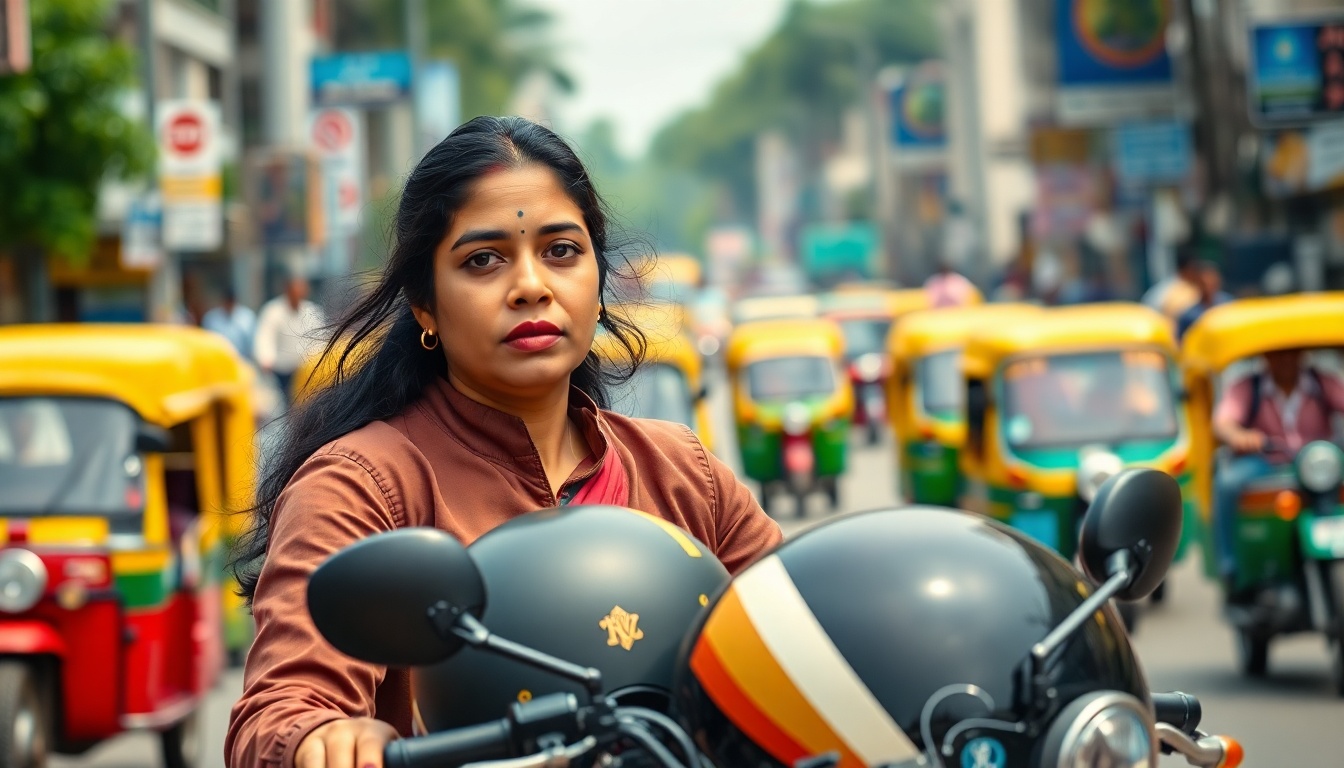
Quick Answer
An advanced rider course in Bengaluru teaches you emergency braking at 60 km/h, counter-steering through traffic gaps, and hazard prediction on city roads. Expect 12 hours of on-bike drills spread over two weekends. You will leave with muscle memory for panic situations, not just theory.
I have watched over a thousand riders roll through our gates at Throttle Angels. Most of them arrive with the same problem. They think they already know how to ride.
Here is the truth about an advanced rider course Bengaluru riders actually need. It is not about going faster. It is about surviving the NICE Road exit ramp when a cab cuts across three lanes without a signal. It is about reading the auto-rickshaw driver’s shoulder twitch before he turns. It is about knowing exactly how much front brake you can grab on a rain-soaked Bannerghatta Road without flipping over the handlebars.
If you have been riding for a year or more, you have already built habits. Some of those habits will save your life. Some of them are waiting to kill you. An advanced course is where you find out which is which.
Why Most Riders Get advanced rider course Bengaluru Wrong
Here is what most new riders get wrong about an advanced rider course in Bengaluru. They think it is about learning to lean lower in corners. Or mastering clutchless upshifts. Or somehow becoming a faster version of themselves on the Nandi Hills twisties.
That is not what gets you killed on Indian roads. What gets you killed is the sudden U-turn from the right lane on Old Airport Road. It is the stray dog that materializes from behind a parked bus on Sarjapur Road at night. It is the truck driver who decides to reverse on a highway shoulder without looking.
I have seen this mistake cause accidents dozens of times. Riders spend their first two years practicing straight-line speed and basic braking. Then they hit a real-world situation that requires advanced bike control, and their brain freezes. Their hands do the wrong thing. They grab a handful of front brake mid-corner. They target-fixate on the very pothole they wanted to avoid.
The real risk is not your lack of skill. It is your overconfidence in skills you never actually tested under pressure. An advanced rider course exists to create that pressure in a controlled space, so you do not have to learn it on a live road with a bus bearing down on you.
Last monsoon, we had a rider named Vikram join our advanced course. He had been riding a Himalayan for two years. Done Ladakh. Done Spiti. He walked in with that quiet confidence you see in experienced tourers. On day one, we set up a simple emergency braking drill at 50 km/h on wet tarmac.
He locked the rear wheel instantly. The bike fishtailed. He put his foot down at 30 km/h and nearly broke his ankle. That moment changed everything for him. He realized his two years of “experience” had never actually tested his limits. By the end of the course, he could stop from 60 km/h in under 18 meters on wet roads. But more importantly, he learned to admit what he did not know.
What Actually Works on Indian Roads
Let me tell you what an advanced rider course in Bengaluru actually teaches you. It is not glamorous. It is deeply practical. And it will save your skin long before any knee-down cornering technique ever will.
First, you learn emergency braking as a reflex, not a thought. Most riders take about 0.7 seconds to process a hazard and begin braking. At 60 km/h, that is 11 meters of travel before you even touch the brake lever. An advanced course drills your reaction time down to 0.3 seconds. That 8-meter difference is often the gap between a close call and a hospital visit.
Second, you learn counter-steering properly. Here is the thing about counter-steering. You already do it unconsciously at slow speeds. But when a panic situation hits, most riders forget how to steer at all. They freeze. They go straight into the obstacle. We train you to push the left bar to go left, push the right bar to go right, even when your brain is screaming. It becomes automatic.
Third, you learn to read traffic like a chess board. Not just watching the car in front of you, but watching the car three vehicles ahead. You learn to spot the telltale signs of a driver about to do something stupid. The slight drift toward a lane marking. The brake lights that flicker on and off. The passenger door that opens slightly before the car has stopped.
Fourth, you learn low-speed control. This is the one that surprises everyone. Bengaluru traffic means you spend half your riding time below 30 km/h. Crawling through Silk Board junction. Filtering through jammed roads. Maneuvering in tight parking lots. If you cannot balance your bike at walking pace without putting your feet down, you are not an advanced rider. You are just lucky.
Fifth, you learn to brake while leaned over. This is the skill that separates survivors from statistics. A dog runs into your line mid-corner. A car door opens on your inside. You need to slow down without standing the bike up and going wide. We teach you how to use both brakes progressively while maintaining your line. It feels wrong at first. Then it feels like magic. Then it feels like survival.
“The most dangerous rider is not the one who crashes. It is the one who has never come close to crashing, because they have no idea where their actual limit sits. An advanced course shows you that line in a parking lot instead of on a highway.”
— Throttle Angels Instructor Team
Beginner vs Trained Rider Comparison
| Aspect | What Beginners Do | What Trained Riders Do |
|---|---|---|
| Emergency Braking | Grab clutch, stomp rear brake, lock wheel, panic | Progressive front brake, clutch in at last moment, bike stays stable |
| Cornering | Brake before turn, coast through, then accelerate late | Trail brake into corner, maintain throttle through apex, drive out early |
| Traffic Reading | Focus on vehicle directly ahead, react to brake lights | Scan 5-7 vehicles ahead, predict lane changes before they happen |
| Low-Speed Balance | Both feet down at stops, wobble through traffic | Feet on pegs at crawl speed, counterbalance through gaps |
| Hazard Response | Swerve without looking, brake mid-turn, freeze | Quick head check, commit to swerve or brake, execute decisively |
Adapting to Indian Road Conditions
Book Your Trial Session Today!
Ready to master the roads of Bangalore or Pune? Join India’s premier motorcycle driving school.
Training Available in Bangalore & Pune
Book Your Trial Session Today!
Ready to master the roads of Bangalore or Pune? Join India’s premier motorcycle driving school.
Training Available in Bangalore & Pune
An advanced rider course in Bengaluru has to account for one thing above all else. The unpredictability of Indian roads. You cannot train for European conditions and call yourself ready for Sarjapur Road at 6 PM on a weekday.
Monsoon riding is a separate skill entirely. The first 20 minutes of rain are the most dangerous. Oil and dust rise to the surface of the road and create a slick film that feels like ice. We teach you to avoid riding in the first shower if possible. If you cannot, we teach you to reduce your lean angle by half and increase your following distance to four seconds instead of two.
Highway riding in India demands constant active attention. Trucks do not stay in lanes. Buses stop without warning. Cattle wander onto expressways. We train you to keep a mental escape route open at all times. If the vehicle in front of you stops suddenly, where will you go? Left shoulder? Right gap? You need that answer ready before the question arises.
City traffic filtering is another skill most riders never formally learn. They just wing it. And they get clipped by side mirrors, or they clip someone else’s. In our course, you practice filtering at different speeds, through gaps of different widths, with your head on a swivel. You learn when to filter and when to wait. Sometimes the safer move is to sit in traffic like everyone else.
Frequently Asked Questions
Who should take an advanced rider course in Bengaluru?
Any rider with at least one year of road experience who wants to break past their current skill plateau. It is especially useful for riders who commute daily in city traffic or tour regularly on highways.
What bike should I bring to the course?
Bring whatever you ride on the road. We have trained people on everything from a Splendor to a Goldwing. The skills transfer to any motorcycle. Just make sure your bike is in good mechanical condition with proper tires.
How long does the advanced rider course take?
Our advanced program runs over two weekends, totaling 12 hours of on-bike training. We keep class sizes small so each rider gets individual attention and multiple repetitions of each drill.
Will I learn wheelies or stoppies?
No. That is stunt riding, not advanced road riding. We teach you controlled braking, smooth cornering, hazard avoidance, and traffic strategy. If you want to pop wheelies, go to an empty parking lot with your own insurance.
How much does Throttle Angels training cost?
Our courses start at competitive rates with flexible packages. Call Rajkumar at 9535350575 or Arun at 8169080740 for current pricing and batch schedules in Bangalore and Pune.
Here is the thing about advanced training that nobody tells you. It does not make you invincible. You will still crash if you ride like an idiot. But it gives you a much wider margin for error. It turns a potential accident into a close call. It turns a close call into nothing at all.
The riders who come back to us after the course always say the same thing. They wish they had done it sooner. Not because they were bad riders before. But because they had no idea how much better they could be. The road does not care about your ego. It only cares about your skill. And skill, unlike luck, is something you can build.
Book Your Trial Session Today!
Ready to master the roads of Bangalore or Pune? Join India’s premier motorcycle driving school.
Training Available in Bangalore & Pune