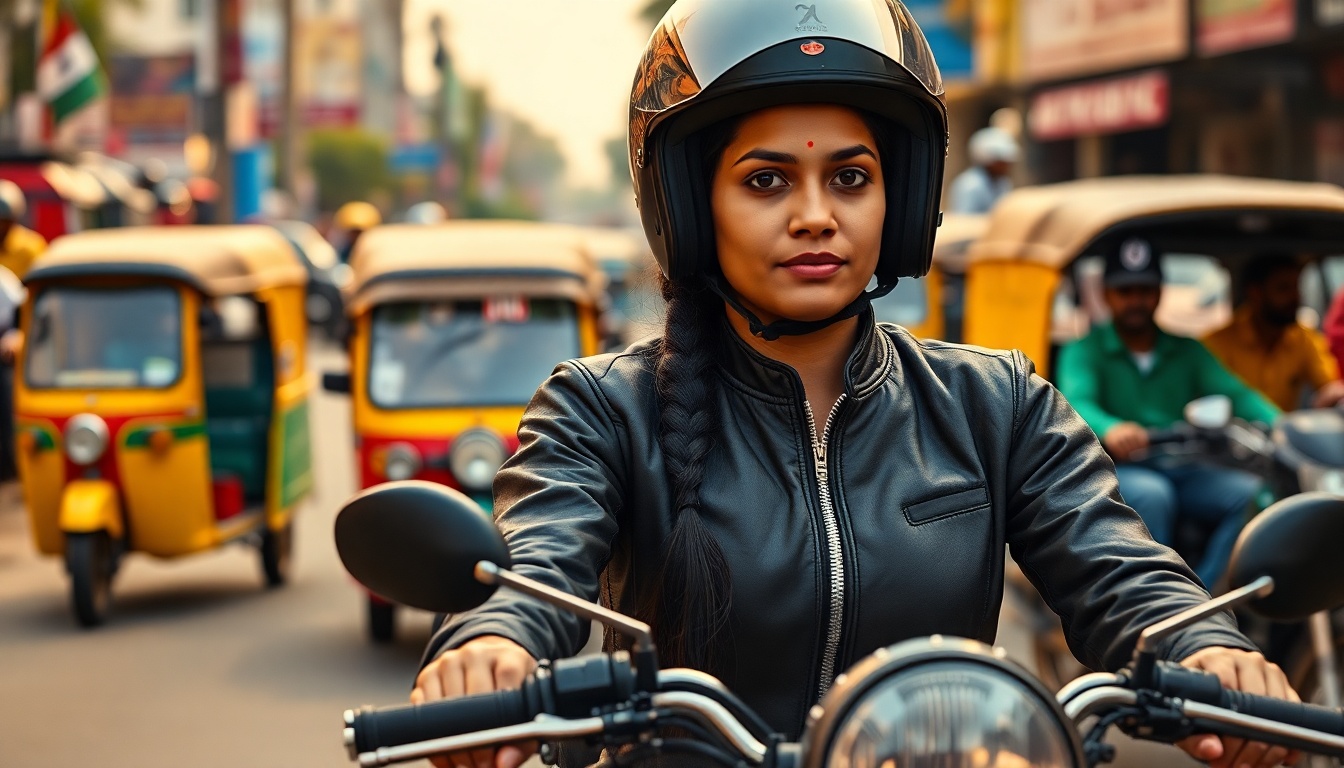
Quick Answer
Limit point observation is the technique of looking at the farthest point you can see on the road ahead, then adjusting your speed and position so you can stop safely within that distance. For Bangalore riders, this means scanning 12-15 seconds ahead through traffic, around buses, and over blind crests on NICE Road or Nandi Hills. It cuts your reaction time by more than half.
I remember the first time I took a group of Bangalore riders out to Nandi Hills for a morning session. We had fifteen bikes, mostly Royal Enfields and KTM Dukes, and within the first three turns, I saw the same mistake repeat itself.
Riders were braking hard into corners, then accelerating out of them with their heads down. They were looking at the tarmac directly in front of their front wheel. Not one of them was scanning the bend ahead.
That is when I pulled everyone over and spent twenty minutes explaining limit point observation motorcycle Bangalore style. Because on our roads, it is not a nice-to-have skill. It is the difference between a clean corner and a trip to the hospital.
Why Most Riders Get limit point observation motorcycle Bangalore Wrong
Here is what most new riders get wrong about limit point observation. They think it means staring at the vanishing point of the road, that spot where the two edges of the tarmac meet in the distance. That is only half the story.
The real trick is understanding what the limit point is telling you. If that point is moving away from you as you approach it, you can hold your speed or even accelerate. If it is getting closer, you need to slow down. If it stays the same distance, you are perfectly matched to the corner.
I have seen this mistake cause accidents dozens of times on Bangalore’s outer ring road and the winding stretches near Sakleshpur. A rider enters a blind left-hander at 60 km/h, sees the limit point closing in fast, but instead of easing off, they freeze. Their eyes drop to the road, they target fixate on the guardrail, and they run wide into oncoming traffic.
The problem is not their vision. It is that they never learned to interpret what they were seeing. Limit point observation is not just about looking far ahead. It is about processing that visual information and making a decision before you reach the corner.
One afternoon during a Throttle Angels session on the Magadi Road stretch, I had a student named Vikram who was struggling with every corner. He was a confident rider, five years of experience, but he kept running wide on right-handers. I followed him for three kilometers, watching his line.
When we stopped, I asked him where he was looking during the turn. He said the road. I asked him to be more specific. He said the white line on the left edge. That was the problem. He was staring at a fixed point three feet in front of his bike. We spent the next hour drilling limit point observation on a straight stretch with cones. By the end of the session, he was carving corners like he had been doing it for years. He told me later it felt like someone had turned on a light in a dark room.
What Actually Works on Indian Roads
Let me give you the practical version of limit point observation that works on Bangalore roads. Not the textbook theory. The real stuff.
First, you need to understand that your eyes lead your bike. Wherever you look, your hands will unconsciously steer the motorcycle toward that spot. If you look at the pothole, you will hit it. If you look through the corner to where you want to go, you will arrive there smoothly.
Second, the limit point is not static. On a straight highway like the NICE Road bypass, your limit point might be a kilometer away. On a tight switchback near Coorg, it might be twenty meters. Your job is to constantly adjust your speed so that you can stop safely within whatever distance you can see.
Here is the technique I teach every Throttle Angels student. As you approach a corner, pick the limit point. Ask yourself: is it moving toward me, away from me, or staying put? If it is moving toward you, roll off the throttle gently. If it is moving away, you can add a little gas. If it is staying the same, hold your line and your speed.
The beauty of this system is that it works at any speed. You can be crawling through Bangalore traffic at 20 km/h or cruising on the Mysore highway at 80 km/h. The principle is identical. Look far ahead, read the limit point, adjust your speed accordingly.
One thing most people miss is that limit point observation also applies to straight roads. When you are riding behind a BMTC bus or a lorry, your limit point is the rear of that vehicle. You need to be able to stop within the distance you can see beyond it. If you cannot see past the bus, back off until you can.
“Most riders think cornering is about lean angle and throttle control. It is not. It is about where you look. Fix your eyes, and your body will fix the rest. Limit point observation is the single most important skill I teach, and I have seen it save riders from crashes they never saw coming.”
— Throttle Angels Instructor Team
Beginner vs Trained Rider Comparison
| Aspect | What Beginners Do | What Trained Riders Do |
|---|---|---|
| Eye focus point | Look at the road directly in front of the front wheel | Scan 12-15 seconds ahead, constantly moving their gaze |
| Corner entry speed | Brake hard at the last moment, then panic | Adjust speed before the turn based on limit point movement |
| Reaction to blind corners | Freeze, target fixate on hazards | Slow down, widen the line, prepare to stop |
| Traffic awareness | Stare at the vehicle directly ahead | Look through and beyond traffic, anticipate gaps |
| Night riding | Follow the headlight beam, overreact to shadows | Use the headlight beam as the limit point, reduce speed proportionally |
Adapting to Indian Road Conditions
Book Your Trial Session Today!
Ready to master the roads of Bangalore or Pune? Join India’s premier motorcycle driving school.
Training Available in Bangalore & Pune
Book Your Trial Session Today!
Ready to master the roads of Bangalore or Pune? Join India’s premier motorcycle driving school.
Training Available in Bangalore & Pune
Bangalore’s roads throw curveballs at you that you will not find in any European riding manual. You have auto-rickshaws that materialize from side streets without warning. You have cows standing in the middle of a blind corner on Bannerghatta Road. You have monsoon rains that turn the tarmac into a skating rink.
Limit point observation becomes even more critical in these conditions. When it is raining, your stopping distance doubles. That means your limit point needs to be twice as far away as you think. If you are doing 40 km/h in the rain on a road like Old Airport Road, you need to be able to see at least 40 meters of clear tarmac ahead. If you cannot, you are going too fast.
The other thing about Indian roads is that the limit point can change in an instant. A parked truck, a sudden pothole, a child running across the road. Your eyes need to be constantly moving, constantly updating the picture in your brain. This is not a skill you learn in a day. It takes practice, and it takes someone watching you and correcting your bad habits.
That is why structured training matters. You can read about limit point observation in a hundred blog posts, but until you have someone riding behind you, pointing out where your eyes are going, you will keep making the same mistakes.
Frequently Asked Questions
What is limit point observation in motorcycle riding?
It is the technique of looking at the farthest point you can see on the road ahead, then using that point to judge your corner entry speed and line. You adjust your throttle and position based on whether the limit point is moving toward you, away from you, or staying the same distance.
How do I practice limit point observation in Bangalore traffic?
Start on a quiet stretch like the NICE Road connector early in the morning. Pick a corner, identify the limit point, and practice rolling off the throttle as it approaches. Gradually increase your speed as you get comfortable. The key is to make it a habit before you need it in heavy traffic.
Can limit point observation prevent accidents on Indian highways?
Absolutely. Most highway accidents happen because riders outrun their vision. They enter a corner too fast, realize they cannot see the exit, and panic. Limit point observation forces you to match your speed to your visibility. It is the most effective accident prevention tool I know.
How long does it take to learn limit point observation properly?
Most riders pick up the basic concept in a single training session, but it takes about 500-1000 kilometers of conscious practice to make it automatic. That is why we recommend at least a weekend course followed by a guided ride. You need repetition in real conditions to rewire your brain.
How much does Throttle Angels training cost?
Our courses start at competitive rates with flexible packages. Call Rajkumar at 9535350575 or Arun at 8169080740 for current pricing and batch schedules in Bangalore and Pune.
Look, I have been riding for over fifteen years and teaching for eight. I have seen riders who thought they were experts get humbled by a simple blind corner on the way to Chikmagalur. And I have seen nervous beginners become smooth, confident riders in a single weekend, just by learning where to put their eyes.
Limit point observation is not a trick. It is not a secret technique reserved for racers. It is the way your brain is supposed to work when you are on a motorcycle. You just need someone to show you how to switch it on. Once you do, you will wonder how you ever rode without it.
Book Your Trial Session Today!
Ready to master the roads of Bangalore or Pune? Join India’s premier motorcycle driving school.
Training Available in Bangalore & Pune