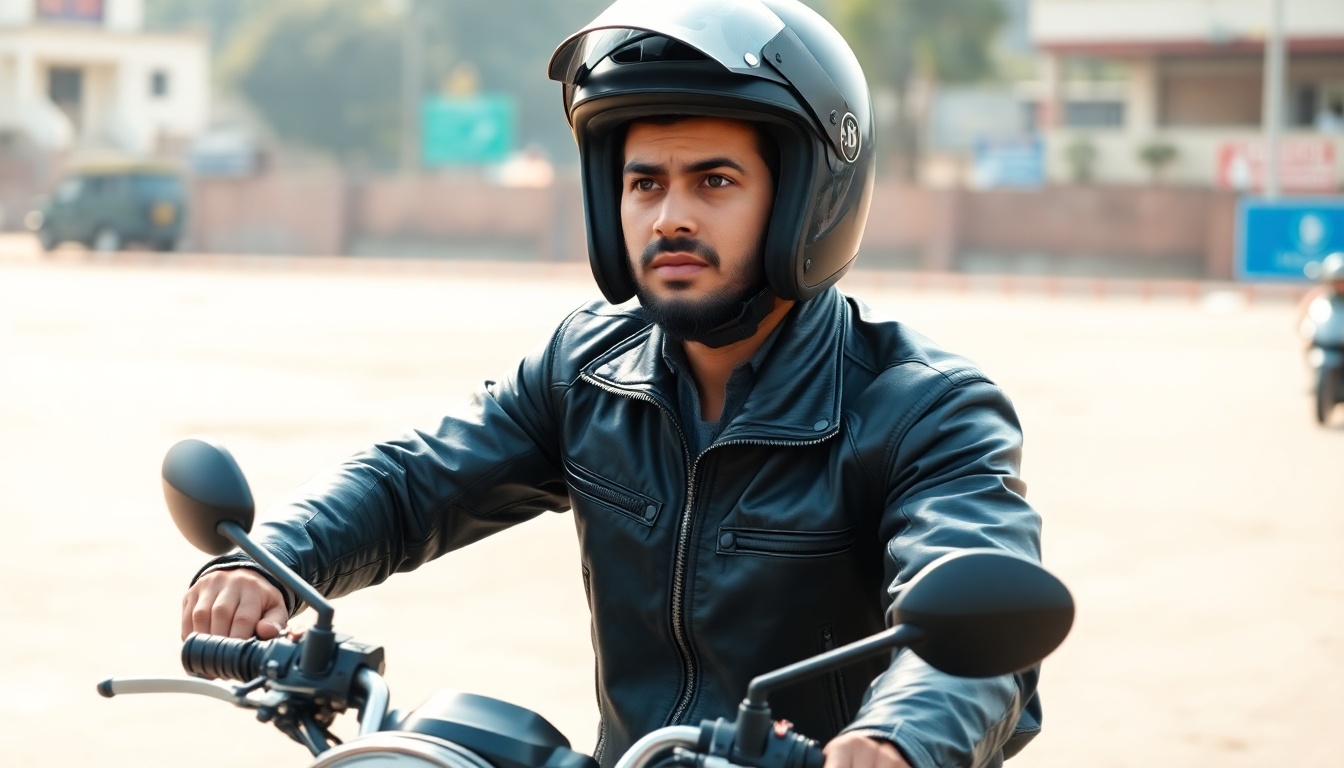
Quick Answer
A proper weekend learn bike riding course is a 16-hour intensive program spread over two days. It’s designed to get you from zero to confidently handling basic traffic, but it’s not a magic bullet. You will learn controls, balance, braking, and essential road sense, but real mastery comes from consistent practice after the course ends.
I see it every Saturday morning. A group of adults standing near our training bikes, looking equal parts excited and terrified. Their hands are a bit clammy, their eyes wide. They’ve all signed up for the same reason: a weekend learn bike riding course.
They want to unlock that freedom. The weekend ride to Nandi Hills, the commute that doesn’t depend on a cab, the sheer joy of the open road. I get it completely. But here is the thing about compressing years of road wisdom into two days.
It’s intense. It’s a firehose of information for your brain and body. You’re not just learning to operate a machine. You’re learning to read a language—the chaotic, beautiful, unpredictable language of Indian traffic.
Why Most Riders Get weekend learn bike riding course Wrong
Here is what most new riders get wrong about a weekend course. They think it’s a license to ride. They finish on Sunday evening, get their certificate, and believe they’re ready for a highway trip on Monday.
The real risk is not falling in the parking lot. It is overconfidence on the real road. I have seen this mistake cause near-misses dozens of times. A rider masters the figure-eight in our controlled yard and thinks they can handle a Bangalore intersection at 6 PM.
Another common error? Treating the weekend like a checkbox. You show up, go through the motions, and expect muscle memory to magically form. Riding is a physical skill. Your body needs to absorb the clutch feel, the weight of the bike, the pressure on the brakes.
That doesn’t happen by just watching. It happens by stalling the bike twenty times. By sweating through a slow-speed U-turn until it clicks. The weekend course gives you the map, but you have to walk the path.
I remember a software engineer, let’s call him Rohan. First session, he could barely get the bike to move without a violent jerk. He was frustrated. He said, “I just want to be safe on my commute to Electronic City.”
By Sunday afternoon, we were on a quiet service road. A dog ran out. Without thinking, Rohan smoothly covered the clutch and brake, controlled his swerve, and avoided it. He didn’t panic. He executed. That’s the shift a weekend course aims for—replacing panic with a practiced procedure.
What Actually Works on Indian Roads
Look, the textbook tells you to keep a two-second gap. On our roads, that gap is instantly filled by an auto-rickshaw. So what actually works?
You learn to ride for everyone else. Assume the car ahead will brake suddenly. Assume the pedestrian will jump the divider. Assume the scooter rider won’t signal. Your primary job is to be predictable, but your survival depends on anticipating the unpredictable.
Here is a thing we drill into you. Your brakes are your best friend, but only if you know them. Emergency braking isn’t about strength. It’s about progressive pressure. Stomp on the front brake and you’ll meet the ground quickly.
We make you practice until your fingers learn the pressure. You need to feel the weight transfer to the front tyre, to know exactly how much lever pull will stop you without skidding. This is non-negotiable.
And your eyes. You must look where you want to go, not at the pothole you’re trying to avoid. It’s counterintuitive. You see a big crater, you stare at it, and your hands follow your eyes right into it. We train that out of you.
Finally, lane position. Don’t ride in the center of the lane where oil and coolant collect. Don’t hug the curb where debris lives. Ride where car wheels go—the path is cleaner. Small adjustments that massively increase your safety.
A weekend course doesn’t make you a rider. It makes you a conscious beginner. It gives you the tools to practice safely, so you don’t develop the dangerous habits that are so hard to unlearn later. The real training starts the Monday after, on your own bike, on your own street.
— Throttle Angels Instructor Team
Beginner vs Trained Rider Comparison
| Aspect | What Beginners Do | What Trained Riders Do |
|---|---|---|
| Approaching an Intersection | Focus only on the traffic light. Assume green means “go”. | Scan left and right before entering, even on green. Expect red-light jumpers. |
| Seeing a Hazard | Stare at the pothole or obstacle, often riding straight into it. | Identify the hazard, then immediately look at the escape path. The bike follows the eyes. |
| Using Brakes | Grab a handful of front brake in panic, locking the wheel or crashing. | Apply progressive pressure, using both brakes in harmony, with the bike upright. |
| Lane Positioning | Ride in the middle of the lane, in the slippery oil strip. | Position themselves in the left or right tire track of vehicles ahead for better grip and visibility. |
| Mental Focus | Think about operating the bike: “Clutch, gear, throttle.” | Think about traffic: “What is that car’s driver about to do? What’s my exit if that truck swerves?” |
Adapting to Indian Road Conditions
Book Your Trial Session Today!
Ready to master the roads of Bangalore or Pune? Join India’s premier motorcycle driving school.
Training Available in Bangalore & Pune
Book Your Trial Session Today!
Ready to master the roads of Bangalore or Pune? Join India’s premier motorcycle driving school.
Training Available in Bangalore & Pune
Our roads are a special kind of classroom. A weekend learn bike riding course that doesn’t address this is just theory. Let’s talk about monsoon first. Those first rains bring up all the engine oil and dirt, making the roads like ice.
You need to double your following distance. Smooth is everything—no sudden brakes, no aggressive throttle. And those painted road markings and metal manhole covers? They’re slick. Straighten the bike before you cross them.
Highway riding is a different beast. The real danger is fatigue and monotony. You get lulled into a rhythm, and your reaction time slows. We teach the 45-minute rule. After 45 minutes on the highway, take a 10-minute break. Get off the bike. Drink water. It resets your brain.
And in city chaos, use your horn as a communication tool, not an anger vent. A short beep to say “I’m here in your blind spot” is useful. Holding it down achieves nothing but stress. Your positioning and speed control are far more effective.
Frequently Asked Questions
Is a weekend really enough to learn bike riding?
It’s enough to learn the fundamentals safely and pass a basic test. You’ll be able to start, stop, shift gears, and navigate light traffic. But true comfort and instinct take months of regular practice. Think of the weekend as your foundation-laying ceremony.
What should I bring to the weekend course?
Sturdy shoes that cover your ankles (no sandals), full-length jeans, a long-sleeve jacket, and your own helmet if you have one (we provide sanitized ones). Bring water, sunscreen, and a mindset ready to listen and make mistakes.
Do I need to know how to ride a bicycle first?
It helps immensely with balance, but it’s not a strict requirement. We start from absolute zero. If you’ve never balanced on two wheels, we have methods to get you there. Just be prepared for a steeper initial learning curve.
How much does Throttle Angels training cost?
Our courses start at competitive rates with flexible packages. Call Rajkumar at 9535350575 or Arun at 8169080740 for current pricing and batch schedules in Bangalore and Pune.
What bike should I buy after the course?
Don’t buy a bike for your future self. Buy for the rider you are today. Start with a used, lower-capacity bike (150-200cc) that you won’t cry over if you drop. Master that for 6-12 months. The shiny big bike can wait.
So you finish the weekend. Your body is tired, your brain is full. What next? Your first solo ride should be short. Just around your block, early on a Sunday morning. Build up slowly.
Remember, the goal isn’t to be fast. It’s to be smooth. It’s to come home safe, every single time. The road will teach you the rest, if you’re willing to listen.
Book Your Trial Session Today!
Ready to master the roads of Bangalore or Pune? Join India’s premier motorcycle driving school.
Training Available in Bangalore & Pune