Quick Answer
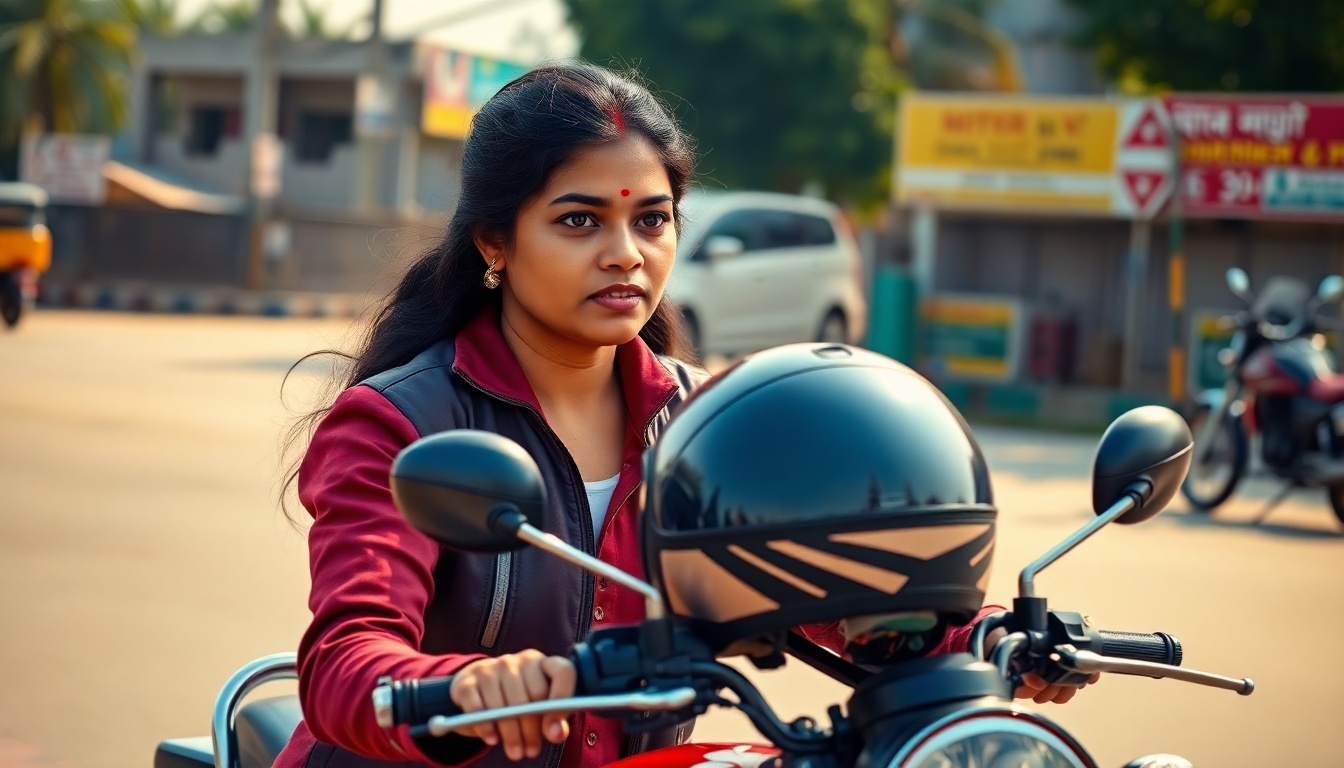
Weekend Royal Enfield riding for beginners is about mastering the bike before the road. Start with a 150-200km round trip on a familiar highway, not a mountain pass. Your first 5-6 weekends should focus on building muscle memory for the weight and brakes in city traffic, not chasing Instagram-worthy destinations.
I see it every Saturday morning at our training ground. A brand new Royal Enfield, gleaming in the sun, and a rider whose eyes are a mix of excitement and pure fear. They’ve just bought their dream machine, the symbol of freedom, and now the weekend is here.
They want to hit the road. Nandi Hills, maybe. Or that cool café 100 kilometers away. The idea of weekend Royal Enfield riding beginners have is almost always about the destination. The open road, the wind, the feeling.
Here is the thing about that feeling. It only comes when you’re not fighting your bike. When a sudden pothole or a truck cutting you off doesn’t send your heart into your throat. That’s where the real journey for weekend Royal Enfield riding beginners actually starts.
Why Most Riders Get weekend Royal Enfield riding beginners Wrong
The biggest mistake is treating the Royal Enfield like a lighter bike. It’s not. That 190-odd kilograms feels fine in a straight line. But in slow-moving Bangalore traffic or on a steep, gravelly incline in Pune’s ghats, that weight has a mind of its own.
Beginners focus on the throttle. They think power is the challenge. The real risk is not the speed. It is the slow-speed drop. I have seen this mistake cause dozens of minor accidents. A foot slips on a wet road, the bike leans too far at a U-turn, and down it goes.
Another common error is the weekend warrior gear. They wear a helmet, sure. But then it’s jeans, sneakers, and regular gloves. Look, a slide at 40 km/h on tarmac will shred denim in seconds. Your ankle in a sneaker offers zero protection if the bike tips over.
They also underestimate fatigue. A Classic 350’s thump is glorious for the first hour. Then the vibration, the constant posture, and the mental load of Indian traffic start to wear you down. Tired riders make late decisions. On our roads, a late decision is often the only decision you get.
I remember a student, let’s call him Rohan. He bought a Meteor 350 and immediately planned a trip to Coorg with friends. He was a confident city rider. On the open highway, he felt like a king.
The trouble started on the twisty ghat section. A bus came around a blind corner, halfway into his lane. He panicked, grabbed a handful of front brake while leaned over, and the bike stood up and shot him towards the edge. He saved it, but just barely. He told me later his heart was pounding so hard he had to stop. He learned that day that highways are one skill. Mountain roads with Indian traffic are a completely different beast.
What Actually Works on Indian Roads
Forget the destination for your first few weekends. Your goal is the bike. Find an empty parking lot or a quiet industrial road early on a Sunday morning. Practice walking the bike, using the friction zone of the clutch to crawl, and making tight U-turns.
You need to know exactly where your foot pegs are, how wide your handlebars swing, and how the bike feels at its balance point. This isn’t exciting. But it builds the instinct that catches the bike when you’re off-camber on a broken patch of road.
Here is what most new riders get wrong about braking. They use only the front, or only the back. On a heavy bike, you need both, smoothly. Practice progressive squeezing of the front lever and firm pressure on the rear pedal. Your life depends on this muscle memory.
Plan a “shakedown” ride. Pick a simple 50km route you know well. The goal is to manage the bike, your gear, and your focus for two hours. Are you sore? Is your helmet buffeting? Does the bike feel stable? This is your data.
Scanning is everything. You look 12 seconds ahead, not at the bumper of the car in front. You watch the wheels of vehicles at intersections—they show movement before the body does. You assume every pedestrian will step into the road and every dog will chase you.
Finally, ride your own ride. If you’re with a group and the pace is too hot, let them go. That peer pressure to keep up is a direct path to a mistake. A true rider knows when to lead and when to follow their own limits.
The thump of the engine isn’t your soundtrack to adventure until you can hear it over the voice in your head that’s shouting about survival. Master the second, and the first becomes a true companion.
— Throttle Angels Instructor Team
Beginner vs Trained Rider Comparison
| Aspect | What Beginners Do | What Trained Riders Do |
|---|---|---|
| Route Planning | Pick the most scenic or popular destination, ignoring road condition and distance. | Choose a route based on skill-building, with known fuel stops and escape routes from bad traffic. |
| Slow Speed Control | Stiff arms, stutter the clutch, feet dangling for balance, prone to tipping. | Feather the clutch friction zone, use rear brake for stability, look where they want to go, feet on pegs. |
| Hazard Reaction | Fixate on the hazard (pothole, animal), tense up, and make a jerky input. | See the hazard early, scan for an escape path, adjust speed and position smoothly, and look past the danger. |
| Cornering | Slow down too much on entry, then accelerate mid-corner, upsetting the bike’s line. | Set their speed before the turn, maintain steady throttle through the apex, and accelerate on the exit. |
| Mental Focus | Think about the bike, the pose, the music, the destination. Scattered attention. | Ride in a “bubble of awareness,” constantly scanning for changes in traffic, road surface, and escape routes. |
Adapting to Indian Road Conditions
Book Your Trial Session Today!
Ready to master the roads of Bangalore or Pune? Join India’s premier motorcycle driving school.
Training Available in Bangalore & Pune
Book Your Trial Session Today!
Ready to master the roads of Bangalore or Pune? Join India’s premier motorcycle driving school.
Training Available in Bangalore & Pune
Indian roads are a living negotiation. You must read the surface like a book. That dark patch ahead? Could be oil, water, or just shadow. Assume it’s slippery until you know otherwise. Ride over manhole covers and painted lines at as close to 90 degrees as you can.
Monsoon riding is a separate skill. Your first rains should not be on a highway. Find a wet, empty road and test your brakes. Understand how visibility vanishes in the spray from a truck. Your stopping distance triples. Your pace should reflect that.
Highway discipline is critical. Overtake from the right, but expect vehicles to swerve without warning. Use your horn not in anger, but as a signal—”I am here.” At night, your high beam is your friend, but dip it the moment you see another vehicle’s light.
The chaos is predictable. Someone will always try to cross a divided highway. Cattle will lounge on the road. The key is to never be surprised. Expect the irrational, and you’ll always have a plan.
Frequently Asked Questions
Is a Royal Enfield too heavy for a beginner rider?
It can be, if you don’t respect the weight. The issue isn’t riding it, it’s managing it at walking speeds, on slopes, and when parking. With focused practice on slow control, beginners can absolutely start on one.
What is the best first weekend ride from Bangalore or Pune for a beginner?
From Bangalore, try the NICE road to Mysore Road and back for highway practice. From Pune, the road to Lavasa (on a non-crowded weekday morning) offers manageable curves. Keep it under 200km round trip.
What are the absolute essential gear items for a weekend ride?
A full-face ISI/DOT helmet, a riding jacket with armor (even a basic one), full-finger gloves, and over-the-ankle boots. Jeans are better than shorts, but riding pants are the actual solution for protection.
How much does Throttle Angels training cost?
Our courses start at competitive rates with flexible packages. Call Rajkumar at 9535350575 or Arun at 8169080740 for current pricing and batch schedules in Bangalore and Pune.
How do I handle the vibration and fatigue on longer rides?
Grip the tank with your knees, keep a light grip on the bars, and take a break every 60-90 minutes. Stand on the pegs for a few seconds to get blood flowing. Fatigue is a signal to stop, not a challenge to overcome.
Your Royal Enfield is a faithful companion, but it won’t make decisions for you. That part is on you. The weekends will come, one after the other, and each one is a chance to build a stronger bond with your machine.
Start small. Build confidence in layers. The mountains aren’t going anywhere. Make sure you do. Ride safe, ride smart, and the road will always welcome you back.
Book Your Trial Session Today!
Ready to master the roads of Bangalore or Pune? Join India’s premier motorcycle driving school.
Training Available in Bangalore & Pune