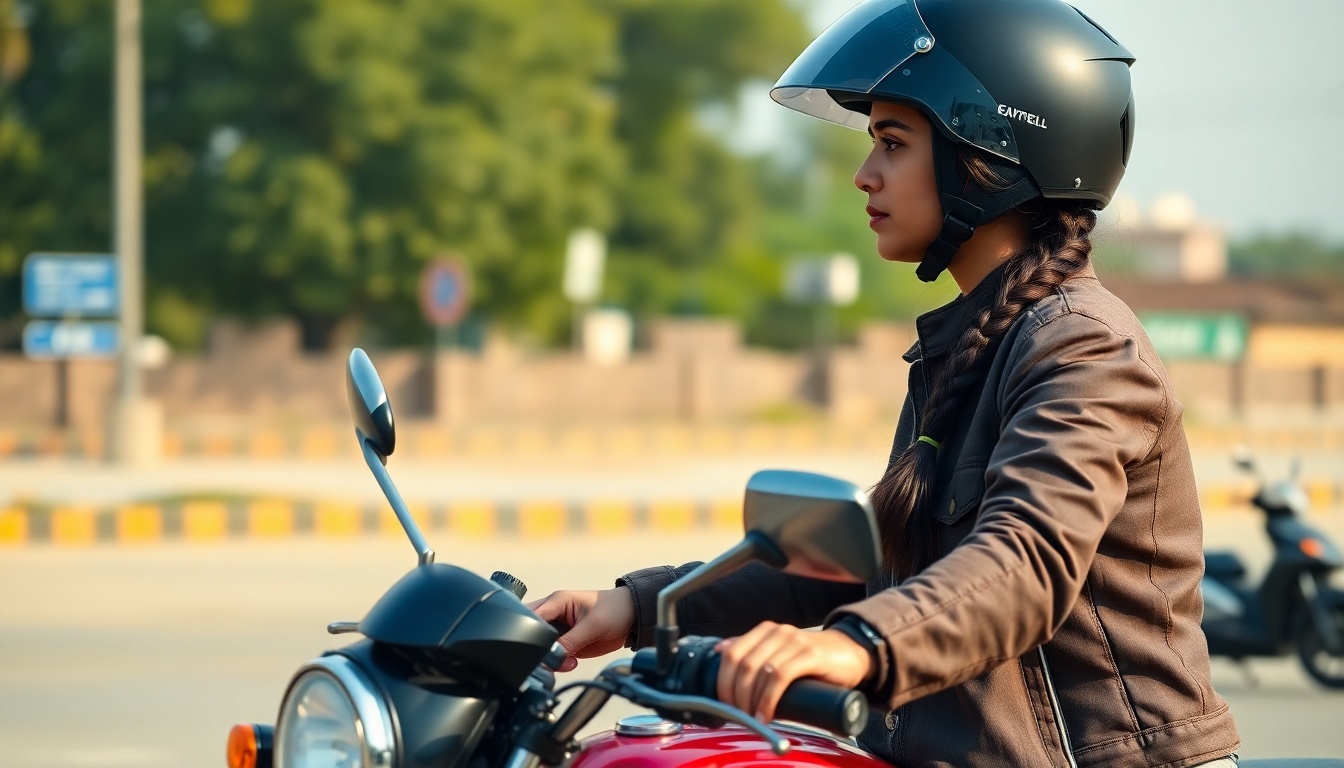
Quick Answer
Yes, you can start on a Royal Enfield, but you need specific training. A proper Royal Enfield beginner training India program focuses on mastering the bike’s weight and torque before you hit traffic. At Throttle Angels, our structured 12-hour course has helped over 500 new riders build the confidence to handle their Bullet or Classic 350 safely.
I see it every weekend at our training grounds. A brand new Royal Enfield, gleaming in the sun, and a proud owner standing beside it with a mix of excitement and pure fear. They’ve just bought the bike of their dreams. But they’re scared to start it.
Here is the thing about a Royal Enfield. It’s not just a motorcycle in India. It’s an emotion, a legacy you’ve seen your uncle or a movie hero ride. But that emotional buy often skips a crucial step: proper Royal Enfield beginner training India. You don’t learn to handle 190 kilograms of metal and that low-end torque by just “taking it slow on empty roads.”
Look, I love these machines. I’ve toured the Himalayas on them. But I have also seen what happens when respect for the machine is missing. That’s why this training isn’t a luxury. It’s your first and most important upgrade.
Why Most Riders Get Royal Enfield beginner training India Wrong
Here is what most new riders get wrong about starting on a Royal Enfield. They think the challenge is the power. It’s not. A 350cc engine isn’t a rocket. The real risk is the weight and the slow-speed handling.
I have seen this mistake cause accidents dozens of times. A rider stops at a slightly angled intersection in Bangalore traffic. Their foot slips on a patch of gravel or oil. That gentle lean suddenly becomes a 190 kg bike heading for the ground, and they don’t have the technique to catch it or safely let it go.
Another common error? Using the clutch like it’s on a 150cc commuter bike. That long, heavy clutch pull on a Royal Enfield is different. New riders often stall in panic, right when they need to move quickly to avoid a merging auto-rickshaw. They blame the bike. The problem is the training.
The worst assumption is that a friend can teach you in a parking lot. Your friend might be a great rider, but they are not a trained instructor. They won’t know how to break down the counter-steering drill you need for that weight, or the proper way to trail brake into a wet Pune corner.
Last month, a software engineer named Arjun came to our Bangalore campus. He had just taken delivery of a Chrome Classic 350. He told me, “Sir, I rode it home from the showroom and my legs were shaking for an hour.”
We started with the bare basics: just walking the bike. Not riding, just using your hips and legs to rock it forward and back. Feeling its center of gravity. By the third session, he was doing tight figure-eights with more control than most riders have after a year. The smile on his face when he executed a perfect emergency stop without a wobble? That’s why we do this.
What Actually Works on Indian Roads
Let’s talk about what actually works. It starts before you even turn the key. Your body position on a Royal Enfield is everything. You don’t just sit on it. You wear it. Your back should be straight, arms relaxed, and your feet must be planted firmly on the pegs the moment you’re moving.
Here is a drill we do with every single beginner. We deflate the cones and have them ride over them at walking pace. Sounds silly, right? It teaches you how the bike reacts to uneven surfaces—like potholes or broken tar—without throwing you off. You learn to let the handlebars move in your hands while keeping your body still.
Braking is another critical piece. That front disc brake is powerful. Jam it with bad posture, and the weight transfer will try to stand the bike up or worse, lock the front. The trick is to squeeze the brake lever like you’re squeezing an orange. Progressive pressure. And always, always cover the rear brake with your foot in city traffic.
Look, Indian traffic is a negotiation. You need to claim your lane. On a light bike, you can dodge. On a Royal Enfield, you plan. This means looking 12 seconds ahead, not 3. See that bus ahead that might swerve? See that pedestrian on the edge of the road? You start your response early, with gentle inputs.
The single most important skill? Slow-speed control. Mastering the friction zone of the clutch while adding a tiny bit of rear brake. This gives you rock-solid stability while crawling in traffic or doing a U-turn on a narrow market road. This isn’t intuitive. It’s a practiced technique that becomes muscle memory.
Finally, you must practice the drop. We teach a controlled, graceful lay-down. Because if your bike is going down, you need to get your legs out of the way and let it go. Fighting a falling Enfield is a sure way to a broken ankle or a crushed leg. Knowing how to fall minimizes damage to you and the bike.
A Royal Enfield forgives many mistakes on an open highway. It forgives none in chaotic city traffic. The training isn’t about learning to ride. It’s about learning to survive the first six months.
— Throttle Angels Instructor Team
Beginner vs Trained Rider Comparison
| Aspect | What Beginners Do | What Trained Riders Do |
|---|---|---|
| Slow Speed & U-Turns | Stare at the front wheel, stiffen arms, panic if the bike leans. Often put a foot down or stall. | Look through the turn, use clutch friction zone and light rear brake for balance. Execute smoothly in a 3-meter space. |
| Sudden Obstacles | Grab a handful of front brake, causing a skid or a dangerous wobble due to weight transfer. | Apply progressive front brake while keeping body weight back, ready to modulate or release if needed. |
| Heavy Traffic | Stay in low gear, ride the clutch constantly, leading to overheating and rider fatigue. | Use short bursts in 1st or 2nd gear, then neutral and brakes when stopped, managing clutch heat. |
| Hill Starts | Roll backwards, panic-rev, and either stall or lurch forward uncontrollably. | Use rear brake to hold position, find friction zone, release brake as they smoothly apply throttle. |
| Mental Focus | Fixated on the vehicle immediately in front, reactive riding. | Scanning 10-12 seconds ahead, planning escape routes, and riding proactively. |
Adapting to Indian Road Conditions
Book Your Trial Session Today!
Ready to master the roads of Bangalore or Pune? Join India’s premier motorcycle driving school.
Training Available in Bangalore & Pune
Book Your Trial Session Today!
Ready to master the roads of Bangalore or Pune? Join India’s premier motorcycle driving school.
Training Available in Bangalore & Pune
Indian roads are a separate subject. You have perfect tarmac, then without warning, a patch of sand, gravel, or a crater-sized pothole. On a light bike, you swerve. On a Royal Enfield, you must learn to ride over it.
The technique is to stand slightly on your pegs, loosen your grip, and let the bike move beneath you. You become a shock absorber. If you’re stiff, the bike will fight you and can easily get deflected into a worse path.
Monsoons are another beast. Those wide, classic tires can hydroplane. You need to increase following distance dramatically and smooth out every input—braking, acceleration, steering. A sudden move on wet paint or metal manhole covers can be disastrous.
Highway riding brings crosswinds. A big, heavy bike with a classic shape acts like a sail. A gust from a passing truck doesn’t just push you, it can initiate a weave. You counter it not by fighting the handlebar, but by leaning your body slightly into the wind and relaxing your arms.
Frequently Asked Questions
Is a Royal Enfield too heavy for a complete beginner?
It can be, if you try to learn alone. That’s the point of training. We build your skill and strength progressively, starting with weight management drills, so the bike feels manageable within the first few hours. The weight becomes an advantage for stability, not a fear.
What’s the most important skill for Royal Enfield city riding?
Slow-speed control and clutch modulation. If you can walk your bike in a tight circle without putting a foot down, you can handle 90% of city traffic situations. This is the core of our beginner curriculum.
Do I need to buy the bike first, or can I train before?
Train first. We provide Royal Enfields for our courses. It’s better to make your initial mistakes on our bikes in a controlled area. Then, when you take delivery of yours, you’ll ride it home with confidence, not fear.
How much does Throttle Angels training cost?
Our courses start at competitive rates with flexible packages. Call Rajkumar at 9535350575 or Arun at 8169080740 for current pricing and batch schedules in Bangalore and Pune.
How long is the typical beginner course?
Our foundational Royal Enfield course is 12 hours, usually spread over two weekends. This gives you time to practice between sessions and build muscle memory. It’s comprehensive, not rushed.
Look, that dream of the open road on your Enfield is absolutely within reach. But the road to that freedom is paved with deliberate, proper practice. Don’t let your first big ride be the one where you learn a hard lesson.
Respect the machine. Invest in your skills. The bike is built to last a lifetime. Make sure your riding journey does too. See you on the training ground.
Book Your Trial Session Today!
Ready to master the roads of Bangalore or Pune? Join India’s premier motorcycle driving school.
Training Available in Bangalore & Pune