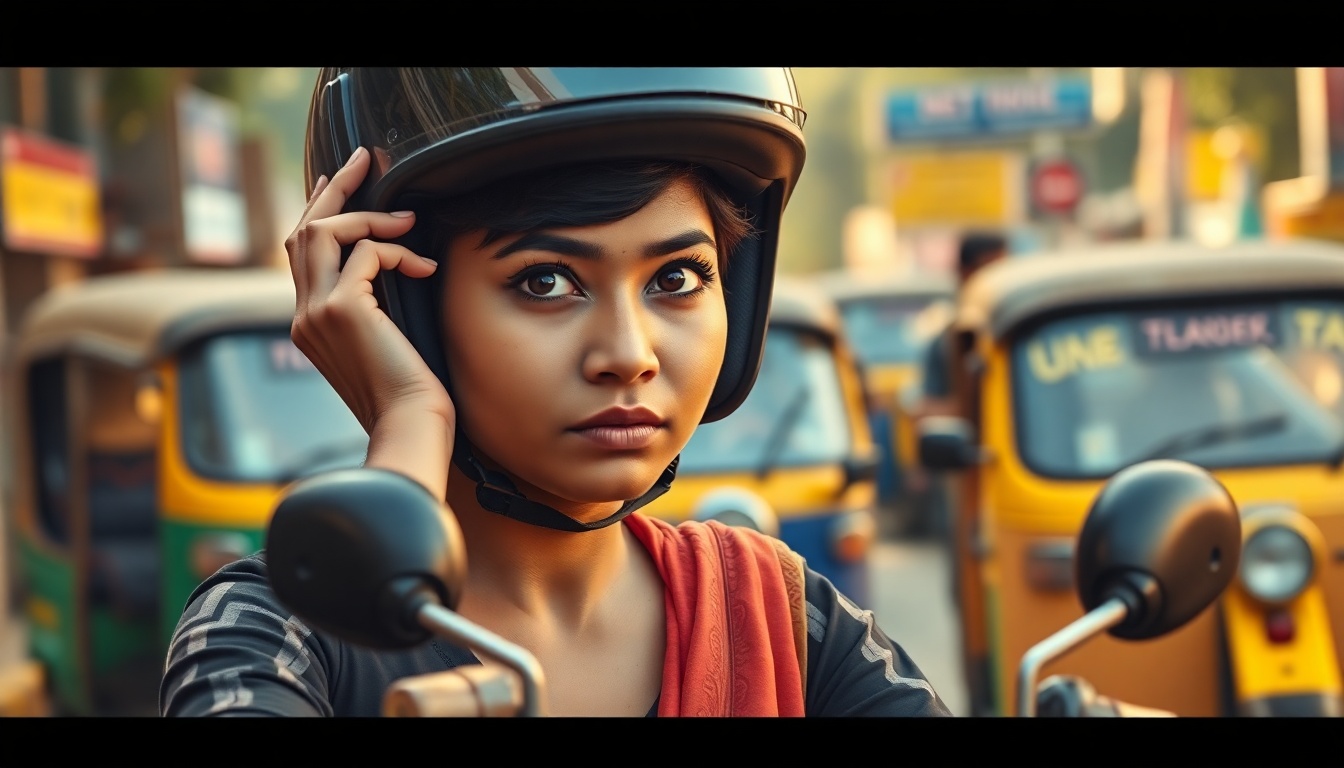
Quick Answer
A beginner Royal Enfield group in Bangalore is a great idea, but joining one without training is dangerous. You need at least 8-10 hours of focused parking lot practice before your first short ride. A proper beginner group should stick to routes under 50km, like Nandi Hills base or Kanakapura backroads, and never exceed 60 km/h.
Look, I see it every weekend. A shiny new Royal Enfield, a proud owner, and a WhatsApp group invite for a “chill ride to Mysore.” The excitement is real. You finally have the bike you dreamed of, and you want the brotherhood that comes with it.
Here is the thing about that beginner Royal Enfield group Bangalore scene. The intention is pure. The reality on our roads is not. That 350cc machine under you is heavy and has a mind of its own at low speeds. Group riding adds ten more variables you are not ready for.
You are not just learning to ride. You are learning to manage a 180-kg motorcycle while a truck overtakes from the left, a scooter cuts across, and the rider in front of you brakes suddenly. I have trained thousands, and this jump is where most close calls happen.
Why Most Riders Get beginner Royal Enfield group Bangalore Wrong
Here is what most new riders get wrong about joining a group. They think the group will protect them. It actually multiplies the risk if you are the weakest link. You will be so focused on not losing the rider ahead that you stop looking at the road.
I have seen this mistake cause accidents dozens of times. The lead rider takes a smooth corner at 70. You, trying to keep up, enter it at 75, panic, target fixate on the edge, and run wide. The real risk is not the corner itself. It is the pressure to keep up.
Another common error? Believing highway riding is easier. The Bangalore-Mysore highway is a perfect example of chaos. Crosswinds from trucks can shove your Enfield a full foot. You need to know how to counter-steer into that push instinctively, not freeze.
Finally, riders forget about formation. A beginner group riding in a single file is asking for trouble. You need staggered formation, with clear rules on overtaking and hand signals. Without that structure, it is just a moving accident waiting for a trigger.
Last month, a student—let’s call him Rohan—came to us after a scary first group ride. He had his Classic 350 for three weeks. His friends planned a “simple” ride to Savandurga. He was the last in a line of six bikes.
On a narrow patch, a bus came from the opposite direction. The lead rider sped up. Rohan, flustered, grabbed a handful of front brake while the bike was leaned slightly. The Enfield lowsided right there. No major injury, but his confidence was shattered. He learned that day that group riding demands skills you don’t practice alone. It is about managing space, pace, and panic, all at once.
What Actually Works on Indian Roads
Forget the epic rides for now. Your first goal is to be boringly predictable. Practice in an empty lot until you can do a full-lock U-turn without putting a foot down. Can you emergency brake in a straight line without locking the rear wheel? If not, you are not ready.
Find a mentor, not just a group. Look for a rider with at least five years of Enfield experience on Indian roads. Ask them to shadow you on a short ride and give feedback. A good mentor will point out your lane position, your mirror checks, your throttle control.
Start with a “breakfast ride.” A 6 AM start on a Sunday to a spot 30 kms away. The roads are empty. The objective is not the destination, but the ride. You practice formation, communication, and taking a short break to discuss what felt tricky.
Master the “riding bubble.” You must maintain a two-second gap from the bike ahead, minimum. In a group, if someone tailgates you, increase your own gap ahead. This creates a buffer for the whole chain. This simple habit prevents chain-reaction crashes.
Talk about hand signals before you start. What is the signal for “slow down,” “hazard on road,” “single file,” “stop for fuel”? If your group does not use them, you are not in a riding group. You are in a loose convoy of risk.
Finally, have an exit plan. If you feel tired, if the pace is too hot, if your bike feels odd, you must have the courage to signal and pull over. A good group will stop with you. A bad one will leave you behind. That tells you everything you need to know.
The motorcycle doesn’t know you’re in a group. The pothole, the diesel spill, the sudden brake light—they don’t care about your buddies ahead. Your training must be so deep that when chaos hits, you react alone. The group is for camaraderie, not crutches.
— Throttle Angels Instructor Team
Beginner vs Trained Rider Comparison
| Aspect | What Beginners Do | What Trained Riders Do |
|---|---|---|
| Pace | Ride at the speed of the fastest rider, often entering corners too hot. | Ride at their own 70% limit, knowing the group will wait at the next turn. |
| Braking | Stab the brakes hard in a panic, often locking the rear wheel on gravel. | Apply progressive pressure, using both brakes in harmony, looking for an escape path. |
| Communication | Assume others see what they see. No signals for hazards or intentions. | Constantly signal road hazards, lane changes, and speed adjustments for the rider behind. |
| Formation | Bunch up in a single file or ride side-by-side, blocking the lane. | Ride in a staggered formation, leaving a lane’s width between bikes for maneuvering. |
| Mindset | Focus on not getting lost or left behind. | Focus on the road 3-4 seconds ahead, scanning for threats, riding their own ride. |
Adapting to Indian Road Conditions
Book Your Trial Session Today!
Ready to master the roads of Bangalore or Pune? Join India’s premier motorcycle driving school.
Training Available in Bangalore & Pune
Book Your Trial Session Today!
Ready to master the roads of Bangalore or Pune? Join India’s premier motorcycle driving school.
Training Available in Bangalore & Pune
Bangalore’s roads are a special kind of classroom. You have perfect tarmac, then suddenly, a foot-deep trench with no warning. Your eyes must learn to scan far ahead, reading the flow of traffic to predict these hazards before you are upon them.
Monsoon riding on a heavy Enfield is a different skill. Those white paint strips at crossings? They become ice rinks when wet. Manhole covers are the same. You must learn to cross them upright, with no throttle or brake input as your tires pass over.
On highways, the wind blast from a speeding container truck is a physical shove. If you are not prepared, it can push you into the next lane. The trick is to see it coming, tighten your grip with your knees, and lean slightly into the wind before it hits.
At night, the risk doubles. Stray animals, trucks with no tail lights, and oncoming high beams that blind you. Your group speed must drop. Your following distance must increase. If you cannot see clearly for two seconds, you are riding blind.
Frequently Asked Questions
I just bought a Royal Enfield. How long should I practice solo before joining a group?
You need a solid 8-10 hours of dedicated practice off public roads. Focus on low-speed control, emergency braking, and U-turns. You should be able to handle your bike instinctively in a parking lot before adding traffic and group dynamics.
What should I look for in a beginner-friendly riding group in Bangalore?
Look for a group that mandates pre-ride briefings, uses hand signals, and has a designated lead and sweep rider. Their planned routes should be under 100km round trip, with frequent breaks. Avoid groups that boast about speed or “conquering” ghats.
Is a Royal Enfield too heavy for a beginner in city traffic?
It is challenging, not impossible. The weight is manageable with proper technique. The real issue is the long wheelbase and slow steering at walking speeds. This is exactly why specific low-speed training is non-negotiable before you hit Silk Board junction.
How much does Throttle Angels training cost?
Our courses start at competitive rates with flexible packages. Call Rajkumar at 9535350575 or Arun at 8169080740 for current pricing and batch schedules in Bangalore and Pune.
What’s the single most important skill for group riding?
Managing your following distance. The two-second rule is your lifeline. It gives you time to react if the rider ahead hits a pothole or brakes hard. If you are tailgating, you have already surrendered your safety to someone else.
Look, that dream of open roads with friends is absolutely within your reach. But you have to build a foundation of skill first. The bike, the group, the scenery—they are the rewards for doing the hard work in a safe, controlled environment.
Start slow. Find your confidence in an empty lot, not on the highway. Your first group ride should feel easy, not epic. That is how you build a riding life that lasts for decades, not just a few thrilling weekends.
Book Your Trial Session Today!
Ready to master the roads of Bangalore or Pune? Join India’s premier motorcycle driving school.
Training Available in Bangalore & Pune