Quick Answer
Advanced obstacle avoidance is about managing space, not just swerving. The key is creating a 3-second gap between you and the vehicle ahead. This gives you the time and distance to see a hazard, decide on a line, and execute a controlled maneuver without panicking.
I was watching a rider on the Bangalore-Hyderabad highway last week. He was good, smooth with his controls, keeping a steady pace.
Then a truck ahead shed a chunk of its retread. It bounced into his lane. What he did next is why we need to talk about real obstacle avoidance advanced motorcycle skills. He froze for a split second, then yanked the handlebar. The bike wobbled violently before he saved it, heart pounding loud enough for me to hear from my bike behind him.
That freeze and yank reaction is what gets people hurt. Here is the thing about obstacles on our roads—they are not the problem. Your programmed response is the problem. A dog, a pothole, a stray brick on the Mysore road at dusk. Your brain needs a better plan than panic.
Why Most Riders Get Obstacle Avoidance Wrong
Here is what most new riders get wrong about obstacle avoidance. They think it’s about lightning-fast reflexes. It is not.
The real risk is not the object itself. It is target fixation. You see that broken bottle in the middle of the lane in Pune traffic, and you cannot look away. Your bike goes exactly where you are staring. I have seen this mistake cause low-sides a dozen times.
Another common error is braking while swerving. You see the obstacle, you grab a handful of front brake, and you try to change direction. Physics hates that. Your bike wants to stand up and go straight, and you lose most of your steering control.
Finally, riders misjudge space. They focus only on the gap directly in front of the obstacle. They forget to check the space beside them. Is there a rickshaw in your blind spot? An overtaking car? You pick your escape route before you need it, not in the moment of crisis.
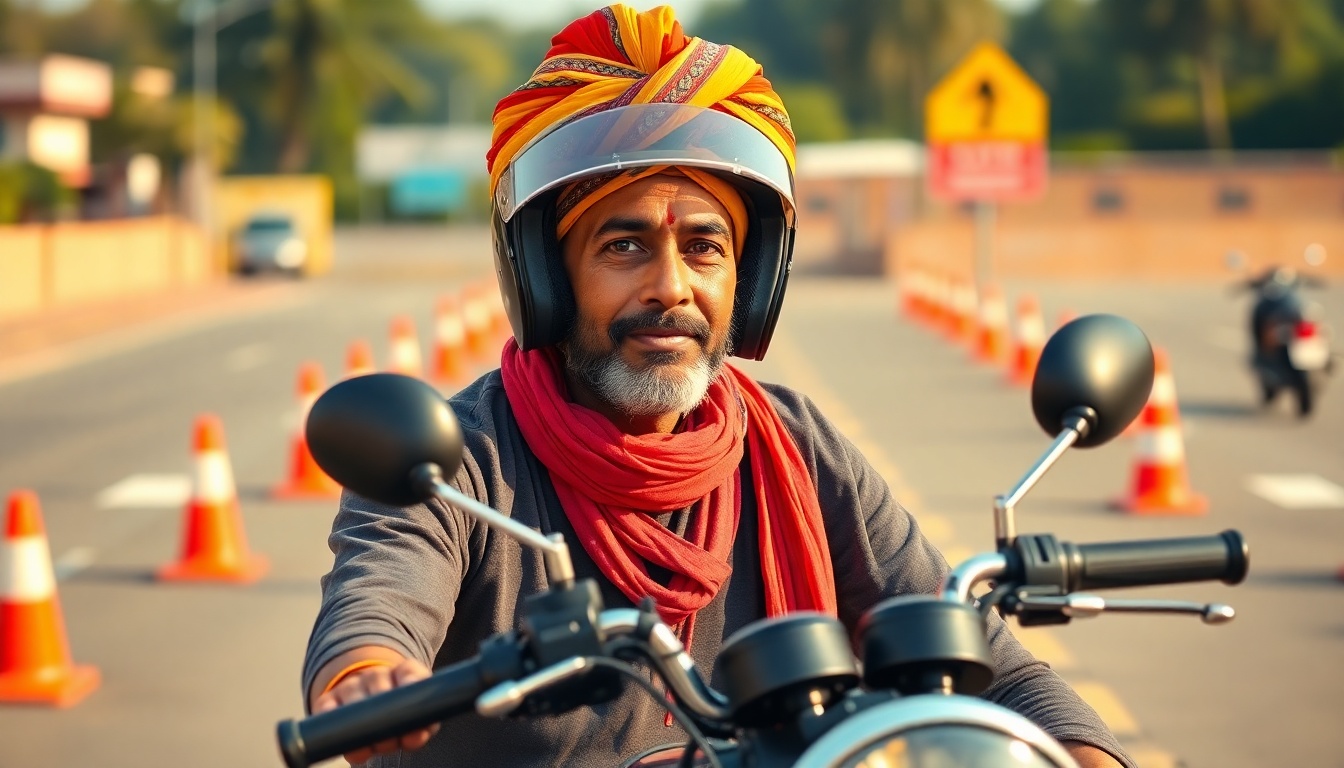
I remember a student, Vikram, on our advanced course track. We set up a cone as a simulated pothole. His first few runs, he’d stare at the cone, brake hard, and jolt the bike around it. He was using brute force, not technique.
We made him practice looking through the hazard, at the clear path beside it. We made him set his speed before the maneuver. By the tenth run, he was flowing around it without a twitch. He said it felt slower, but the timer showed he was two seconds faster. His body learned to let the bike do the work.
What Actually Works on Indian Roads
Look, the theory is simple. Separate your actions. Brake. Then turn. Or turn, then brake. Never both at the same time with maximum force.
On a clear, dry road, you brake in a straight line to shed speed. You get your braking done before you need to swerve. You look where you want the bike to go—your chin should point at the gap. Then you press forward on the handlebar in the direction you want to go. It is a push, not a pull.
What about when you have no time? Say a car suddenly doors you in Bangalore traffic. This is the real-world scenario. Here, you might need to swerve then brake.
The push on the handlebar gets you out of the immediate danger zone. Once you are clear and stable, you then apply the brakes to create distance. This sequence is everything.
Your body position matters more than you think. Stay loose on the bars. Grip the tank with your knees. A tense upper body transmits every shock directly into the steering, making the bike nervous. A relaxed body lets the bike move beneath you and recover.
Practice this in a safe lot. Use a painted line or a leaf as your “obstacle.” Get used to the feeling of pushing the bar quickly and firmly. It should feel like dodging a puddle, not fighting the bike.
Your eyes are your best avoidance tool. If you can see the hazard from 100 meters away, you have already won. Scan far ahead, identify your escape routes early, and your hands will follow what your eyes tell them.
— Throttle Angels Instructor Team
Beginner vs Trained Rider Comparison
| Aspect | What Beginners Do | What Trained Riders Do |
|---|---|---|
| Vision | Stare fixedly at the hazard directly in front of them. | Look past the obstacle at the clear path, using peripheral vision to track it. |
| Input Sequence | Brake and swerve simultaneously, overloading the tires. | Brake first in a straight line, then swerve, or swerve then brake. Actions are separated. |
| Body Position | Arms locked, death grip on the handlebars, body rigid. | Knees gripping tank, upper body relaxed, loose on the bars to allow steering input. |
| Space Management | Ride in the center of the lane, with limited escape options. | Position themselves in the lane to maximize visibility and have an escape route (left or right) always in mind. |
| Mindset | Reactive. Waits for the hazard to become a crisis before acting. | Proactive. Constantly scans 12-15 seconds ahead, identifying potential hazards and escape routes early. |
Adapting to Indian Road Conditions
Book Your Trial Session Today!
Ready to master the roads of Bangalore or Pune? Join India’s premier motorcycle driving school.
Training Available in Bangalore & Pune
Book Your Trial Session Today!
Ready to master the roads of Bangalore or Pune? Join India’s premier motorcycle driving school.
Training Available in Bangalore & Pune
Our roads demand a specific kind of awareness. You are not just avoiding static objects. You are avoiding moving potholes, unpredictable livestock, and vehicles that change lanes without warning.
During monsoons, your avoidance game changes completely. That innocent-looking puddle could be a wheel-bending crater. The real risk is not the water. It is the hidden damage underneath. Your only safe move is to treat every puddle as an obstacle and go around it.
On highways, the danger is fatigue and high-speed debris. Maintain that three-second gap religiously. It gives you time to see the shredded tire, the fallen branch, the slow-moving tractor without indicators.
In city chaos, your escape route is often a sliver of space. Practice slow-speed control and clutch work. Sometimes, the best avoidance is a controlled stop, not a swerve, especially when surrounded by autos and pedestrians.
Frequently Asked Questions
Should I use the front or rear brake during obstacle avoidance?
For maximum stopping power before a swerve, use both brakes, with emphasis on the front. But you must complete the braking while the bike is upright and straight. If you are already swerving, be very gentle with the brakes, especially the front.
What if there’s no space to swerve on a crowded street?
This is where prior positioning saves you. If you’re boxed in, your only option is to brake as hard as you can without locking up. This is why we train to never get “trapped” in traffic. Always leave yourself an out, even if it’s just a few feet of shoulder.
Does ABS help with obstacle avoidance?
Absolutely. ABS prevents wheel lock-up during panic braking. This means you can brake harder in a straight line before the swerve without losing control. It’s a fantastic safety net, but it doesn’t replace the need to look and steer correctly.
How much does Throttle Angels training cost?
Our courses start at competitive rates with flexible packages. Call Rajkumar at 9535350575 or Arun at 8169080740 for current pricing and batch schedules in Bangalore and Pune.
Can I practice these skills on my own?
You can start with the basics in a safe, empty lot. Use chalk marks or leaves as obstacles. But to ingrain the correct muscle memory under stress and get expert feedback, structured training is invaluable. It breaks your bad habits before they break you.
Think of these skills as your invisible armor. You hope you never need it, but it’s there, saving you from that one moment of chaos our roads throw at you.
Go find a safe space this weekend. Practice looking and pressing. Make that motion feel natural. Your future self, facing that sudden crater on a rainy night, will thank you for the rehearsal.
Book Your Trial Session Today!
Ready to master the roads of Bangalore or Pune? Join India’s premier motorcycle driving school.
Training Available in Bangalore & Pune