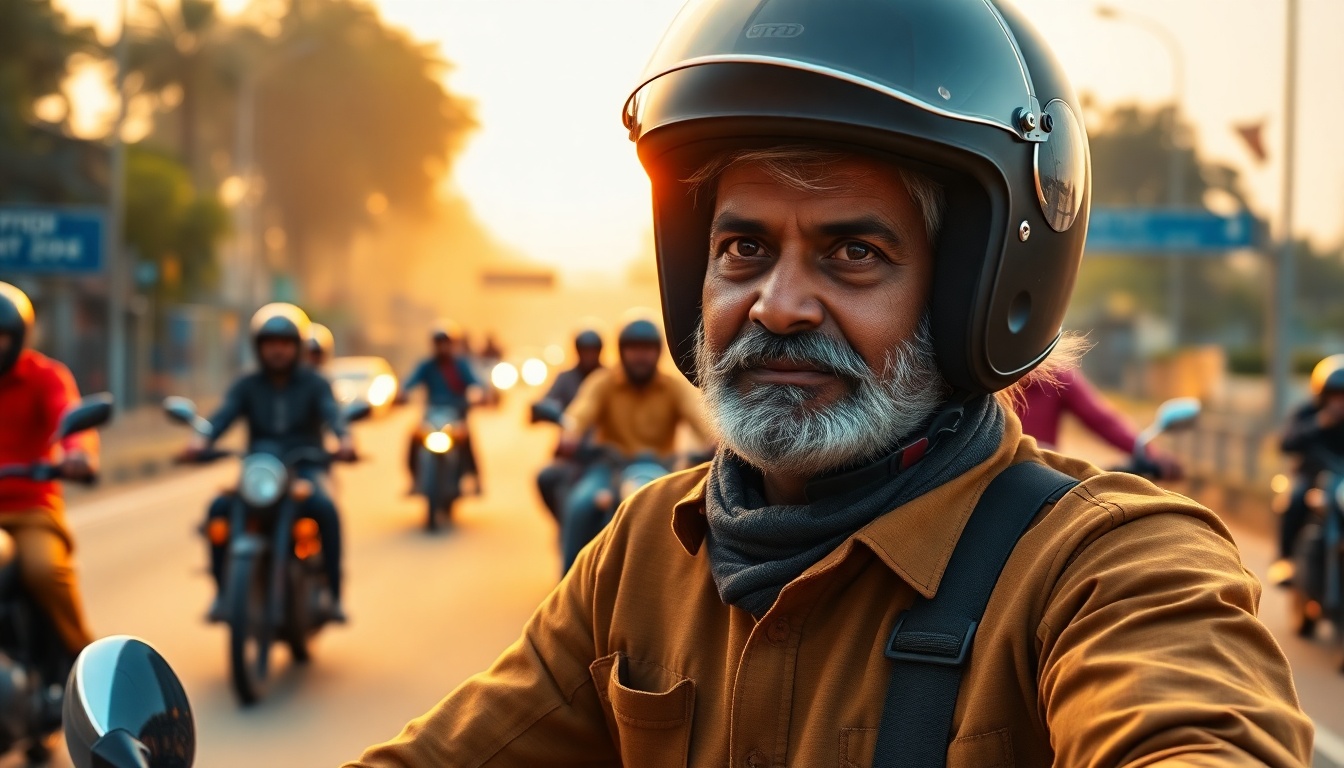
Quick Answer
An advanced group riding dynamics course teaches you to ride safely and efficiently in a pack, not just follow the leader. It focuses on communication, staggered formation discipline, and managing sudden road hazards as a single unit. At Throttle Angels, our 2-day intensive course covers everything from hand signals to emergency lane changes, preparing you for the unpredictable reality of Indian highways.
You know that moment on a group ride, maybe on the way to Coorg or Ladakh, when everything just clicks? The bikes flow like a school of fish through traffic. Everyone knows where to be. It feels smooth, safe, and connected.
That feeling is not luck. It is the result of practiced, advanced group riding dynamics. Most riders never get there. They think group riding is just about following the guy in front and not getting lost.
Here is the thing about an advanced group riding dynamics course. It is not about riding faster together. It is about riding smarter and safer as a single, breathing organism on chaotic roads. It is the difference between a convoy of individuals and a cohesive riding unit.
Why Most Riders Get advanced group riding dynamics course Wrong
Look, the biggest mistake is thinking you already know how to do this. You have been on ten rides with your buddies. You have a WhatsApp group. You think that is enough.
Here is what most new riders get wrong about group riding. They fixate on the tail light of the bike directly ahead. They become followers, not participants. Their world shrinks to that one red circle of light.
The real risk is not losing the group. It is becoming so tunnel-visioned that you miss the cow, the pothole, or the truck merging from the side. I have seen this mistake cause near-misses dozens of times on NH48.
Another common error? The “hero leader.” The fastest rider blasts ahead, leaving slower riders to panic and chase. This stretches the group over kilometers. It creates dangerous overtaking pressure. Now you have five riders trying risky passes to catch up, on a road with oncoming buses.
And communication? Forget it. A vague hand wave. A frantic pointing at a speed breaker after you have already hit it. Without clear, pre-decided signals, you are just hoping the rider behind figures it out. Hope is not a strategy on Indian roads.
I remember a session on the outskirts of Pune. We had a group of six experienced tourers. They were all strong solo riders. I asked them to ride in a simple staggered formation for five kilometers.
Within two minutes, the formation was a mess. The third rider was practically in the first rider’s lane. The last rider was half a kilometer back, stressed. When a tempo suddenly stopped ahead, the chain reaction was chaotic. That was their lightbulb moment. Individual skill meant nothing without group discipline.
What Actually Works on Indian Roads
Let us talk about what actually works. It starts before you even twist the throttle. A proper rider’s briefing is non-negotiable. You agree on hand signals for slowdown, hazard, fuel stop, and single file. You set the sweep rider—the most experienced person at the back.
The staggered formation is your best friend. But it is not rigid. The rider in the left track of the lane should be ahead, the next rider in the right track, behind them. This gives everyone an escape path and a clear view ahead, not just of the bike in front, but the road beyond.
Your primary focus should be two riders ahead. Not one. Watch the rider ahead of the guy directly in front of you. You will see their reactions first. You will see the brake light of the lead bike reflected in the posture of the second rider. This gives you precious extra seconds.
The leader’s job is not to be fastest. It is to be the most predictable. Smooth inputs. Early signals. Matching the pace to the weakest rider in the group. The sweep’s job is to ensure no one is left behind or in trouble.
What about overtaking? The group does not overtake. Individuals do. The lead rider finds a safe opening and goes. The next rider waits, finds their own safe opening, and follows. You never blindly follow a rider into an overtake. That is how multi-bike pile-ups happen.
And when chaos hits—a dog runs across, a crater appears—you compress the formation smoothly. You do not slam on brakes. You close the gaps gently, moving to single file if needed, communicating constantly. The group becomes tight and predictable, not scattered and panicked.
A good group ride isn’t measured by how fast you reached the destination. It’s measured by how little you surprised each other along the way. Your safety is in the hands of the rider behind you as much as the one in front.
— Throttle Angels Instructor Team
Beginner vs Trained Rider Comparison
| Aspect | What Beginners Do | What Trained Riders Do |
|---|---|---|
| Focus | Stare at the tail light of the bike immediately ahead. Reactive riding. | Scan 2-3 riders ahead and the road beyond. Proactive riding. |
| Overtaking | Follow the leader into the maneuver, creating a dangerous “train” of bikes. | Each rider assesses and executes their own safe overtake, one at a time. |
| Communication | Vague, improvised hand waves. Often too late. | Use pre-briefed, clear hand signals for hazards, slowdowns, and lane changes. |
| Pace | Ride at the limit of the fastest rider, dropping and stressing others. | Ride at the comfort level of the slowest rider. The group stays compact. |
| Emergency | Panic braking, causing a chain reaction. The group scatters. | Smooth, communicated compression of formation. The group moves as one unit. |
Adapting to Indian Road Conditions
Book Your Trial Session Today!
Ready to master the roads of Bangalore or Pune? Join India’s premier motorcycle driving school.
Training Available in Bangalore & Pune
Book Your Trial Session Today!
Ready to master the roads of Bangalore or Pune? Join India’s premier motorcycle driving school.
Training Available in Bangalore & Pune
Our roads are a special kind of classroom. You have to adapt the textbook rules. The staggered formation? It breaks down in city chaos. You need to seamlessly switch to single file when an auto-rickshaw decides to become a road divider.
Monsoons change everything. The gap between bikes must double. You cannot see through the spray of the bike ahead. Your signals need to be bigger, slower. And you must assume every painted line and manhole cover is as slippery as ice.
On single-lane highways with constant oncoming traffic, the group’s length is critical. If you stretch over 500 meters, you will never get a chance to overtake a slow truck together. The solution is patience. Overtake in smaller sub-groups when safe, then regroup later.
Night riding in a group requires its own protocol. No high beams on when following. Use them only when leading in clear traffic. The glare in mirrors blinds everyone behind you. This is basic courtesy that becomes critical safety in a pack.
Frequently Asked Questions
Is this course only for large touring groups?
No. The principles apply whether you are riding with one buddy or ten. The dynamics of communication, formation, and hazard management are the same. It makes every ride, even a short weekend trip, safer and less stressful.
What bike do I need for the course?
You need the bike you normally ride. We have had everything from Royal Enfield 350s to litre-class adventure bikes. The skills are transferable. It is about controlling your machine in relation to others, not about horsepower.
How much does Throttle Angels training cost?
Our courses start at competitive rates with flexible packages. Call Rajkumar at 9535350575 or Arun at 8169080740 for current pricing and batch schedules in Bangalore and Pune.
I am an experienced solo rider. Will I still learn something?
Absolutely. In fact, strong solo riders often have the most to unlearn. You are used to making decisions only for yourself. Group riding is about shared responsibility and predictability. It is a different skill set entirely.
What is the single biggest takeaway from the course?
You stop being just a rider. You become a member of a riding unit. Your awareness expands to protect not just yourself, but the riders ahead and behind you. That shift in mindset is what prevents accidents.
Think about your next big ride. Maybe it is to Spiti or down the Konkan coast. Now imagine doing it with a group where everyone is on the same page. Where a hand signal is understood instantly. Where no one is left behind or feels pressured.
That is the goal. It turns a stressful convoy into a journey you can actually enjoy. The road is unpredictable enough. Your riding partners should not be. Get the training, then go make those miles count, safely.
Book Your Trial Session Today!
Ready to master the roads of Bangalore or Pune? Join India’s premier motorcycle driving school.
Training Available in Bangalore & Pune