Quick Answer
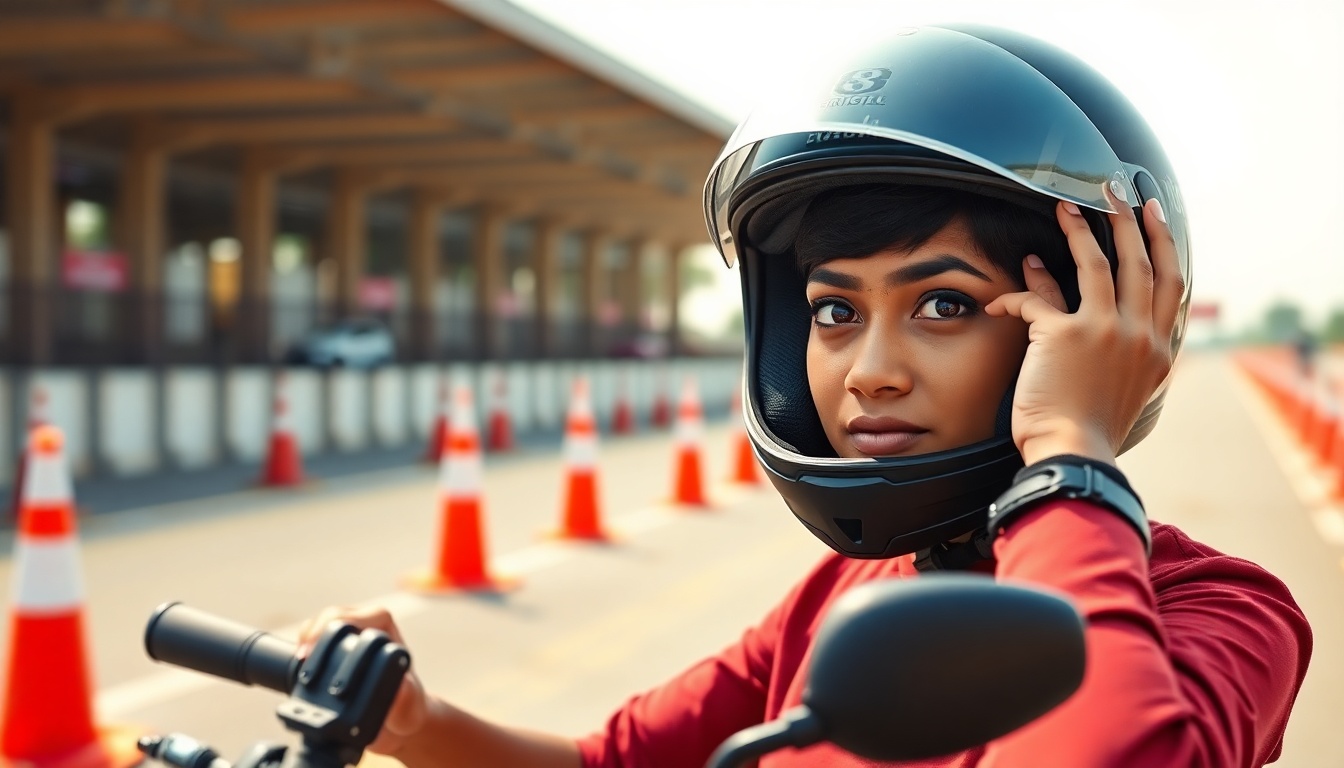
An advanced motorcycle decision making course teaches you to predict and react to danger before it happens. It moves beyond basic control skills to train your brain for the chaos of Indian roads. A proper course is 2-3 days of intensive, on-road drills designed to build instinct.
I see it all the time. A rider comes in, confident after a few years on the road. They can handle their bike well. They lean into corners, they brake smoothly.
Then I take them out on a busy Bangalore ring road. A bus suddenly swerves into their lane to avoid a pothole. A scooter cuts across three lanes without a glance. Their riding is technically fine, but their decisions are a split-second too slow. That split-second is everything.
This gap between skill and judgment is exactly what an advanced motorcycle decision making course is built to close. It’s not about going faster. It’s about thinking faster, seeing further, and having a plan for when everything goes wrong. Because on our roads, it often does.
Why Most Riders Get advanced motorcycle decision making course Wrong
Here is what most new riders get wrong about decision making. They think it’s about reacting to what’s right in front of them. That’s a survival tactic, not a strategy.
The real risk is not the cow in the middle of the highway. It’s the truck behind you that might not stop in time because the driver is looking at his phone. I have seen this mistake cause near-misses dozens of times. You focus on the obstacle, not the domino effect it creates around you.
Another big one? Riders assume more experience equals better decisions. Not necessarily. Ten years of repeating the same bad habits just makes you confidently wrong. You might ‘feel’ the traffic, but you’re not systematically scanning for escape routes, predicting blind spots, or managing your lane position for maximum visibility and space.
Look, the most dangerous rider is often the one who just bought a big bike and thinks their reflexes will save them. They rely on speed to get out of trouble. On our congested roads, that’s a fantasy. Your primary tool isn’t horsepower. It’s foresight.
I remember a student, let’s call him Rohan. He was a skilled rider, commuting daily from Whitefield. He told me he never had a close call. During a drill, I asked him to narrate his thoughts aloud as we rode.
He was only commenting on things within 20 meters. “Car braking.” “Scooter slowing.” I pointed ahead to a junction 100 meters away where a tempo was approaching fast from a side road. He hadn’t even registered it. That tempo was the real threat. It could have pulled out, forcing the car in front of him to brake hard. He learned that day that his eyes were set too close. He was riding reactively, not proactively.
What Actually Works on Indian Roads
Here is the thing about our traffic. It flows like water. It finds gaps. Your job is to read the current and stay in the safe channel. This starts with your vision. You must look 12-15 seconds ahead. Not at the bumper in front of you.
Scan for patterns, not just objects. Is that group of pedestrians on the divider looking to cross? Is that auto-rickshaw driver’s head turned, about to change lanes without signaling? These are the data points that matter.
You must always have an escape route. This is non-negotiable. Are you riding next to a row of parked cars? Your escape route is gone. Move to a part of the lane that gives you an out—left or right. Position yourself so you’re visible in the mirrors of the vehicle ahead.
Manage your following distance. I know, in city traffic, someone will fill that gap. Let them. Create it again. That two-second buffer is your decision-making space. It’s the difference between a controlled stop and a panic grab at the brakes.
Finally, communicate your intent. Use your horn not as a shout, but as a polite “I am here.” A quick flash of your headlamp in the day. Make eye contact with that driver at the junction. Assume they haven’t seen you until you have proof that they have.
This isn’t a checklist you run through once. It’s a continuous loop. See, predict, plan, position, communicate. Over and over until it’s muscle memory for your brain.
Speed thrills, but judgment saves. The fastest part of your ride should be your thinking, not your right wrist. We train riders to see the story of the road unfolding three pages ahead, not just the word in front of them.
— Throttle Angels Instructor Team
Beginner vs Trained Rider Comparison
| Aspect | What Beginners Do | What Trained Riders Do |
|---|---|---|
| Vision & Scanning | Stare at the road directly ahead or at the vehicle immediately in front. Miss peripheral and distant hazards. | Use a systematic, wide-area scan. Constantly check mirrors, blind spots, and 12-15 seconds ahead for developing situations. |
| Lane Position | Ride in the center of the lane, often in the oil slick. Feel trapped by traffic on all sides. | Actively choose left, center, or right position to maximize visibility, create space, and maintain an escape route. |
| Following Distance | Tailgate to prevent others from cutting in. Have no time to react if the lead vehicle stops suddenly. | Maintain a 2+ second gap at all costs. Calmly re-establish it if someone merges in. This is their safety buffer. |
| Hazard Prediction | React to visible hazards only (a stopped car, a speed breaker). | Predict hidden hazards (a child behind that parked car, a vehicle about to run a red light from the cross road). |
| Mental State | Ride on autopilot or in a state of heightened stress/alertness that fatigues quickly. | Ride with focused awareness. The mind is actively processing, planning, and staying calm because it has a plan. |
Adapting to Indian Road Conditions
Book Your Trial Session Today!
Ready to master the roads of Bangalore or Pune? Join India’s premier motorcycle driving school.
Training Available in Bangalore & Pune
Book Your Trial Session Today!
Ready to master the roads of Bangalore or Pune? Join India’s premier motorcycle driving school.
Training Available in Bangalore & Pune
Monsoon riding changes everything. Your number one decision becomes traction management. You must identify where water will pool, where mud will wash onto the road, and where painted lines and manhole covers become slick ice.
On highways, the threat isn’t just speed. It’s monotony. Your mind can wander. You must consciously scan for changing wind patterns from overtaking trucks, debris in the road, and the fatigue of other drivers. Decide to take a break before you feel you need one.
In city chaos, your decision-making tempo must increase. But don’t let rush hour rush you. That’s when you need your escape routes and buffers the most. Watch for the “door zone” next to parked cars and the sudden U-turns from frustrated drivers.
At night, your vision is limited to your headlight beam. Your decisions must be more conservative. Slow down to a speed where you can stop within the distance you can see. Assume every unlit object on the roadside is alive and about to move.
Frequently Asked Questions
I’ve been riding for years. Do I really need a decision making course?
Absolutely. Experience can cement bad habits. A structured course exposes the gaps in your mental process you didn’t know were there. It’s about unlearning guesswork and learning a system.
Is this course mostly classroom theory or actual riding?
It’s heavily weighted towards on-road, real-world drills. We start with briefings to establish concepts, then immediately hit the road to practice them in controlled, progressively challenging scenarios with instructor feedback.
What bike should I bring? Is my 150cc commuter okay?
Bring the bike you ride most. The principles are the same whether you’re on a Splendor or a Harley. The goal is to train your brain, not test your bike’s limits. Familiarity with your own machine is key.
How much does Throttle Angels training cost?
Our courses start at competitive rates with flexible packages. Call Rajkumar at 9535350575 or Arun at 8169080740 for current pricing and batch schedules in Bangalore and Pune.
Will this course make my daily commute less stressful?
Yes, but not by making traffic disappear. It will make you feel more in control. When you have a plan and can predict chaos, it transforms stress into manageable focus. You’ll arrive feeling sharper, not drained.
Look, the goal isn’t to become a paranoid rider. It’s the opposite. It’s to build so much confidence in your ability to read the road and make good choices that you can actually enjoy the ride.
The open highway, the mountain curve, the city bustle—they all become more rewarding when you know you’re truly present and prepared. Your next ride is a chance to practice. Start by looking further ahead than you ever have before.
Book Your Trial Session Today!
Ready to master the roads of Bangalore or Pune? Join India’s premier motorcycle driving school.
Training Available in Bangalore & Pune