Quick Answer
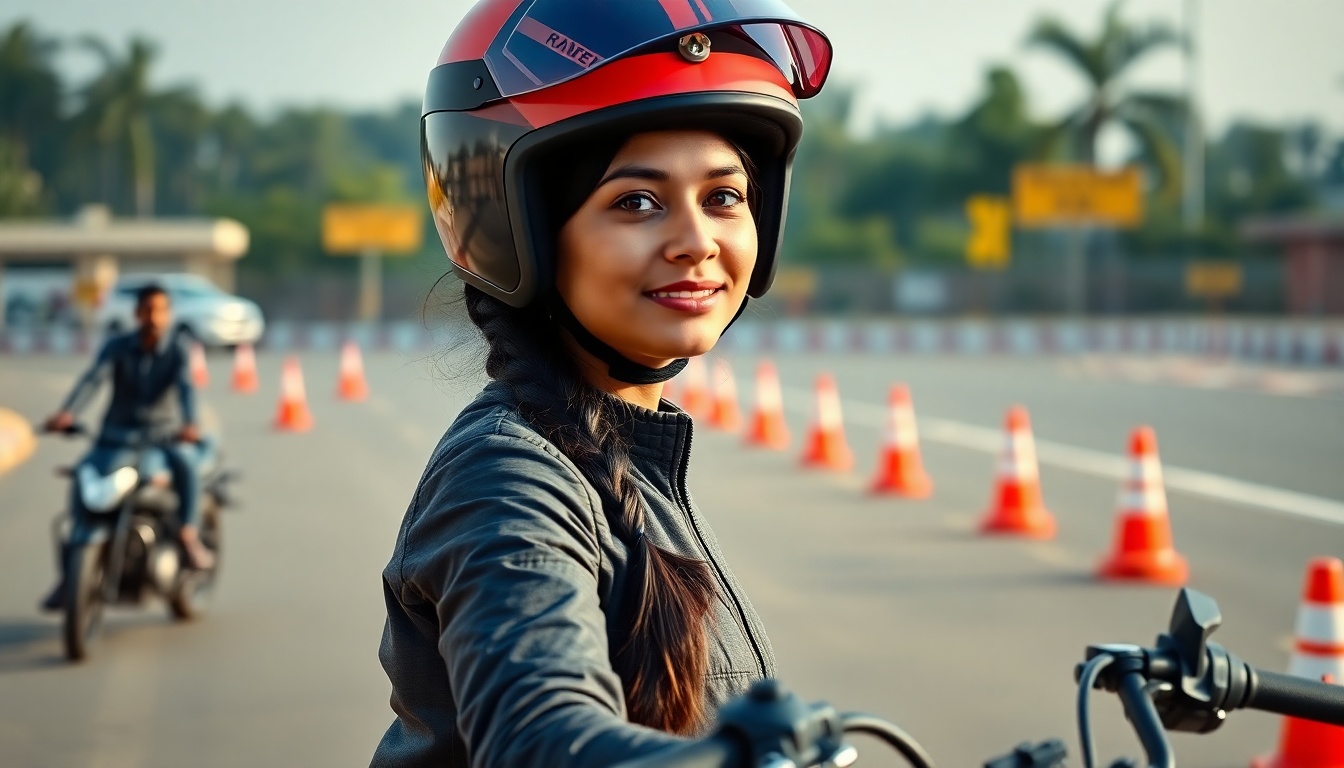
An advanced motorcycle control clinic is a focused, practical training session that moves beyond basic riding. It teaches you to handle your bike with precision in real-world chaos, not just on a perfect track. At Throttle Angels, our clinics are 8-hour intensive sessions where we break down complex skills like emergency braking and cornering into simple, repeatable actions.
You know that moment when you’re filtering through traffic on Outer Ring Road and a car door swings open? Your heart jumps into your throat. Your hands tighten on the bars.
That split-second reaction, that’s what we work on. Most riders buy a bigger, faster bike and think skill comes with kilometres. It doesn’t. Confidence without control is just luck, and on our roads, luck runs out fast. That’s the gap an advanced motorcycle control clinic is designed to fill.
I’ve watched riders with years of “experience” struggle to make a tight U-turn on a narrow Bangalore street. They have the miles, but not the mastery. The clinic is where we build that mastery, one controlled input at a time.
Why Most Riders Get advanced motorcycle control clinic Wrong
Here is what most new riders get wrong about advanced control. They think it’s about speed. They believe if they can ride fast on the Mumbai-Pune Expressway, they’re advanced riders.
The real risk is not high speed. It is low-speed uncertainty. I have seen this mistake cause accidents dozens of times. A rider panics at 25 km/h in wet market chaos, grabs the front brake, and the bike drops. The bike isn’t heavy. The technique is.
Another common error? Using only the rear brake. You were probably taught that on your basic test. On a wet, painted road divider or a dusty patch, that rear brake alone will not stop you. It will slide. You need both brakes, with precise pressure distribution.
Look, the biggest misunderstanding is that these skills are for the track. They’re not. That controlled swerve you practice in a clinic? That’s for the pothole that appears from under a truck on NH48. That throttle control drill? That’s for maintaining balance when a cow decides to amble across your path mid-corner.
I remember a student, Rohan. He rode a powerful adventure bike and had done solo trips to Ladakh. He came to a clinic almost as a formality. His first emergency braking drill was a shock.
He was fast, but his braking was all panic. The front wheel would chatter, the bike would stand up awkwardly. He admitted that on his trips, he’d just rely on engine braking and hope for the best. In two hours, we changed that. We worked on progressive pressure, on keeping his eyes up. By the end, his stops were shorter, straighter, and calm. He told me he’d never actually known how to stop his bike. Just how to go.
What Actually Works on Indian Roads
Forget racing lines. Let’s talk survival lines. On our broken, unpredictable tarmac, your primary focus is traction management. You must read the road surface like a book—fresh tar, old asphalt, spillages, metal covers.
Your throttle hand is your best safety device. Smooth inputs are everything. A jerky throttle over a patch of gravel on a corner exit will break traction. I teach riders to roll on the throttle as if they’re turning a delicate knob, not twisting a wrist.
Here is the thing about braking. You must practice it until it’s muscle memory. The goal is to use 100% of your bike’s braking power without activating the ABS, or if you don’t have ABS, without locking up. You find that threshold through feel.
Counter-steering is not a theory. It’s your escape tool. To swerve around an obstacle, you press forward on the handlebar grip in the direction you want to go. It feels counterintuitive, but it’s instant. We drill this until it’s your first reaction, not your last.
And your body position? It’s not about hanging off. It’s about staying loose. Grip the tank with your knees, keep your arms relaxed. A stiff rider fights the bike. A loose rider guides it. This is what actually works when the road throws chaos at you.
Advanced control isn’t about dominating your motorcycle. It’s about having a quiet conversation with it. When a bus cuts you off, you and your bike should react as one unit, without a single shouted command.
— Throttle Angels Instructor Team
Beginner vs Trained Rider Comparison
| Aspect | What Beginners Do | What Trained Riders Do |
|---|---|---|
| Emergency Braking | Stomp on the rear brake, freeze on the front, body goes rigid. Bike skids or stops inefficiently. | Apply progressive, firm pressure to front brake while supporting with rear, eyes up looking for escape. |
| Sudden Obstacle | Target fixate on the pothole or dog, brake in a straight line, hit the obstacle. | See the threat, press the handlebar to initiate a swift swerve, then counter-steer back to original line. |
| Slow-Speed Control | Feet dangling for balance, erratic clutch and throttle, bike feels unstable and heavy. | Feet on pegs, using rear brake drag and friction zone control to balance, bike feels light and manageable. |
| Cornering on Bad Roads | Slow down too much mid-corner, see debris, panic and sit upright or grab brake. | Set speed before the turn, look through the exit, maintain steady throttle to keep suspension settled over bumps. |
| Mental Approach | Rides reactively. Focus is on vehicles immediately around them. | Rides proactively. Scans 12-15 seconds ahead for surface changes, escape routes, and driver intentions. |
Adapting to Indian Road Conditions
Book Your Trial Session Today!
Ready to master the roads of Bangalore or Pune? Join India’s premier motorcycle driving school.
Training Available in Bangalore & Pune
Book Your Trial Session Today!
Ready to master the roads of Bangalore or Pune? Join India’s premier motorcycle driving school.
Training Available in Bangalore & Pune
Monsoon riding changes everything. Your first rain after a dry spell is the most dangerous. All the oil and grime rises to the surface. Treat those first 45 minutes like you’re riding on ice.
Highway riding here isn’t about cruising. It’s about managing fatigue and avoiding sleep-inducing monotony. Change your posture slightly every 30 minutes. Hydrate. And never, ever trust an oncoming vehicle to stay in its lane on a two-lane road.
In city traffic, your lane position is critical. Don’t ride in the centre of the lane where oil and coolant accumulate. Ride in the tyre tracks of cars. Your visibility to others is key—sometimes you need to be seen, other times you need to hide in blind spots.
At night, your speed should be limited to your headlight’s reach. If you can’t stop within the pool of light you see, you’re over-riding your vision. That’s a genuine danger with our unmarked speed breakers and stationary trucks.
Frequently Asked Questions
I’ve been riding for years. Do I really need an advanced control clinic?
Absolutely. Experience often reinforces bad habits. The clinic breaks those habits in a safe environment. We focus on the precise mechanics of control you likely never learned, which is different from just accumulating road miles.
What bike should I bring? Is my 150cc commuter okay?
Bring the bike you ride every day. Skills learned on a 150cc bike translate directly to a 650cc. It’s about technique, not displacement. Mastering control on a lighter bike often makes you a better rider on a heavier one.
Is the training done on a track or on real roads?
We use a controlled, closed training area—like a large parking lot or a dedicated training ground. This gives you the freedom to make mistakes and practice drills repeatedly without the danger of traffic. The skills, however, are 100% for real-road application.
How much does Throttle Angels training cost?
Our courses start at competitive rates with flexible packages. Call Rajkumar at 9535350575 or Arun at 8169080740 for current pricing and batch schedules in Bangalore and Pune.
What safety gear is required?
You must have a certified helmet, riding gloves, a jacket (riding or thick denim), full-length pants, and boots that cover your ankles. We can guide you on gear if you’re unsure. Your safety is non-negotiable.
Think of your skills as the one piece of riding gear you can never leave behind. Your helmet can be top-tier, your jacket armored, but without control, you’re vulnerable.
The goal is to make your reactions so practiced that they happen without thought. When that happens, you stop surviving your rides and start truly enjoying them. The road, with all its beautiful chaos, becomes a different place.
Book Your Trial Session Today!
Ready to master the roads of Bangalore or Pune? Join India’s premier motorcycle driving school.
Training Available in Bangalore & Pune