Quick Answer
Pro level swerve avoidance is not about jerking the handlebars. It is about a single, committed counter-steer input that takes less than 0.5 seconds to execute. You shift your weight, press the bar, look where you want to go, and the bike follows instantly.
I have been watching riders train at Throttle Angels for over a decade now. And there is one skill that separates the riders who stay upright from the ones who don’t.
It is not braking. It is not cornering. It is pro level swerve avoidance.
Here is the thing about Indian roads. You will face a truck that decides to turn without an indicator. You will see a pedestrian step out from behind a bus. You will hit a patch of gravel that was not there yesterday. In those moments, your brakes will not save you. Your ability to swerve will.
Why Most Riders Get pro level swerve avoidance Wrong
Most riders think swerving is about strength. They grip the bars tight, tense their shoulders, and try to muscle the bike out of the way.
I have seen this mistake cause accidents dozens of times. A rider spots a pothole at the last second. They panic. They yank the handlebar. The front wheel tucks. Or they overcorrect and go straight into the ditch.
The real risk is not the obstacle itself. It is your brain telling you to do the exact wrong thing in that split second.
Here is what most new riders get wrong about swerving. They think it is a steering input. It is not. It is a counter-steering input. You push the left bar to go left. You push the right bar to go right. Your bike does not turn because you lean. It turns because you counter-steer. The lean is a result, not a cause.
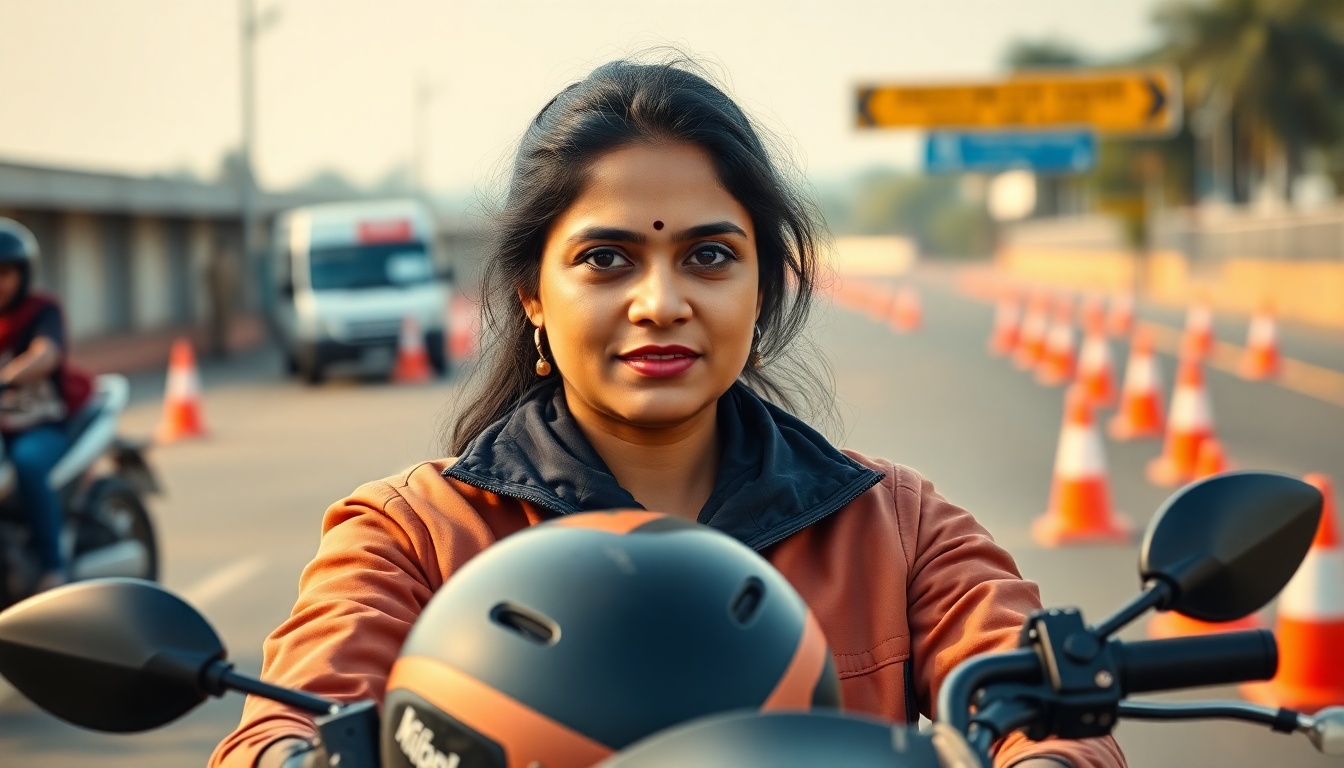
I remember a student in Bangalore. He was a software engineer. Bought a new KTM 390. First day of our advanced course. We set up a foam cone obstacle course on the training ground.
I asked him to ride towards a cone at 40 km/h and swerve around it at the last second. He froze. He grabbed the front brake. The bike stood up and went straight into the cone. He told me later that his brain just went blank.
That is the biggest lie we tell ourselves. We think we will react correctly in an emergency. But unless you have drilled the exact movement, you will do what every untrained rider does. You will freeze, brake, and crash.
What Actually Works on Indian Roads
Let me break down what pro level swerve avoidance looks like when you have done it a thousand times. First, your eyes. Your eyes must go where you want the bike to go. Not at the obstacle. Not at the truck. Not at the pothole. Look at the gap you want to ride through. Your bike goes where your eyes go. This is not a motivational quote. This is physics.
Second, your hands. You must be relaxed on the bars. A death grip will transmit every bump into your steering. It will also slow down your counter-steer input. Keep your elbows loose. Keep your wrists flat. You want to be able to press the bar forward without fighting your own tension.
Third, the press itself. When you need to swerve left, you do not turn the handlebar like a bicycle. You press forward on the left grip. A firm, deliberate push. The bike will lean left and turn left. It happens in a fraction of a second. If you need to swerve right, you press the right grip forward.
Fourth, body position. Shift your weight to the outside peg. If you are swerving left, put weight on your right foot peg. This keeps the bike stable and gives you more traction. It also stops you from panicking and putting a foot down, which is how people break ankles.
Fifth, the recovery. After you swerve, you need to bring the bike back upright. That means a counter-steer input in the opposite direction. Push the right bar to bring the bike back from a left swerve. Do not just let go and hope the bike straightens itself. You control the bike. The bike does not control you.
Here is the real secret. Pro level swerve avoidance is not one movement. It is two movements. Swerve. Then recover. Most riders only practice the first one. They can dodge an obstacle, but then they run wide into the next lane. That is how you trade one accident for another.
“The moment you look at the obstacle, you have already hit it. Pro level swerve avoidance is about training your eyes to ignore the danger and find the escape. That is the hardest skill to teach and the most important one to learn.”
— Throttle Angels Instructor Team
Beginner vs Trained Rider Comparison
| Aspect | What Beginners Do | What Trained Riders Do |
|---|---|---|
| Reaction to Obstacle | Grab brakes, freeze, stare at the hazard | Scan for escape path, commit to counter-steer |
| Grip on Handlebars | White-knuckle death grip, arms locked | Loose elbows, relaxed wrists, ready to press |
| Steering Input | Yank handlebar like a bicycle, overcorrect | Firm counter-steer press, committed and smooth |
| Body Weight | Lean into the swerve, shift weight incorrectly | Weight on outside peg, stable and planted |
| Recovery | No plan, run wide or wobble after swerve | Immediate opposite counter-steer, controlled line |
Adapting to Indian Road Conditions
Book Your Trial Session Today!
Ready to master the roads of Bangalore or Pune? Join India’s premier motorcycle driving school.
Training Available in Bangalore & Pune
Book Your Trial Session Today!
Ready to master the roads of Bangalore or Pune? Join India’s premier motorcycle driving school.
Training Available in Bangalore & Pune
Indian roads are not a racetrack. You have unpredictable variables everywhere. A cow sleeping in the middle of a highway. A speed breaker with no paint. A truck unloading bricks on a blind corner. Your swerve technique must account for these realities.
In the monsoon, the road surface changes every kilometer. Wet paint, oil patches, standing water. Your traction is lower. Your swerve must be smoother. A sudden counter-steer on a painted white line in the rain will send you sliding. You need to feather the input, not hammer it.
On highways, the danger is speed differential. A Tata Ace moving at 30 km/h in the fast lane. You are doing 80. Your closing speed is 50 km/h. You have maybe two seconds to decide. Brake and swerve. Or just swerve. The trained rider knows that braking first compresses the front suspension, which actually improves your ability to counter-steer. But only if you release the brake before you turn.
In city traffic, the obstacles are smaller and faster. A kid running after a ball. An auto rickshaw cutting across three lanes. Your swerve here is tighter. You do not have space for a big arc. You need a quick left-right-left that takes you around the obstacle and back into your lane within the width of a single car. That takes practice on a closed ground, not on the road.
Frequently Asked Questions
Can I swerve safely while braking?
Yes, but only if you separate the inputs. Brake hard in a straight line first, then release the brake and swerve. Trying to brake and swerve at the same time will overwhelm your front tire and cause a lowside crash.
What is the maximum speed for an emergency swerve?
On a dry road with good tires, a trained rider can swerve safely at up to 80 km/h. Beyond that, the forces become difficult to manage. At highway speeds over 100 km/h, your best option is usually braking combined with a very gentle steering input.
Does ABS help with swerving?
ABS helps with braking, not swerving. It prevents wheel lockup during braking. But the swerve itself is a steering maneuver. ABS will not help you counter-steer better. That is a skill you have to practice.
How long does it take to learn pro level swerve avoidance?
Most riders get the basics in a single training session of about two hours. But true muscle memory takes about 20 to 30 repetitions spread over multiple sessions. That is why we include swerve drills in every advanced course at Throttle Angels.
How much does Throttle Angels training cost?
Our courses start at competitive rates with flexible packages. Call Rajkumar at 9535350575 or Arun at 8169080740 for current pricing and batch schedules in Bangalore and Pune.
Look, I have been riding for over twenty years. I have crashed exactly twice. Both times were because I did not swerve. I froze. I grabbed the brake. I went down. That is why I teach this skill with so much focus.
Your bike can dodge almost anything if you let it. The bike is capable. The question is whether you are. Go find a safe empty space. Set up a cone. Practice your counter-steer at 30 km/h. Then 40. Then 50. Drill it until your hands move before your brain even finishes the thought. That is pro level swerve avoidance. That is what keeps you on two wheels.
Book Your Trial Session Today!
Ready to master the roads of Bangalore or Pune? Join India’s premier motorcycle driving school.
Training Available in Bangalore & Pune