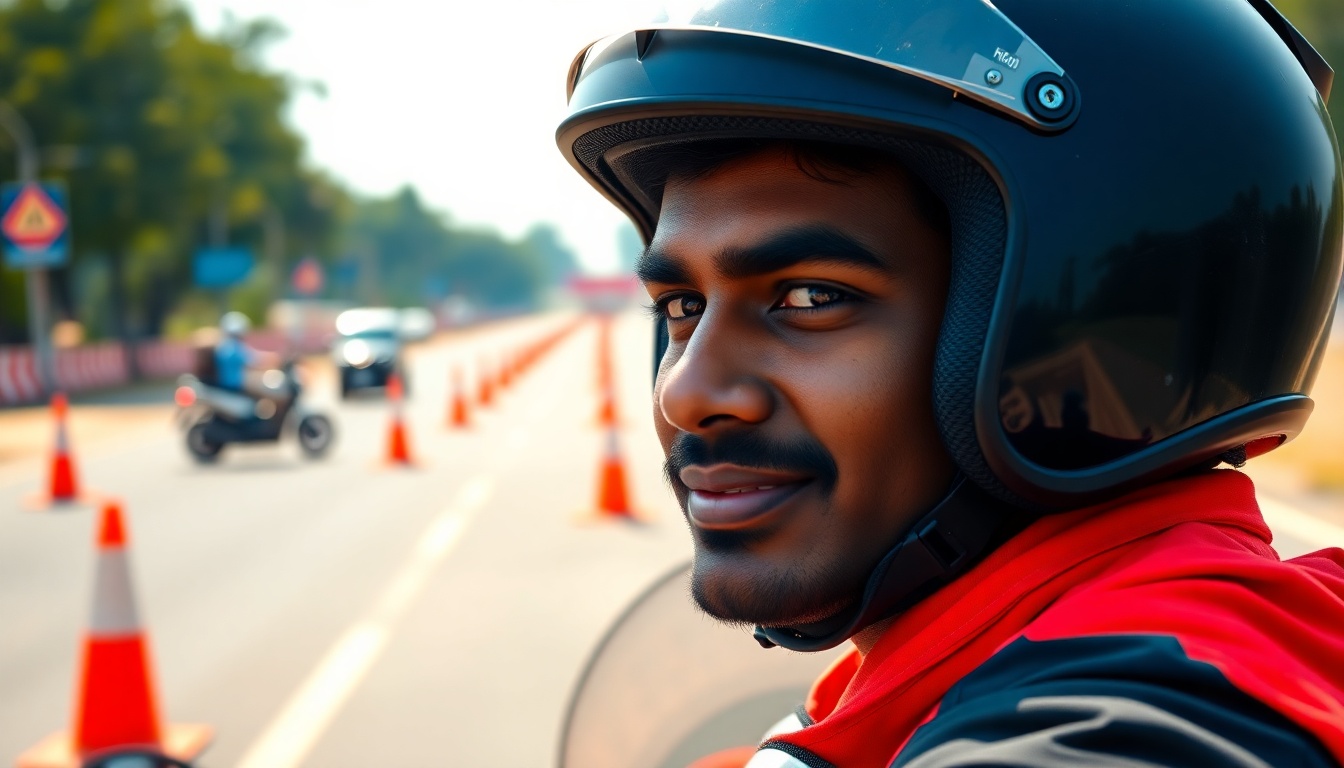
Quick Answer
Advanced cornering line selection advanced means choosing your turn-in point so you hit the apex about 70% of the way through the corner, not the middle. This gives you maximum visibility of the exit and a safety buffer for unexpected obstacles like sand, potholes, or a stalled autorickshaw.
I was watching a rider at one of our Throttle Angels sessions last month on the Nandi Hills road. He was fast, no doubt. But every corner looked like a fight. He would turn in early, scrub too much speed mid-corner, and then panic when the road tightened. His line was a mess.
That is when I realized he had never been taught advanced cornering line selection advanced. He was riding by instinct, and instinct on Indian roads will put you into a ditch or worse. Here is the thing about cornering lines — they are not just for racetracks. They are survival tools.
Most riders think cornering is about leaning the bike. It is not. It is about where you place your front wheel and when. Get the line right, and the lean angle takes care of itself. Get it wrong, and you are fighting physics all the way to the hospital.
Why Most Riders Get advanced cornering line selection advanced Wrong
The biggest mistake I see is what we call “early apexing.” Riders turn into the corner too soon. They aim for the inside curb or the inner edge of the road. In their head, this feels fast because they are pointing the bike towards the exit early.
But here is the reality. When you hit the apex early, you are committed to a line that forces you to stand the bike up while still turning. That means you are either running wide on the exit or you have to brake mid-corner. Both are terrible options.
I have seen this mistake cause accidents dozens of times on the Mumbai-Bangalore highway. A rider turns in early, finds a patch of gravel at the apex, and has no room to adjust. They either low-side or end up in oncoming traffic. The real risk is not the corner itself. It is the lack of options you have when you commit too early.
Another common error is looking at the kerb or the edge of the road. Your bike goes where your eyes go. If you stare at the drain on the left, you will ride into the drain. Advanced cornering line selection advanced starts with your vision, not your hands.
I remember a student named Vikram who came to us after a scary crash near Lonavala. He was on a 650cc bike, confident, and had been riding for three years. He told me he always “trusted his instincts” in corners. His instincts almost killed him.
We took him to a closed stretch of road and had him practice late apexing. The first few attempts were awkward. He kept turning in too early because his brain was screaming at him to get the bike pointed at the exit. But after twenty repetitions, something clicked. He realized that waiting that extra half-second gave him a view of the entire exit. He could see the road surface, the cars, the debris. He had control. He later told me it was the first time he felt “safe” in a corner.
What Actually Works on Indian Roads
Let me break down the technique that actually works for advanced cornering line selection advanced. It is based on a simple principle: delay your turn-in point. Instead of turning when you first see the corner entrance, wait until you can see the exit.
Here is the sequence. As you approach the corner, brake in a straight line. Get your speed set before you even think about leaning. Position your body to the outside of the corner — your head should be where your mirror was a moment ago. Then, and only then, turn your head and look through the corner to where you want to exit.
Your hands will follow your eyes. This is not a tip. This is a physiological fact. If you look at the gap between two cars, your hands will steer the bike there. If you look at the exit of the corner, your bike will go there. Advanced cornering line selection advanced is 80% vision and 20% steering input.
Now, about the line itself. On a right-hand corner, start from the left third of your lane. On a left-hand corner, start from the right third. This gives you the maximum radius for your turn. A larger radius means you can carry more speed with less lean angle. Less lean angle means more tire contact patch and more grip.
Hit your apex late — about 70-75% through the corner. This means you are still turning as you pass the geometric center of the curve. The benefit is enormous. You can see the entire exit road before you commit to opening the throttle. If there is a stalled truck or a herd of goats, you still have room to tighten your line or straighten up and brake.
One more thing. In the wet, which is half the year in Bangalore and Pune, you need to be even more patient. Wet roads reduce your grip by about 40%. Move your turn-in point even later. Give yourself a bigger safety margin. Advanced cornering in the rain is about survival, not style.
“Most riders think cornering is about leaning the bike. It is about where you place your front wheel. Get the line right, and the lean angle takes care of itself. Get it wrong, and you are fighting physics all the way to the hospital.”
— Throttle Angels Instructor Team
Beginner vs Trained Rider Comparison
| Aspect | What Beginners Do | What Trained Riders Do |
|---|---|---|
| Turn-in Point | Turn early, often at the first sight of the corner | Delay turn-in until they can see the exit clearly |
| Apex Position | Hit the apex at 40-50% of the corner | Hit the apex at 70-75% of the corner |
| Vision Focus | Stare at the road edge or the kerb | Look through the corner to the exit point |
| Body Position | Stay centered or lean with the bike | Move upper body to the inside, head low |
| Braking Zone | Brake while leaned over or too late | Finish all braking in a straight line before turn-in |
Adapting to Indian Road Conditions
Book Your Trial Session Today!
Ready to master the roads of Bangalore or Pune? Join India’s premier motorcycle driving school.
Training Available in Bangalore & Pune
Book Your Trial Session Today!
Ready to master the roads of Bangalore or Pune? Join India’s premier motorcycle driving school.
Training Available in Bangalore & Pune
Indian roads are not racetracks. You have to adapt advanced cornering line selection advanced to our reality. That means accounting for sand, gravel, oil spills, and the occasional buffalo sleeping on the warm asphalt.
In the monsoon, your line needs to change completely. Avoid the center of the lane where oil and diesel accumulate. That strip is slick as glass when wet. Instead, follow the tire tracks of cars — those are usually the cleanest part of the road. Your late apex technique becomes even more critical here because you need that extra time to assess grip.
On highway sweepers, the danger is crosswinds and sudden gusts from passing trucks. Keep your line wide on entry. Do not hug the inside. A truck passing in the opposite lane creates a vacuum that can pull you off your line. Leave yourself a buffer of at least two feet on your outside.
In city traffic, the principle is the same but the execution is tighter. You cannot carry speed, but you can still practice late apexing in slow corners. It trains your brain to delay the turn-in, and that muscle memory saves you when you are on the highway doing 80 km/h.
Frequently Asked Questions
What is the single most important thing for advanced cornering line selection advanced?
Delaying your turn-in point. Wait until you can see the entire exit of the corner before you commit the bike. This one change will transform your riding more than any other technique.
Does this work on narrow Indian mountain roads?
Absolutely. In fact, it is more important on narrow roads. You have less room for error. A late apex lets you see around blind corners before you commit, which is critical for avoiding oncoming buses and stray animals.
How long does it take to learn advanced cornering?
Most riders see a noticeable improvement after one focused training session of about 4-5 hours. But true mastery takes consistent practice over 3-6 months on different road types.
Can I practice this on my daily commute?
Yes. Every corner you take is a practice opportunity. Focus on one thing per ride — turn-in point, vision, or body position. Do not try to fix everything at once.
How much does Throttle Angels training cost?
Our courses start at competitive rates with flexible packages. Call Rajkumar at 9535350575 or Arun at 8169080740 for current pricing and batch schedules in Bangalore and Pune.
Here is what I want you to remember. Advanced cornering line selection advanced is not about being faster. It is about having options. When you hit the apex late, you are not just choosing a line — you are buying yourself time. Time to see the hazard. Time to adjust. Time to react.
Next time you ride, try this. Pick one corner you know well. Instead of turning in where you usually do, wait one full second longer. Look through the corner. Feel the bike settle. Then open the throttle smoothly. That one second will feel like an eternity at first. But it is the difference between riding reactively and riding with intention.
Book Your Trial Session Today!
Ready to master the roads of Bangalore or Pune? Join India’s premier motorcycle driving school.
Training Available in Bangalore & Pune