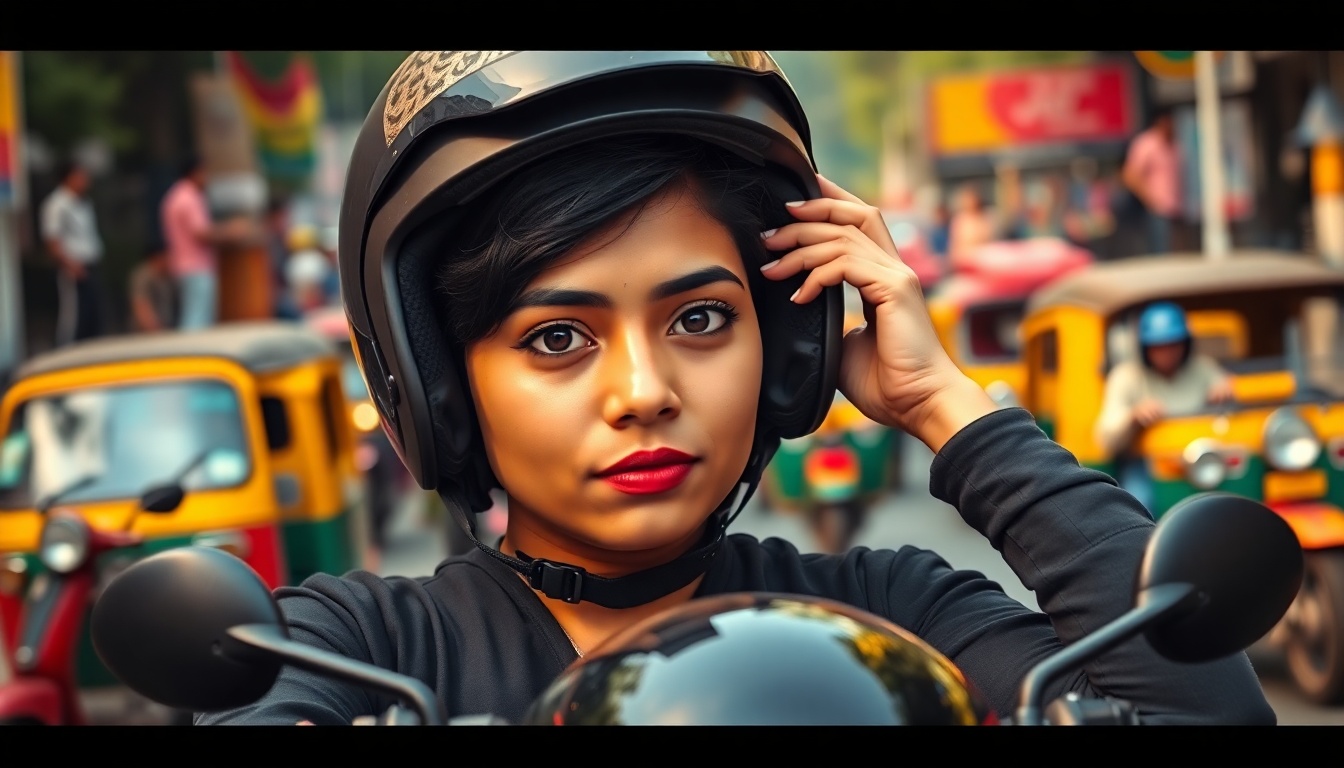
Quick Answer
Advanced hazard prediction riding in Bangalore means scanning 12 seconds ahead—not just the car in front—to catch the auto that will swerve, the dog that will bolt, and the pothole that appears after the rain. It is about reading the behavior of traffic like a chess board, not reacting to it like a pinball. The real skill is predicting the next three moves of every vehicle around you, especially on roads like Old Airport Road or NICE Road.
I remember my third training session in Bangalore like it was yesterday. A student on a new RE Hunter was gripping the handlebars so tight his knuckles had gone white. We were on a stretch near Silk Board junction—yes, that Silk Board—and he was staring at the bumper of the bus ahead like it held the secrets to the universe.
Here is the thing about advanced hazard prediction riding Bangalore: most riders think it is about reacting faster. They think if they just get better reflexes, they will survive. But that is like trying to put out a forest fire with a water pistol. You cannot react your way out of Bangalore traffic. You have to predict your way through it.
I have trained over 4,000 riders in this city. I have seen the same patterns repeat themselves. The riders who crash are almost never the ones who ride slow. They are the ones who ride blind—seeing only the road directly in front of their front wheel, missing everything that is about to happen.
Why Most Riders Get advanced hazard prediction riding Bangalore Wrong
The biggest mistake I see is riders focusing too much on the vehicle directly ahead. They lock onto that taillight like a moth to a flame. Meanwhile, a cab two cars ahead is slowing down because a passenger is about to open the door. An auto on the left is drifting into your lane because the driver is on his phone. A pedestrian is about to step out from behind a parked van.
Look, Bangalore traffic is not random chaos. It is organized chaos with patterns. The auto driver who keeps looking over his left shoulder? He is going to cut across three lanes to reach that U-turn. The bus that is moving slightly slower than traffic? It is going to stop dead at the next stop, and three people will step off into your path. The car with the Kerala registration plate? It is probably lost and about to brake suddenly at the next intersection.
I have seen this mistake cause accidents dozens of times. A rider on a KTM Duke near Hebbal flyover was tailgating a Swift. The Swift braked hard for a speed breaker the rider did not see. The rider swerved, hit the divider, and broke his collarbone. He told me later, “I did not even see the speed breaker.” Of course he did not. He was looking at the car, not the road ahead.
The real risk is not the vehicle you can see. It is the hazard you have not even noticed yet. That is what advanced hazard prediction riding in Bangalore is all about—seeing the invisible threat before it becomes visible.
I will never forget a rainy evening session near Marathahalli. A student named Ravi was doing well on the straight stretches. But when we hit a patch of road with standing water and a construction site, he froze. A lorry was coming from the opposite direction, and a bunch of autos were weaving around a stopped BMTC bus. Ravi fixated on the lorry, squeezed the front brake, and the front wheel washed out from under him.
He was okay—low-side at low speed. But when we debriefed, he said, “I saw everything, but I did not know what to look at first.” That is the problem. Your eyes can see a thousand things, but your brain can only process one threat at a time. Training teaches you which threat to prioritize and how to scan so you never get surprised.
What Actually Works on Indian Roads
Here is what works for advanced hazard prediction riding Bangalore: you need to develop a scanning pattern that covers three zones. The near zone is 0 to 4 seconds ahead. That is your immediate escape path—the gap between you and the car ahead, the surface condition under your tires, the auto that is already in your lane.
The mid zone is 4 to 8 seconds ahead. This is where you spot the developing threats. The brake lights of the third car ahead. The pedestrian who is looking at his phone while standing at the edge of the road. The dog that is sitting on the median and might bolt. The van that is parked with its engine running—someone is about to pull out.
The far zone is 8 to 12 seconds ahead. This is where you read the traffic flow. Is the lane ahead slowing down? Are brake lights coming on in a wave pattern? Is there a junction coming up where vehicles might turn across your path? This is the zone that most riders ignore completely.
I teach my students to move their eyes like a metronome. Glance near. Glance mid. Glance far. Check your mirrors. Repeat. Every two seconds. If you are not moving your eyes, you are not scanning. And if you are not scanning, you are gambling with your safety.
Another thing that works is what I call “mental rehearsal.” As you ride, narrate what you think will happen next. “That auto is going to cut left to pick up a passenger.” “That bus is going to stop at the next shelter.” “That car is going to turn right without indicating.” When you predict out loud, your brain starts recognizing patterns faster. After a few weeks, it becomes automatic.
And here is the part nobody talks about: you need to leave a buffer. In Bangalore, that means at least a 3-second following distance in good conditions, and 5 seconds in rain or at night. Yes, autos will cut into that gap. Yes, it feels like you are going slow. But that buffer is what gives you time to process a threat and take evasive action instead of just panic braking.
“Most riders crash not because they ran out of skill, but because they ran out of time. Advanced hazard prediction is about buying yourself time. If you see the threat 5 seconds before it happens, you have time to brake, swerve, or accelerate out of danger. If you see it 1 second before, you are just a passenger on a crash.”
— Throttle Angels Instructor Team
Beginner vs Trained Rider Comparison
| Aspect | What Beginners Do | What Trained Riders Do |
|---|---|---|
| Scanning distance | Stares at the bumper of the car ahead (2-3 seconds) | Scans 12 seconds ahead, checking near, mid, and far zones |
| Reaction to hazards | Panic brakes or swerves without looking | Predicts the hazard early, adjusts speed or position smoothly |
| Mirror usage | Checks mirrors only when turning or changing lanes | Scans mirrors every 5-7 seconds, always aware of traffic behind |
| Following distance | Rides 1 second behind the vehicle ahead | Maintains 3-5 second buffer, adjusts for rain and night |
| Reading traffic | Sees individual vehicles as isolated objects | Reads traffic flow, predicts group behavior and common patterns |
Adapting to Indian Road Conditions
Book Your Trial Session Today!
Ready to master the roads of Bangalore or Pune? Join India’s premier motorcycle driving school.
Training Available in Bangalore & Pune
Book Your Trial Session Today!
Ready to master the roads of Bangalore or Pune? Join India’s premier motorcycle driving school.
Training Available in Bangalore & Pune
Bangalore roads are a special kind of challenge. You have the monsoon that turns Outer Ring Road into a skating rink. You have construction that changes the lane layout every week. You have potholes that appear overnight like mushrooms after rain. And you have traffic that moves at 60 km/h one minute and comes to a dead stop the next.
The key to advanced hazard prediction riding Bangalore in these conditions is to adjust your scanning based on the environment. In the rain, you are not just looking for vehicles. You are looking for water accumulation, oil slicks, and painted road markings that become slippery as glass. You are watching for pedestrians who will run across the road holding newspapers over their heads, completely blind to traffic.
On highways like NICE Road or Tumkur Road, the hazards change. You get high-speed differentials—cars doing 120 km/h passing trucks doing 40 km/h. You get sudden crosswinds near open stretches. You get animals—stray dogs, cows, even the occasional goat—that appear from the bushes at the roadside. Your 12-second scan becomes even more critical here because the closing speeds are so high.
And then there are the junctions. Bangalore junctions are a free-for-all. Signals are treated as suggestions. Autos will filter to the front and then turn left from the right lane. Buses will stop in the middle of the intersection to pick up passengers. Your job is not to get angry at this. Your job is to predict it before it happens and position yourself so you have an escape route.
Frequently Asked Questions
What is the single most important skill for advanced hazard prediction riding Bangalore?
The ability to scan 12 seconds ahead while simultaneously checking your mirrors every 5 seconds. If you can master that one habit, you will avoid 80% of the common accidents on Bangalore roads.
How long does it take to develop advanced hazard prediction skills?
Most riders see a noticeable improvement after 3-4 dedicated practice sessions. But true mastery—where prediction becomes automatic—takes about 3 months of consistent riding with conscious scanning.
Can I practice hazard prediction on my daily commute?
Absolutely. Your daily commute is the best training ground. Instead of zoning out, actively narrate what you see and predict what will happen next. Treat every ride as a training session.
What is the most dangerous road in Bangalore for motorcyclists?
Old Airport Road and the stretch near Silk Board junction consistently see the highest number of motorcycle accidents. The combination of high speed differentials, unpredictable autos, and poor road surfaces makes it a hazard prediction nightmare.
How much does Throttle Angels training cost?
Our courses start at competitive rates with flexible packages. Call Rajkumar at 9535350575 or Arun at 8169080740 for current pricing and batch schedules in Bangalore and Pune.
Look, I have been riding in Bangalore for over 15 years. I have seen riders who thought they were invincible end up in hospital beds. And I have seen nervous beginners transform into confident, safe riders who can handle anything this city throws at them. The difference is always the same: the ones who survive are the ones who learn to predict.
Advanced hazard prediction riding Bangalore is not a secret technique. It is a habit. It is a way of seeing the road that you can train yourself to do. Start tomorrow morning on your commute. Look 12 seconds ahead. Predict out loud. Check your mirrors. Give yourself a buffer. Do that for a month, and you will wonder how you ever rode any other way.
Book Your Trial Session Today!
Ready to master the roads of Bangalore or Pune? Join India’s premier motorcycle driving school.
Training Available in Bangalore & Pune