Quick Answer
An advanced motorcycle control clinic in Bangalore teaches you emergency braking, slow-speed maneuvering, and cornering techniques that regular riding never covers. Most riders need about 8-10 hours of focused practice to break their bad habits and build muscle memory that actually saves lives on Indian roads.
I have seen it happen at least a dozen times this year alone. A rider rolls into our Throttle Angels facility in Bangalore, confident after riding for three or four years, and within the first fifteen minutes of the advanced motorcycle control clinic, they realize they have been doing everything wrong.
The look on their face is always the same. A mixture of embarrassment and genuine fear when they understand how close they have been riding to disaster every single day.
Here is the thing about the advanced motorcycle control clinic Bangalore offers through Throttle Angels. It is not about going faster. It is about understanding exactly what your bike can do when you ask it properly, and more importantly, what it cannot do even if you panic.
Why Most Riders Get Advanced Motorcycle Control Clinic Bangalore Wrong
Most riders think an advanced clinic is about knee-down cornering or learning to wheelie. That is what social media has taught you. The reality is far less glamorous and far more important.
The real risk on Indian roads is not your lack of speed. It is your inability to stop or swerve when a autorickshaw cuts across three lanes without warning. I have seen this mistake cause accidents dozens of times. A rider freezes, grabs a handful of brake, and the bike stands up or slides out.
Here is what most new riders get wrong about advanced training. They think it is optional. They think their daily commute is enough practice. But your daily commute only reinforces your bad habits. It does not correct them.
I had a student last month who had been riding for seven years. Seven years. He could not execute a proper emergency stop from 60 km/h without the rear wheel locking up. That is not experience. That is seven years of luck.
I remember a specific session from last monsoon. A gentleman named Ravi came in with a 650cc bike he had owned for two years. He was confident, maybe a little too confident. We set up a simple cone weave exercise at walking pace.
He dropped the bike three times in ten minutes. Not because he was careless. Because he had never learned how to use the clutch and rear brake together at low speeds. His ego took a hit. But his riding changed completely that day. He later told me that single session saved him from a lowside on a slippery flyover ramp two weeks later.
What Actually Works on Indian Roads
The advanced motorcycle control clinic Bangalore riders need is built around three core skills. Emergency braking, slow-speed control, and cornering vision. Everything else is decoration.
Emergency braking on Indian roads is different from what you see in European training videos. Our roads have gravel, oil spills, painted markings that turn to glass in the rain, and stray animals. You cannot just stomp on the brakes and expect to stop.
The technique we teach is progressive braking. You squeeze the front brake lever smoothly, feel the weight transfer to the front wheel, and then increase pressure. Your rear brake is for stability, not stopping power. Most riders use it backwards.
Slow-speed control is where most experienced riders fail. If you cannot do a full lock turn in a parking lot without putting your foot down, you are not in control of your bike. You are just along for the ride. We spend hours on this because it builds the clutch and throttle coordination that keeps you upright in traffic.
Cornering vision is the skill that separates alive riders from statistics. Your bike goes where your eyes go. If you look at the pothole, you will hit the pothole. If you look at the gap between the truck and the divider, you will make it through. Training your eyes is harder than training your hands.
We put riders through specific drills that force them to look through corners, not at the road directly in front of them. It feels unnatural at first. Then it becomes second nature. That is when you stop having close calls.
“I have trained over two thousand riders in Bangalore alone. The ones who survive long-term are not the ones who ride fast. They are the ones who can stop fast, turn tight, and keep their head calm when everything goes wrong. That is what an advanced clinic actually teaches you.”
— Throttle Angels Instructor Team
Beginner vs Trained Rider Comparison
| Aspect | What Beginners Do | What Trained Riders Do |
|---|---|---|
| Emergency braking | Grabs full front brake, locks wheel, panics | Squeezes progressively, feels weight transfer, stays upright |
| Slow-speed turns | Drops feet, wobbles, stalls in traffic | Uses clutch and rear brake, keeps feet on pegs, flows smoothly |
| Cornering | Looks at the ground, target fixates on hazards | Looks through the turn, picks exit point, adjusts line |
| Brake usage | Relies mostly on rear brake, afraid of front | Uses front for 70% of stopping power, rear for stability |
| Reaction to surprise | Freezes, targets the obstacle, crashes | Swerves or stops based on training, avoids the obstacle |
Adapting to Indian Road Conditions
Book Your Trial Session Today!
Ready to master the roads of Bangalore or Pune? Join India’s premier motorcycle driving school.
Training Available in Bangalore & Pune
Book Your Trial Session Today!
Ready to master the roads of Bangalore or Pune? Join India’s premier motorcycle driving school.
Training Available in Bangalore & Pune
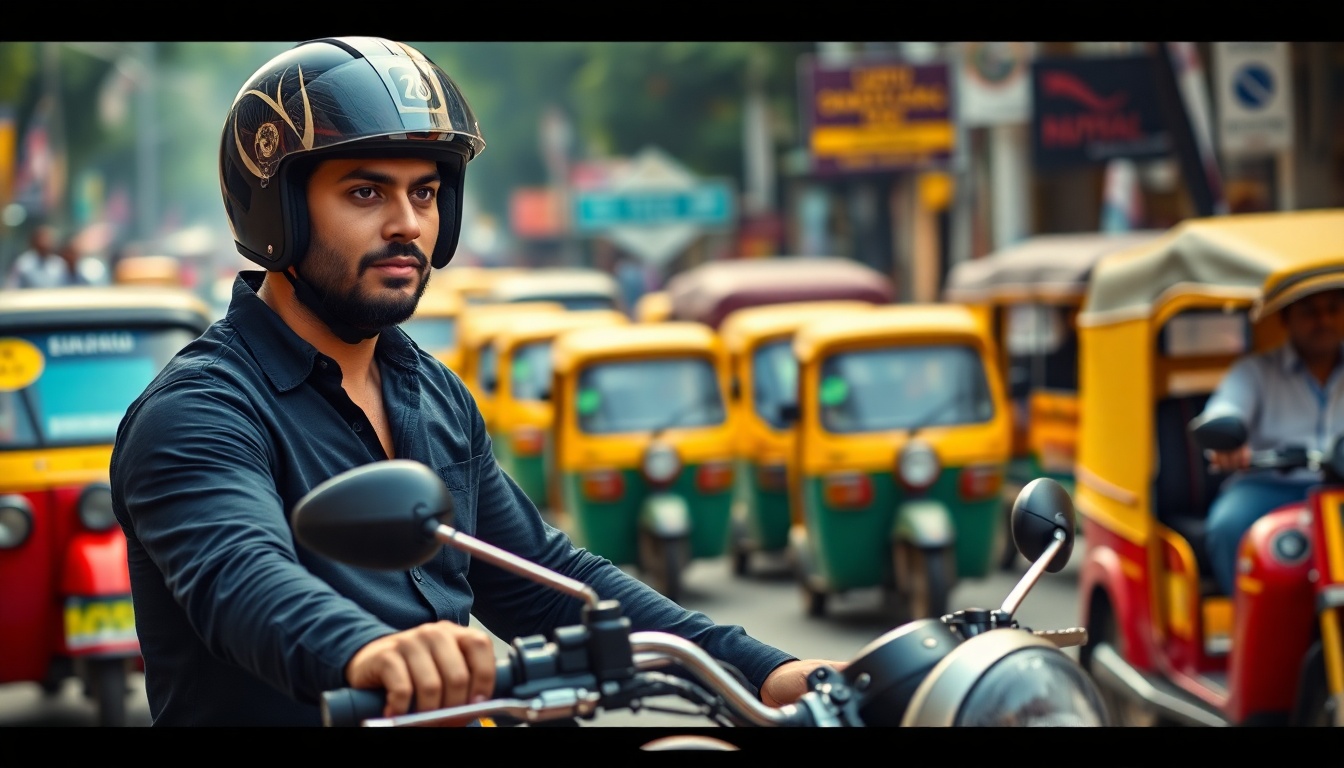
Bangalore roads are a special kind of chaos. You have BMTC buses that change lanes without indicators, cab drivers who stop in the middle of the road to check their phones, and potholes that appear overnight like mushrooms after rain. An advanced motorcycle control clinic in Bangalore has to address all of this.
Monsoon riding is where training pays for itself. Wet roads reduce your traction by roughly half. Your braking distance doubles. Your cornering speed needs to drop by a third. Most riders do not adjust. They ride the same way they do in dry conditions and wonder why they crash.
We teach riders to read the road surface. That patch of road that looks darker than the rest? It is probably oil mixed with water. That section near the construction site? Expect loose gravel. The painted pedestrian crossing? Slippery as ice when wet. Your eyes need to be scanning ten seconds ahead, not two seconds ahead.
Highway riding on the NICE Road or the stretch to Mysore has its own challenges. High-speed crosswinds, sudden lane changes from trucks, and the occasional buffalo. Your body position matters. Your grip on the handlebars matters. A relaxed upper body absorbs bumps. A tense one amplifies them into a crash.
Frequently Asked Questions
Who should attend an advanced motorcycle control clinic in Bangalore?
Any rider who has been on the road for at least six months and wants to break their bad habits. If you have ever had a close call that made your heart stop, this clinic is for you.
What bike should I bring to the training?
Your own bike. We want you to learn on the machine you ride every day. Whether it is a 150cc commuter or a 1000cc superbike, the techniques are the same. The bike just responds differently.
Is the advanced clinic suitable for women riders?
Absolutely. We have trained riders of all genders and experience levels. The techniques are universal. What matters is your willingness to learn, not your background.
How long does the training take?
Our core advanced clinic runs for one full day, about 8 hours of on-bike training. We also offer weekend programs for riders who want to spread the learning over two sessions.
How much does Throttle Angels training cost?
Our courses start at competitive rates with flexible packages. Call Rajkumar at 9535350575 or Arun at 8169080740 for current pricing and batch schedules in Bangalore and Pune.
The advanced motorcycle control clinic Bangalore riders need is not a luxury. It is the difference between riding for ten years and riding for ten years without a single serious crash. I have seen riders come back to us years later, still in one piece, still riding, because they took two days to learn what their instincts had been teaching them wrong.
Your bike is capable of more than you know. The question is whether you are capable of asking it properly. That is what we teach. And that is what keeps you coming home.
Book Your Trial Session Today!
Ready to master the roads of Bangalore or Pune? Join India’s premier motorcycle driving school.
Training Available in Bangalore & Pune