Quick Answer
Advanced motorcycle finesse skills are the subtle, almost invisible inputs that separate a rider who survives from one who thrives. They are not about speed, but about precision and control. Think of it as moving from just steering your bike to truly communicating with it, a difference that can cut your emergency stopping distance by 20-30% on our unpredictable roads.
I was watching a rider in our advanced course the other day. He was fast, aggressive, and technically correct. But his riding was loud. Every input was a shout—a harsh brake, a jerky turn, a sudden throttle crack.
He was fighting the bike. And on a wet Bangalore road with a bus cutting him off, that fight would be one he’d lose. This is where advanced motorcycle finesse skills come in. They are the quiet conversation between you and your machine.
Here is the thing about finesse. It’s not a separate skill you learn after the basics. It’s how you execute the basics. It’s the art of making every control input smooth, deliberate, and progressive. It’s what keeps you upright when the chaos of a Pune intersection or a monsoon-slicked highway tries to knock you down.
Why Most Riders Get advanced motorcycle finesse skills Wrong
The biggest mistake is confusing aggression with skill. I see riders who think faster cornering means yanking the handlebar harder. They treat the throttle like an on/off switch. This is how you lose traction on a painted road divider or a patch of diesel.
Your bike has a finite amount of grip. Use it all for braking, and you have none left for steering. Use it all for accelerating, and a slight lean becomes a slide. Finesse is about managing that grip budget. Most riders spend it all in one place.
Another error is fixation. You stare at the pothole you want to avoid, and guess what? You hit it. Your body follows your eyes. Advanced finesse is about looking where you need to be, not at what you fear. Your hands will naturally guide the bike through the path your eyes have charted.
Finally, there’s the death grip. You clamp the handlebars like you’re trying to choke them. This transmits every tiny bump and wobble directly into your steering, making the bike nervous. Your arms should be loose, your grip firm but not tense. Let the bike move beneath you.
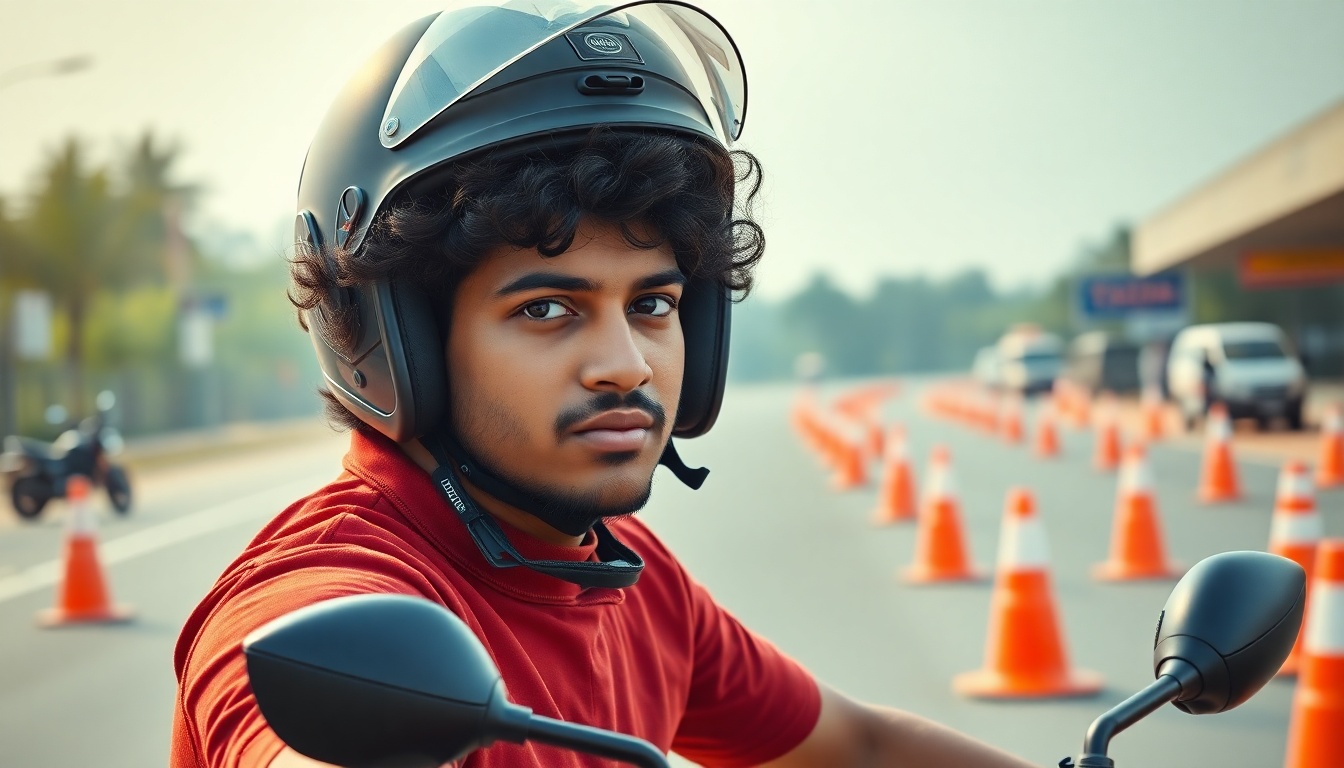
I remember a student, a seasoned tourer who had ridden from Kashmir to Kanyakumari. He came to us because he said city traffic “felt sketchy.” On our simulated tight-course drill, he was using huge steering inputs, his upper body wrestling the bike through cones.
I had him slow right down. Then I told him to steer not with his arms, but by pressing his inside knee into the tank and shifting his weight. The bike began to flow. His eyes went wide. “It’s not work anymore,” he said. That’s the moment. When control stops being a struggle and starts being a dialogue.
What Actually Works on Indian Roads
Look, the theory is simple. Application is everything. Start with your brakes. The real risk is not braking too late. It’s braking too abruptly. Squeeze the lever like you’re squeezing a ripe tomato. You don’t want to crush it, just apply steady, increasing pressure.
This gives the bike’s weight time to transfer forward, loading the front tyre for maximum grip. A panicked grab locks the wheel or makes the rear end light. I have seen this mistake cause accidents dozens of times when a dog or a child runs across.
Throttle control is your best friend. On a patch of loose gravel or wet leaves, a smooth, steady throttle is your anchor. A choppy one breaks traction. Think of rolling the throttle on and off like turning a volume knob, not flicking a switch.
Here is what most new riders get wrong about cornering. They brake mid-corner. This is genuinely dangerous. Your grip is already being used for the turn. Adding braking asks for more than the tyre can give. Set your speed before the bend. Then maintain a gentle, consistent throttle through it.
Your body position is a finesse tool. On our roads, you are not hanging off the bike like a MotoGP rider. But a slight shift of your weight to the inside of a turn, pressing on the inside footpeg, does wonders. It helps the bike turn with less physical steering effort, keeping it more stable.
Finally, practice the friction zone. Not just for starting off. In slow-speed traffic crawling up Mumbai’s Pedder Road, being able to balance the bike with a tiny bit of clutch and rear brake is pure finesse. It gives you control at walking pace, where balance is hardest.
Speed is a byproduct of control, not the other way around. The smoothest rider in the room is almost always the fastest and safest in real-world chaos. Finesse isn’t about being slow; it’s about being so efficient with your control that you have plenty left in reserve for the unexpected.
— Throttle Angels Instructor Team
Beginner vs Trained Rider Comparison
| Aspect | What Beginners Do | What Trained Riders Do |
|---|---|---|
| Emergency Braking | Snatch the brake lever, often locking the front or skidding the rear. | Apply progressive, firm pressure, loading the front tyre for maximum controlled stop. |
| Navigating Potholes | Stare at the hazard, stiffen up, and hit it squarely or swerve violently. | Look at the clear path beside it, stand slightly on pegs to absorb impact, and let the bike track their eyes. |
| Slow-Speed Control | Feather the clutch nervously, feet dangling, leading to wobbles and drops. | Use a precise combination of rear brake and friction zone, head up, for rock-solid balance. |
| Overtaking on Highways | Rely solely on throttle, staying in the blind spot for too long. | Use a decisive throttle burst combined with a clear body position and lane placement for visibility. |
| Mid-Corner Surprise | Panic, hit the brakes, and stand the bike up into oncoming traffic or the ditch. | Press on the inside bar, increase lean smoothly, and trust the bike to complete the turn. |
Adapting to Indian Road Conditions
Book Your Trial Session Today!
Ready to master the roads of Bangalore or Pune? Join India’s premier motorcycle driving school.
Training Available in Bangalore & Pune
Book Your Trial Session Today!
Ready to master the roads of Bangalore or Pune? Join India’s premier motorcycle driving school.
Training Available in Bangalore & Pune
Monsoon riding is the ultimate finesse test. Your tyres are cold, the road is a mix of slick tar, mud, and invisible puddles. Braking distances double. Here, your throttle hand must be like a surgeon’s. Any sudden input can break traction.
In city chaos, your finesse is in your lane positioning and pace. Don’t ride in the centre where oil and coolant accumulate. Ride in the tyre tracks of cars. Leave yourself an escape route on either side. This isn’t aggressive, it’s strategic.
On long, boring highways, the danger is complacency. Your skills get rusty. Make a game of it. Practice smooth, slow lane changes. Practice scanning far ahead. This mental engagement is a finesse skill that fights fatigue.
Dealing with unpredictable traffic—autos, cows, jaywalkers—requires modulated inputs. You can’t just slam on anchors. You might need to brake, then swerve, then accelerate. This sequence only works if each action is smooth and separate. Finesse lets you link them.
Frequently Asked Questions
I’ve been riding for years. Do I really need “finesse” training?
Absolutely. Experience often reinforces bad habits. Training breaks those habits and replaces them with conscious, refined techniques. The most common feedback we get from veteran riders is, “I didn’t know how much I was working against the bike.”
Can I learn these skills on my own bike?
Yes, and you should practice on your own bike. But initial training is best done in a controlled, safe environment like our training grounds. Dropping a bike here has no consequences. Doing it on the road does.
How long does it take to develop real finesse?
You’ll feel a difference in a single weekend course. But making it instinctive takes consistent, mindful practice for about 3-6 months. Every ride becomes a practice session.
Are these skills only for big bikes?
Not at all. Finesse on a 150cc commuter in traffic is just as critical, maybe more. The principles of smooth control are universal. A lighter bike often teaches you more because it reacts faster to your mistakes.
How much does Throttle Angels training cost?
Our courses start at competitive rates with flexible packages. Call Rajkumar at 9535350575 or Arun at 8169080740 for current pricing and batch schedules in Bangalore and Pune.
Look, this isn’t about turning you into a track star. It’s about giving you the tools to handle that moment when everything goes wrong. And on our roads, that moment isn’t a question of if, but when.
Your goal for the next week? Pick one thing. Just your braking, or just your throttle roll-on. Be conscious of making it smoother. That’s how it starts. One quiet input at a time.
Book Your Trial Session Today!
Ready to master the roads of Bangalore or Pune? Join India’s premier motorcycle driving school.
Training Available in Bangalore & Pune