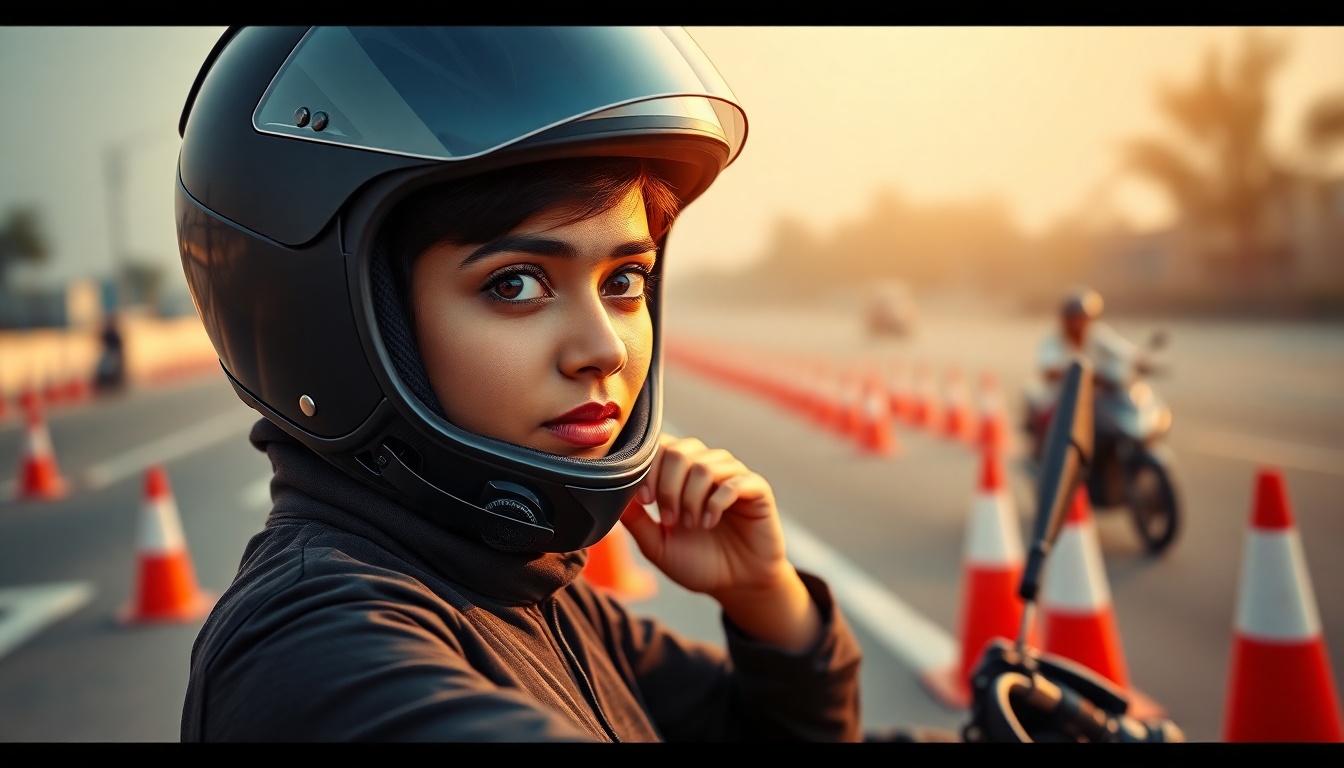
Quick Answer
Advanced motorcycle observation pro is about training your eyes to scan 12 seconds ahead, check your mirrors every 5-8 seconds, and read vehicle body language. It is not about staring at the road directly in front of you. It is about building a mental map of every vehicle, pedestrian, and animal within a 200-meter radius around your bike.
I remember a rider in our advanced course in Bangalore. He had been riding for seven years. He could handle corners well, brake smoothly, and shift gears like a pro.
But when I asked him what the car behind him was doing, he froze. He had no idea. That is when I realized he had never truly learned advanced motorcycle observation pro. He was looking, but he was not seeing.
Most riders think observation means glancing at the road every few seconds. It is much deeper than that. It is a constant, active process of gathering information and predicting what will happen next. On Indian roads, that skill separates riders who finish their journeys from those who don’t.
Why Most Riders Get Advanced Motorcycle Observation Pro Wrong
Here is the biggest mistake I see. Riders fixate. They stare at the bumper of the car in front of them. They watch the pothole directly ahead. They forget that danger comes from every direction.
I have seen this mistake cause accidents dozens of times. A rider on the Outer Ring Road in Bangalore is focused on the truck ahead. He does not notice the auto rickshaw merging from his blind spot. By the time he hears the horn, it is too late.
Another common mistake is tunnel vision during stress. When traffic gets heavy or a bus cuts you off, your field of view narrows. You stop seeing the bigger picture. Your brain focuses only on the immediate threat, and you miss the secondary danger.
The real risk is not the pothole you can see. It is the car that will swerve to avoid that pothole and hit you. Advanced observation means predicting the chain reaction, not just the first event.
I had a student in Pune last monsoon season. He was an experienced tourer, had done Ladakh twice. But during our advanced observation drill, he kept missing the cyclist on his right. Every single time.
I stopped the session and asked him why. He said, “I was watching the car ahead.” That was the problem. He was watching one thing instead of scanning everything. We spent the next hour working on his peripheral awareness. By the end of the day, he could tell me the color of the shirt the cyclist was wearing without turning his head. That is what advanced observation looks like.
What Actually Works on Indian Roads
Let me give you the system we teach at Throttle Angels. It is called the “Three-Second Scan.” Every three seconds, your eyes move to a new zone. Front, left mirror, front, right mirror, front, instrument cluster. Repeat.
But scanning is just the beginning. You also need to interpret what you see. That auto rickshaw weaving through traffic? He is going to cut in front of you. That pedestrian looking at their phone? They are about to step onto the road. That dog sitting on the sidewalk? It might chase you.
Here is the trick. Do not just look at vehicles. Look at their wheels. A car’s wheels tell you where it is going before the driver even turns the steering wheel. A truck’s front wheels turning slightly toward your lane? He is coming over. You have about two seconds to react.
Another technique we drill is the “Life-Saver Glance.” Before you change lanes, before you turn, before you merge, you turn your head fully and look over your shoulder. Mirrors have blind spots. Your eyes do not. That half-second glance can save your life.
On highways, your observation needs to stretch further. Look for brake lights two or three cars ahead. Watch for shadows under bridges that could mean oil or sand. Read the road surface changes from 100 meters away.
The most advanced observation skill is predicting what you cannot see. If a bus is stopped on the side of the road, expect someone to step out from in front of it. If you see a ball roll into the street, expect a child to run after it. Your brain needs to fill in the gaps.
“The best riders don’t react to danger. They arrive at the danger before it happens. That is the difference between survival and a crash. Your eyes are your best safety gear.”
— Throttle Angels Instructor Team
Beginner vs Trained Rider Comparison
| Aspect | What Beginners Do | What Trained Riders Do |
|---|---|---|
| Eye Movement | Fixate on one object for 5+ seconds | Scan every 3 seconds across all zones |
| Mirror Use | Check mirrors only when changing lanes | Check mirrors every 5-8 seconds constantly |
| Blind Spots | Rely only on mirrors | Use life-saver glance every time |
| Prediction | React to what they see | Predict what will happen next |
| Peripheral Vision | Ignore peripheral movement | Actively use peripheral awareness |
Adapting to Indian Road Conditions
Book Your Trial Session Today!
Ready to master the roads of Bangalore or Pune? Join India’s premier motorcycle driving school.
Training Available in Bangalore & Pune
Book Your Trial Session Today!
Ready to master the roads of Bangalore or Pune? Join India’s premier motorcycle driving school.
Training Available in Bangalore & Pune
Indian roads demand a different kind of observation. You are not just watching traffic. You are watching for cows, dogs, speed bumps with no warning signs, broken-down vehicles on curves, and drivers going the wrong way on one-way streets.
In the monsoon, your observation distance shrinks. Rain on your visor reduces visibility. Spray from trucks creates a wall of water. You need to slow down and increase your scanning frequency. Look for standing water that could hide a pothole deep enough to bend your rim.
On highways like the Mumbai-Pune expressway, watch for tire debris. Truck tires blow out regularly. The rubber pieces on the road can be as dangerous as an animal. Also, look for gravel near the edges of the road. That is where trucks drop their load.
In city traffic, your observation needs to be 360 degrees. Autos will appear from between buses. Pedestrians will jaywalk without looking. Kids will run out from behind parked cars. Your eyes cannot rest for a single second.
Frequently Asked Questions
How do I practice advanced motorcycle observation pro daily?
Start with your commute. Every time you stop at a traffic light, do a full 360 scan. Name every vehicle and pedestrian you see. Then predict what each one will do next. Do this for one week and your observation will improve dramatically.
What is the most dangerous blind spot on a motorcycle?
Your right rear blind spot. On Indian roads, vehicles overtake from your right constantly. Your right mirror has a gap. The life-saver glance over your right shoulder is the only way to cover it.
Can I improve observation without riding?
Yes. When you are a passenger in a car, practice scanning. Watch the road like you are riding. Predict what the driver needs to see. This builds the same mental muscles you use on a bike.
How long does it take to master advanced observation?
Most riders see major improvement after 2-3 focused training sessions. But true mastery takes months of conscious practice. The goal is to make it automatic, like breathing.
How much does Throttle Angels training cost?
Our courses start at competitive rates with flexible packages. Call Rajkumar at 9535350575 or Arun at 8169080740 for current pricing and batch schedules in Bangalore and Pune.
Here is what I want you to take away from this. Your bike has brakes, suspension, and tires. But your eyes are the most important safety system you have. If you do not see the danger, none of the other systems matter.
Start practicing today. On your next ride, do not just look. See. Predict. Prepare. That is what advanced motorcycle observation pro is really about. And it is the single best investment you can make in your riding safety.
Book Your Trial Session Today!
Ready to master the roads of Bangalore or Pune? Join India’s premier motorcycle driving school.
Training Available in Bangalore & Pune