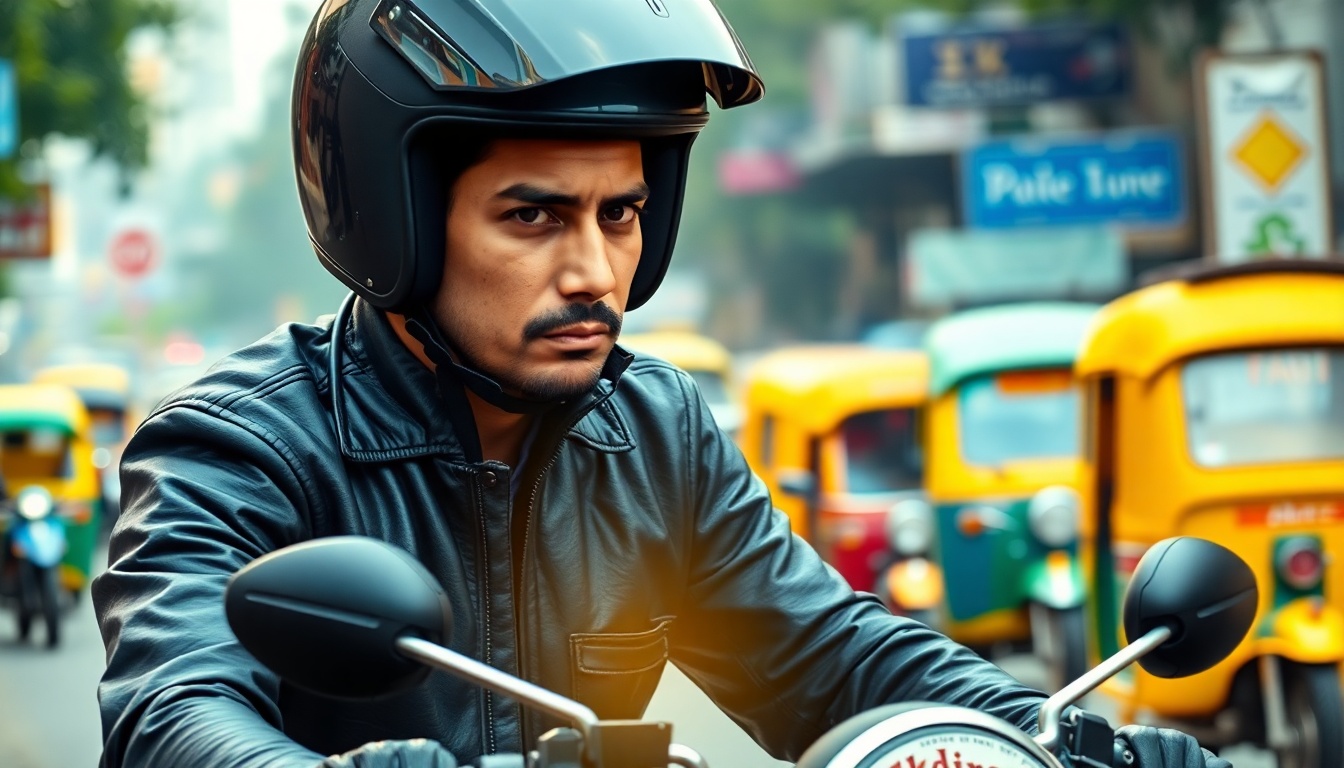
Quick Answer
Advanced rider risk strategy in Bangalore means learning to read traffic 12 seconds ahead, not just 3. It is about positioning your bike so you always have an escape route, and braking before you need to. The pros here don’t just react — they predict and prevent.
I remember a session last month with a rider who had been commuting on NICE Road for three years. He thought he was advanced because he could filter through traffic and hit 120 km/h on the empty stretches.
Then I asked him one question: “What is your risk strategy when a auto-rickshaw cuts you from the left with no indicator?” He froze. That is when I realized most riders in Bangalore confuse experience with skill. They have been riding for years, but they have been making the same mistakes for years too.
An advanced rider risk strategy pro Bangalore approach is not about speed or cornering heroics. It is about surviving the chaos of Silk Board, the unpredictability of monsoon roads, and the recklessness of other drivers. Let me show you what that actually looks like.
Why Most Riders Get Advanced Rider Risk Strategy Pro Bangalore Wrong
Here is the thing most riders get wrong about advanced risk strategy. They think it means going faster. They buy better tires, upgrade their suspension, and wear expensive leathers. Then they crash on a simple right turn near Majestic because a bus stopped suddenly.
I have seen this mistake cause accidents dozens of times. A rider focuses on the bike’s capabilities but ignores the environment. Bangalore roads are not a racetrack. You have cows on the Outer Ring Road, potholes that swallow scooters, and drivers who treat red lights as suggestions.
Another common mistake is thinking that defensive riding means riding slow. No. Defensive riding means riding aware. I have seen riders crawl at 30 km/h and still get rear-ended because they were in the wrong lane position. Speed is not the enemy. Surprise is the enemy.
The real risk is not the car that hits you. It is the split-second decision you make before that. Do you brake? Do you swerve? Do you accelerate? Most riders freeze. An advanced rider risk strategy pro Bangalore teaches you to have a plan before the danger appears.
I had a student named Vikram who rode a 650cc bike. He was confident, maybe too confident. During a training session near Bannerghatta Road, I asked him to follow me through a tricky series of turns with traffic merging from both sides.
He took the first turn wide, nearly clipped a divider, and then panic-braked when a taxi appeared from a side road. After we stopped, he said, “I never saw that taxi coming.” I told him, “That is exactly the problem. You were looking at the road two meters ahead of your front tire. You need to see the whole picture.” He spent the next two hours learning to scan intersections, check mirrors, and position his bike so every threat was visible. By the end, he was riding smoother and safer than ever.
What Actually Works on Indian Roads
Let me tell you what an advanced rider risk strategy pro Bangalore actually looks like in practice. It starts with your eyes. Not your hands, not your throttle. Your eyes.
You need to train yourself to look where you want to go, not where you are. When you stare at that pothole, you will hit it. When you look at the gap between two cars, you will find it. This is not philosophy. It is physics. Your bike goes where your eyes go.
Next is lane positioning. Most riders in Bangalore ride in the center of the lane. That is the worst place to be. The center has the most oil, the most debris, and the least traction. Ride in the left tire track of the car ahead. You get better visibility, more grip, and a clear escape path to the shoulder.
Here is something I teach every rider at Throttle Angels. When you approach an intersection, slow down before you need to. Your brakes are for emergencies, not for routine stops. If you are braking hard at every intersection, you are riding too fast for your vision. Slow down early, downshift smoothly, and keep your fingers on the brake lever.
Another pro technique is the “head check.” Every time you change lanes, turn your head fully. Not just your eyes. Your helmet should point exactly where you want to go. This eliminates blind spots and forces your body to follow. I see riders crash because they rely only on mirrors. Mirrors lie. Your neck does not.
The most advanced strategy is managing your following distance. In Bangalore traffic, everyone tailgates. Do not be everyone. Leave a three-second gap at minimum. In rain, make it five seconds. If someone fills that gap, drop back again. Your safety is worth the extra ten seconds it costs you.
“The difference between a beginner and an advanced rider is not how fast they can go. It is how early they can see trouble coming. In Bangalore, trouble comes from every direction. You need eyes in the back of your head — and a plan for every scenario.”
— Throttle Angels Instructor Team
Beginner vs Trained Rider Comparison
| Aspect | What Beginners Do | What Trained Riders Do |
|---|---|---|
| Intersection Approach | Brake hard at the last moment, panic if something appears | Slow down early, scan left and right, cover brakes, plan escape |
| Lane Position | Ride center of lane, hit oil patches and debris | Ride in tire tracks, avoid center, adjust for visibility |
| Following Distance | Tailgate because “someone will cut in” | Maintain 3-second gap, drop back if anyone fills it |
| Corner Entry | Brake in the corner, lean too late, run wide | Brake before corner, look through the turn, smooth throttle |
| Emergency Reaction | Freeze, grab brakes, lock wheels, crash | Swerve or brake based on situation, stay relaxed, use both brakes |
Adapting to Indian Road Conditions
Book Your Trial Session Today!
Ready to master the roads of Bangalore or Pune? Join India’s premier motorcycle driving school.
Training Available in Bangalore & Pune
Book Your Trial Session Today!
Ready to master the roads of Bangalore or Pune? Join India’s premier motorcycle driving school.
Training Available in Bangalore & Pune
Bangalore roads are a special kind of chaos. You have the monsoon from June to September, where water pools in every low spot and hides potholes that could swallow a bicycle. Your tires lose grip on painted lines and manhole covers. The first rain after a dry spell is the most dangerous — oil rises to the surface and makes the road slick as ice.
You need to adjust your advanced rider risk strategy pro Bangalore approach for these conditions. In rain, double your following distance. Avoid braking on turns. Use your rear brake more than the front for gentle slowing. And for God’s sake, keep your visor clean. A foggy visor at 60 km/h is a death sentence.
Highway riding on NICE Road or the elevated expressway requires a different mindset. You have trucks that drift, cars that brake suddenly for exits, and two-wheelers that cut across four lanes. Your strategy should be to stay visible. Wear bright gear, use your high beam in daytime, and never ride in a truck’s blind spot. If you cannot see the truck driver’s face in his mirror, he cannot see you.
City traffic is about patience. Filtering through stopped traffic is fine if you do it at walking speed. But never filter past a bus or truck that might turn left. I have seen riders get crushed between a bus and a divider because they assumed the bus would go straight. Assume nothing. Expect everything.
Frequently Asked Questions
What is an advanced rider risk strategy for Bangalore traffic?
It is a systematic approach to predicting and avoiding hazards before they happen. You learn to scan intersections, position your bike for maximum visibility, and always have an escape route. It is not about skill — it is about survival.
How is advanced rider training different from basic riding?
Basic riding teaches you to operate the bike. Advanced training teaches you to read the road, manage risk, and make decisions under pressure. It is the difference between knowing how to brake and knowing when to brake.
Do I need a big bike to learn advanced risk strategies?
No. The principles work on any bike from a 125cc commuter to a 1000cc superbike. In fact, smaller bikes teach you better throttle control and cornering because you cannot rely on power to get you out of trouble.
Can I learn these strategies in a weekend course?
You can learn the fundamentals in a weekend, but mastering them takes practice. That is why Throttle Angels offers progressive training. You start with classroom theory, move to controlled drills, then ride on real Bangalore roads with an instructor.
How much does Throttle Angels training cost?
Our courses start at competitive rates with flexible packages. Call Rajkumar at 9535350575 or Arun at 8169080740 for current pricing and batch schedules in Bangalore and Pune.
Here is the bottom line. An advanced rider risk strategy pro Bangalore is not a luxury. It is a necessity. Every time you swing a leg over your bike, you are entering a battlefield. The cars, buses, auto-rickshaws, pedestrians, and animals are not your enemies. But they are unpredictable. You need to be more predictable than they are.
Start with one change. Tomorrow, when you ride to work, look 12 seconds ahead. Pick your lane position. Leave a bigger gap. See how much calmer your ride feels. Then come to Throttle Angels and we will show you the rest. Your bike can handle more than you think. The question is — can you?
Book Your Trial Session Today!
Ready to master the roads of Bangalore or Pune? Join India’s premier motorcycle driving school.
Training Available in Bangalore & Pune