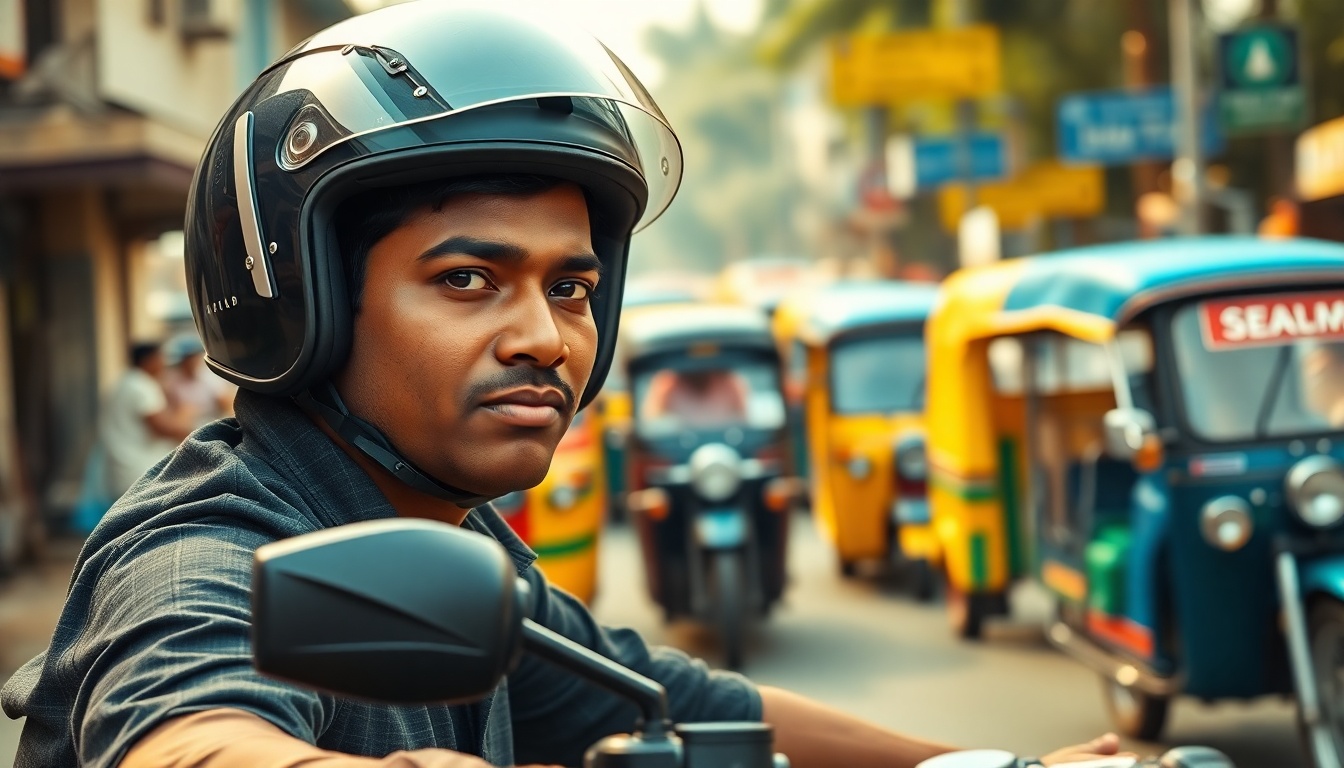
Quick Answer
Advanced rider training in Bengaluru is a structured program that moves you beyond basic control to mastering survival skills for real-world chaos. It’s not about speed; it’s about precision, hazard prediction, and muscle memory for emergencies. A proper course typically involves 2-3 days of intensive, hands-on drills on a closed track before applying those skills on city and highway roads.
I see it every weekend at our track. A rider pulls up on a powerful bike, looking confident. They’ve done a few thousand kilometres, maybe even a trip to Coorg. Then I ask them to perform a simple controlled stop while swerving around a pretend pothole at just 40 km/h.
The bike gets unstable. Their eyes fixate on the cone. The brakes are grabbed, not squeezed. This is the exact moment they realize why they’re here. This gap between riding experience and riding skill is what genuine advanced rider training Bengaluru programs are built to close.
Look, Bangalore’s roads are a unique classroom. You go from Silk Board’s gridlock to NICE Road’s high speeds in minutes. Your advanced training isn’t complete if it only works on a perfect Sunday morning. It has to work when a dog runs across ORR, or when a bus changes lanes without looking.
Why Most Riders Get advanced rider training Bengaluru Wrong
Here is what most new riders get wrong about advanced training. They think it’s about learning to knee drag or go faster on a track. That’s a performance course, not survival training. The real risk on our roads is not high speed. It’s the sudden, unpredictable low-speed chaos.
I have seen this mistake cause accidents dozens of times. A rider practices hard braking in a straight line on an empty road. They feel good. But on Hosur Road, when a car cuts them off, they must brake and steer simultaneously. They haven’t practiced that. The bike stands up, goes wide, and trouble follows.
Another common error? Riders focus only on their bike. Advanced training is about reading the entire environment. That auto-rickshaw driver’s head turn, the pedestrian’s hesitation at the curb, the wet patch near the drain cover. Your eyes learn to see these things 5 seconds before they become a threat.
Finally, many believe their reflexes will save them. Your reflexes are only as good as your practiced options. If you’ve never consciously practiced a swerve, your body won’t magically do it correctly in panic. Training builds that library of correct reactions so they become automatic.
I remember a student, let’s call him Arjun. He rode a large adventure bike and had toured all over South India. He signed up for advanced rider training Bengaluru almost as a formality. His first exercise was a slow-speed, tight U-turn within a 4-meter box.
He struggled. The bike was heavy, and he was using only the handlebars to fight it. We worked on clutch control, rear brake modulation, and head turn. The moment he looked through the turn, not at the cone in front of him, the bike settled. He said, “I’ve done this turn a hundred times on ghat roads, but I was always fighting the bike.” That single skill transformed his confidence in city traffic. The big bike suddenly felt light.
What Actually Works on Indian Roads
Let’s talk about what actually works. It starts with vision. Your eyes are your best safety device. You must learn to scan far ahead, not just at the bumper of the car in front. Look for escape paths constantly—the gap between two cars, the width of the lane next to you.
Here is the thing about braking. Everyone pulls the lever. A trained rider understands progressive pressure. You squeeze the front brake like you’re squeezing a ripe mango. Too hard, too fast, and you make a mess. This control prevents the front wheel from locking and keeps the bike stable.
Then there’s throttle control. It’s not an on/off switch. A smooth, rolled-on throttle keeps the chassis settled, especially mid-corner on those unpredictable hill roads. A jerky input on a wet white line or loose gravel is an invitation to slide.
Counter-steering is not a myth. It’s the physics of how every single motorcycle turns above walking speed. Push the left handlebar to go left. It feels counterintuitive until you practice it deliberately. Then it becomes how you make quick, precise lane changes to avoid that sudden pothole.
The real skill is combining these inputs. Braking while leaned over a bit to avoid debris. Managing throttle while scanning for a cow around the blind corner. This integration is the core of advanced rider training Bengaluru. We break it down into drills, then build it back up until it’s seamless for you.
Finally, works on knowing your bike’s limits and yours. How much lean angle do you really have left with your current tires? What’s the actual stopping distance from 60 km/h? Knowing these numbers, from practice, replaces fear with calculated confidence.
Advanced training isn’t about making risky maneuvers. It’s about having so much control that you rarely need to use them. The goal is to see trouble so early, and manage your position and speed so well, that the dramatic swerve or hard stop becomes your last option, not your first.
— Throttle Angels Instructor Team
Beginner vs Trained Rider Comparison
| Aspect | What Beginners Do | What Trained Riders Do |
|---|---|---|
| Hazard Reaction | Fixate on the hazard (pothole, animal). Brake in a straight line, often too hard. | Identify escape path first. Use a combination of smooth braking and a deliberate swerve while looking at the exit. |
| Cornering on Ghats | Slow down mid-corner if it feels too fast, upsetting the bike’s balance. Stare at the edge of the road. | Set their speed on entry. Maintain steady throttle through the corner. Look all the way through to the exit point. |
| City Lane Filtering | Weave unpredictably at inconsistent speed. Focus only on handlebar clearance. | Move at a slow, controlled pace. Prioritize watching car wheels and drivers’ heads for signs of sudden lane changes. |
| Emergency Braking | Grab the front brake, lock the wheel, and skid. Use no rear brake. | Apply progressive front brake pressure while firmly using the rear. Keep the bike upright and eyes up. |
| Riding in Rain | Ride nervously, avoid all painted surfaces and manholes, brake with sudden inputs. | Increase following distance, plan smoother lines and inputs, and gently test brake traction early in the ride. |
Adapting to Indian Road Conditions
Book Your Trial Session Today!
Ready to master the roads of Bangalore or Pune? Join India’s premier motorcycle driving school.
Training Available in Bangalore & Pune
Book Your Trial Session Today!
Ready to master the roads of Bangalore or Pune? Join India’s premier motorcycle driving school.
Training Available in Bangalore & Pune
Bangalore’s monsoon is a genuine danger. The first rain lifts a film of oil and dust to the surface. Your advanced training teaches you to ride as if on ice for the first 30 minutes. Smooth is safe. No sudden acceleration, braking, or steering.
On highways, the threat is fatigue and high-speed monotony. A trained rider actively scans, changes their riding position slightly, and plans rest stops before they feel tired. They also know that a highway crash is rarely survivable without proper gear—that’s non-negotiable.
In urban chaos, your lane position is your shield. You learn to ride in the “dominant” part of the lane—where you can be seen in mirrors and have an escape route. You stop hiding in blind spots. You use your horn not in anger, but as a polite “I am here” signal.
For night riding, you must understand that your headlight only shows you a fraction of the road. Your speed should be such that you can stop within that illuminated distance. Animals, broken-down vehicles, and potholes appear out of nowhere.
Frequently Asked Questions
I already ride every day. Why do I need advanced rider training Bengaluru?
Experience teaches you how to navigate traffic. Training teaches you how to control your motorcycle in an emergency. They are different skills. Daily riding often reinforces bad habits; training breaks them and builds correct muscle memory for when you really need it.
What bike should I bring for the training?
Bring the bike you ride most often. The skills must translate directly to your machine. We train everyone, from 150cc commuters to 1000cc superbikes. The principles are the same; we adapt the drills to your bike’s weight and power.
Is the training only on a track?
We start on a controlled, closed track. This is where you make mistakes safely. Once core skills are drilled, we move to supervised road sessions where you apply those skills to real traffic, intersections, and highway scenarios. Both environments are critical.
How much does Throttle Angels training cost?
Our courses start at competitive rates with flexible packages. Call Rajkumar at 9535350575 or Arun at 8169080740 for current pricing and batch schedules in Bangalore and Pune.
What is the single biggest takeaway from advanced training?
Conscious control. You stop being a passenger on your bike. You learn to command it with precise inputs. This turns panic into procedure. You stop hoping you’ll react correctly, and start knowing you will.
Look, the goal is simple. We want you to come back from every ride. The roads won’t get less chaotic. The vehicles won’t get more predictable. The only variable you can truly control is your own skill level.
Investing in that skill is the best modification you can make to your motorcycle. It’s permanent, it transfers to every bike you’ll ever ride, and it gives you the confidence to not just ride, but to truly ride well. See you at the track.
Book Your Trial Session Today!
Ready to master the roads of Bangalore or Pune? Join India’s premier motorcycle driving school.
Training Available in Bangalore & Pune