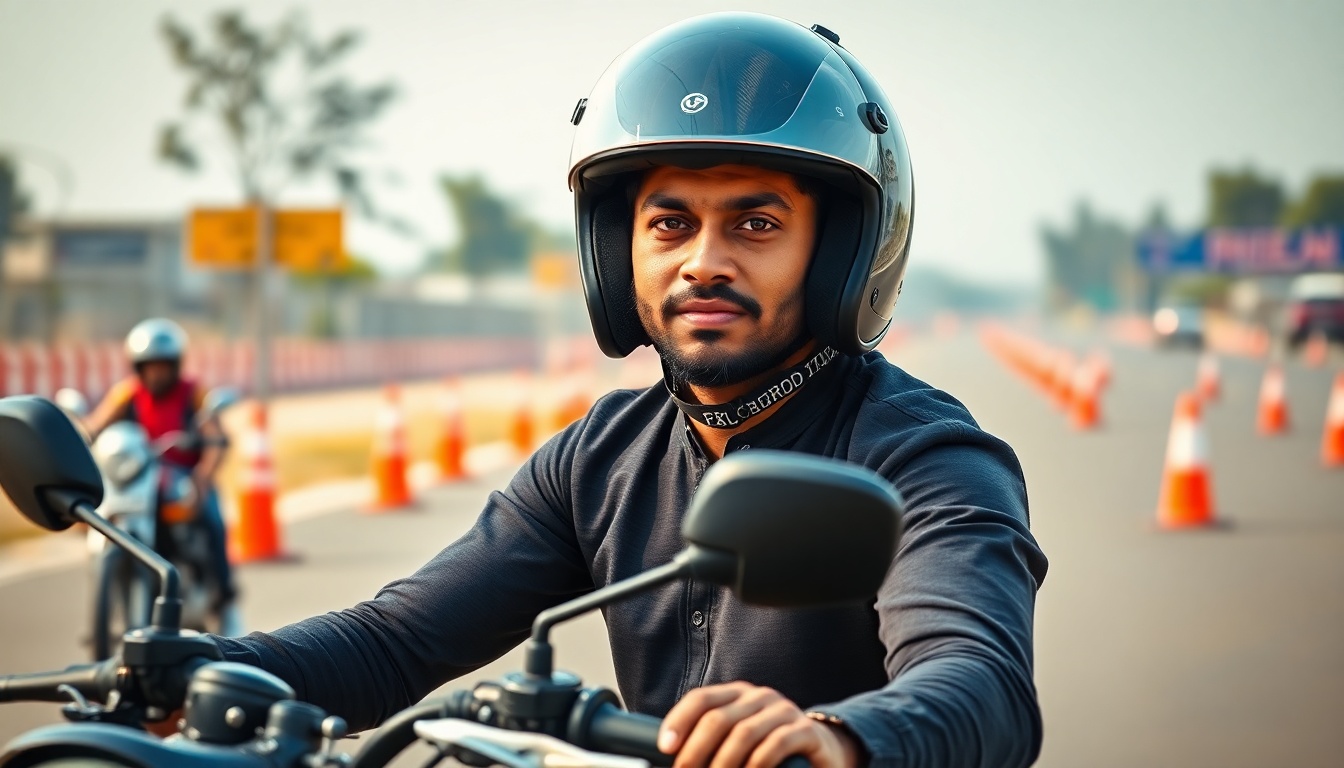
Quick Answer
Advanced slow speed precision pro is the skill of controlling your motorcycle at under 10 km/h using clutch friction zone, rear brake modulation, and counterbalance steering. It takes about 3–4 focused practice sessions to go from wobbling to nailing a full-lock U-turn in a 12-foot lane.
I have watched over a thousand riders try to turn their bike around in a narrow Bangalore lane. The handlebars go full lock. The front wheel skips. The foot comes down in panic.
Here is the thing about advanced slow speed precision pro: it is not about being slow. It is about being precise when you have no room for error. And on Indian roads, you rarely have room for error.
Whether you are filtering through a jammed Silk Board junction or parking your bike in a cramped basement, this skill keeps you upright. It keeps you confident. And it keeps you from looking like a beginner.
Why Most Riders Get advanced slow speed precision pro Wrong
The biggest mistake I see is riders trying to steer the bike with the handlebars alone. They turn the bars hard left, lean their body the same direction, and wonder why the bike wants to tip over.
Here is what most new riders get wrong about advanced slow speed precision pro: they think it is about turning. It is actually about balance and counterbalance. Your body needs to go the opposite direction of your turn.
I have seen this mistake cause accidents dozens of times. A rider tries a U-turn on a narrow road, their body leans with the bike, the bike drops, and their leg gets pinned. That is a broken ankle waiting to happen.
Another common error is grabbing the front brake mid-turn. At slow speeds, the front brake will stand the bike up and send you wide. You will either hit a car or drop the bike trying to correct.
I remember a student in our Bangalore batch. He had been riding for six years. Touring, commuting, everything. But he could not do a U-turn in a single lane without putting his foot down. He was embarrassed. His friends called him “the dabba rider.”
We spent one session on advanced slow speed precision pro. Just clutch control, rear brake, and counterbalance. By the end of the day, he was doing figure-eights between cones. He told me later that skill saved him from dropping his bike in a steep parking ramp in Nandi Hills. That is what this training does.
What Actually Works on Indian Roads
Let me break down the real technique. The one that works when you are stuck behind a bus on a narrow road in Pune and need to turn around without getting off your bike.
First, you need to master the friction zone. That is the part of your clutch pull where the bike starts to move but the engine is still engaged. You want to stay right there. Not fully engaged, not fully disengaged.
Second, your rear brake is your best friend. At slow speeds, the rear brake stabilizes the bike. It prevents that wobble you feel when the bike wants to fall into the turn. Drag the rear brake lightly through the entire turn.
Third, counterbalance. When you turn left, push your hips to the right side of the seat. When you turn right, shift your weight to the left. Your bike will lean into the turn while your body stays upright. This gives you stability and control.
Fourth, look where you want to go. Your bike follows your eyes. If you look at the pothole, you will hit the pothole. If you look at the gap between two cars, you will fit through it. This is not magic. It is how your brain and body work together.
Fifth, practice in a parking lot. Find an empty space, set up two water bottles 15 feet apart, and do figure-eights. Start wide, then bring the bottles closer. Your goal is to do a full-lock turn without your feet touching the ground.
“Most riders think slow speed control is about being gentle. It is not. It is about being deliberate. Every input matters. One wrong twitch and you are on the ground.”
— Throttle Angels Instructor Team
Beginner vs Trained Rider Comparison
| Aspect | What Beginners Do | What Trained Riders Do |
|---|---|---|
| Clutch Use | Pulls clutch fully in, loses engine braking and control | Holds clutch in friction zone, maintains power and stability |
| Braking | Grabs front brake, bike stands up and goes wide | Drags rear brake, bike stays stable and turns tight |
| Body Position | Leans with the bike, feels unstable and heavy | Counterbalances, upper body upright, bike leans |
| Foot Placement | Drops feet early, loses balance and control | Keeps feet on pegs, uses body weight to balance |
| Result | Wobbles, puts foot down, or drops the bike | Smooth tight turns, full control, no drama |
Adapting to Indian Road Conditions
Book Your Trial Session Today!
Ready to master the roads of Bangalore or Pune? Join India’s premier motorcycle driving school.
Training Available in Bangalore & Pune
Book Your Trial Session Today!
Ready to master the roads of Bangalore or Pune? Join India’s premier motorcycle driving school.
Training Available in Bangalore & Pune
Indian roads throw everything at you. Loose gravel at the edge of a turn. Oil patches from a leaking auto. Wet leaves after a monsoon shower. Your advanced slow speed precision pro needs to work on all of them.
Here is the reality: the rear brake is your safety net on slippery surfaces. If you feel the rear wheel start to slide, you can release the brake slightly and regain traction. The front brake will just lock up and send you down.
In heavy traffic, you will often need to stop and turn in tight spaces. Like when you are between two autos and need to get to the front of the signal. Use your clutch friction zone and rear brake to crawl forward. Keep your head up, not looking at the bumper in front of you.
On highway exit ramps or flyover turns, the same principles apply but at higher speed. Do not grab the front brake mid-turn. Look through the curve. Shift your weight to the inside peg. Your bike will follow.
Frequently Asked Questions
How long does it take to learn advanced slow speed precision pro?
Most riders see real improvement after two focused practice sessions. Full mastery of tight U-turns and figure-eights usually takes about 4 to 5 hours of deliberate practice with an instructor.
Can I practice this on my own without an instructor?
You can practice basic clutch and rear brake control alone in an empty lot. But to unlearn bad habits like dropping your foot or grabbing the front brake, you need someone watching you and correcting you in real time.
Is this skill necessary for touring riders?
Absolutely. Touring riders face narrow hill roads, tight switchbacks, and unexpected traffic in small towns. Without slow speed precision, you will struggle to turn around on a mountain road or park your loaded bike in a crowded lot.
What type of bike is hardest for slow speed control?
Heavy cruisers and large adventure bikes with wide handlebars are the most challenging. They have a larger turning radius and more weight to manage. But the techniques are the same. You just need more space and more practice.
How much does Throttle Angels training cost?
Our courses start at competitive rates with flexible packages. Call Rajkumar at 9535350575 or Arun at 8169080740 for current pricing and batch schedules in Bangalore and Pune.
Look, I have been riding for over fifteen years. I still practice slow speed drills before every long trip. It keeps the muscle memory sharp. It reminds me that control is not about speed. It is about precision.
If you take one thing from this, let it be this: your motorcycle will do exactly what you tell it to do. The problem is most riders give the wrong instructions. Learn to speak your bike’s language at slow speeds, and every ride becomes safer. Every turn becomes easier. Every traffic jam becomes less stressful.
Book Your Trial Session Today!
Ready to master the roads of Bangalore or Pune? Join India’s premier motorcycle driving school.
Training Available in Bangalore & Pune