Quick Answer
Advanced speed control advanced riding is about managing your entry speed into corners and traffic gaps, not your top speed. The secret is using trail braking and vision techniques to arrive at every hazard at a speed where you can stop or swerve within your available sight distance — typically under 2 seconds of reaction time.
I watched a rider on the NICE Road fly past me last week. He was fast, sure. But he was grabbing brakes hard before every curve, bike wobbling, looking terrified.
That is not advanced speed control advanced riding. That is survival mode dressed up as aggression.
Here is the thing about speed control at an advanced level. It has nothing to do with how fast you can go. It is about how late you can brake, how smooth you can be, and how much traction you leave in reserve for the unexpected cow, autorickshaw, or pothole that India throws at you.
Why Most Riders Get advanced speed control advanced riding Wrong
Most riders think advanced speed control means going faster. They watch MotoGP and think trail braking is for racetracks only. They are wrong.
I have seen this mistake cause accidents dozens of times. A rider enters a corner too fast, panics, and either stands the bike up into oncoming traffic or locks the rear brake and lowsides. The real risk is not your top speed. It is your entry speed.
On Indian roads, the difference between a good rider and a great one is not how fast you take a corner. It is how early you see the hazard and how smoothly you adjust your speed before you reach it.
Beginners brake in the middle of the turn. Trained riders do all their braking before they tip in. That is the first lesson of advanced speed control advanced riding — finish your braking before you start leaning.
I remember a student named Vikram who came to us after two years of riding. He could go fast in a straight line, but every corner terrified him. We took him to a quiet stretch near Nandi Hills.
I asked him to take a right-hander at 40 km/h without touching the brakes. He froze at the entry. We spent the next hour working on his vision — looking through the turn, not at the road right in front of his front wheel. By the end of the session, he was carrying 15 km/h more speed through the same corner with zero panic. His problem was not skill. It was where he was looking.
What Actually Works on Indian Roads
Advanced speed control advanced riding on Indian roads comes down to three things. Vision, braking technique, and throttle management. Let me break each one down for you.
Vision is everything. Your bike goes where you look. If you stare at the pothole, you will hit it. If you look at the gap between the truck and the divider, you will find it. I train my students to scan 12 seconds ahead at all times. That gives you enough time to adjust your speed without panic.
Braking technique is where most riders lose time and safety. The instinct is to grab a handful of front brake. That stands the bike up and ruins your line. Advanced riders use progressive braking — start gentle, squeeze harder, then release smoothly as you tip in. This keeps the front tyre loaded with traction and the bike stable.
Throttle management is the secret sauce. Once you are leaned over, you should be gently rolling on the throttle. This transfers weight to the rear tyre and gives you more grip. If you chop the throttle mid-corner, the weight shifts forward and you lose rear traction. That is how high sides happen.
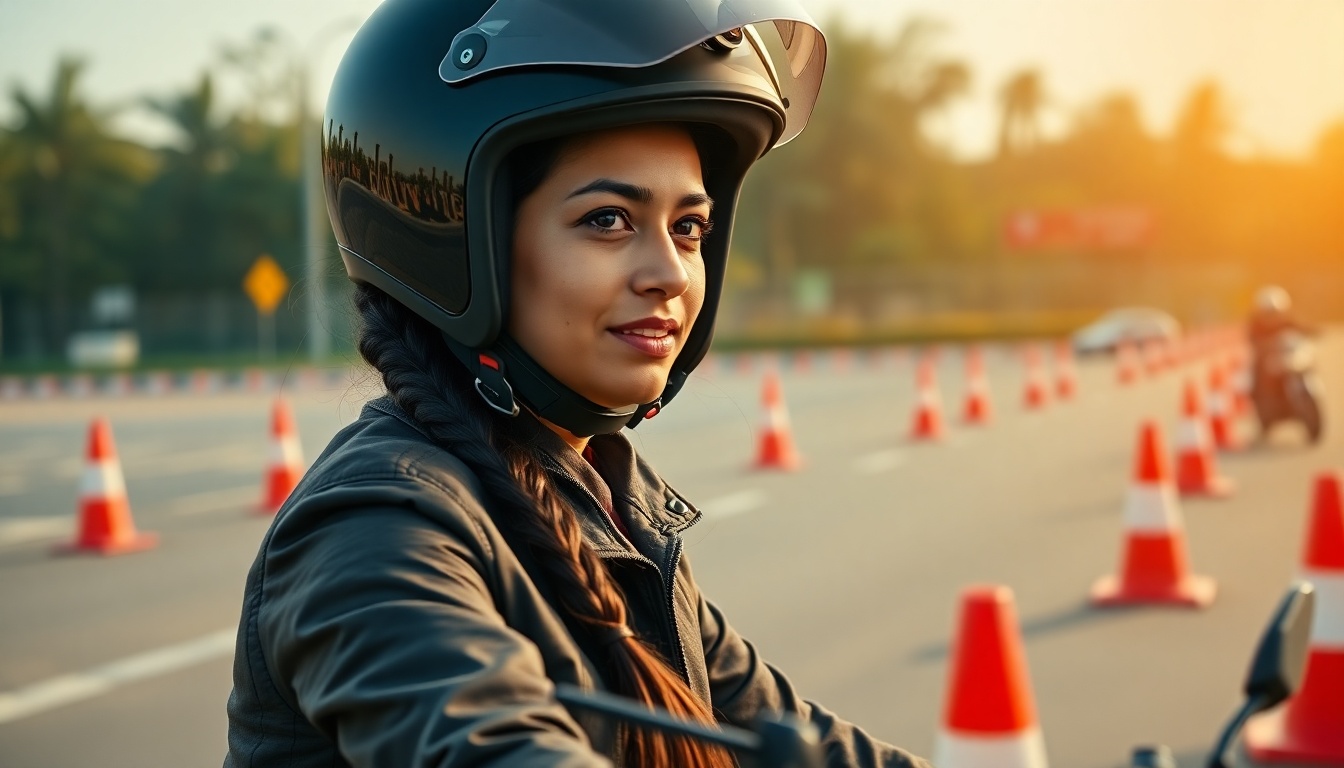
Here is a drill I teach at Throttle Angels. Find an empty parking lot. Mark a corner with cones. Practice entering at 30 km/h, braking to 20 km/h before the cone, then rolling on the throttle through the turn. Repeat until you can do it without thinking. Then increase your entry speed by 5 km/h. Your body will learn the feel of traction limits without the risk of real traffic.
“Advanced speed control is not about how fast you can go. It is about how late you can brake, how smooth you can be, and how much traction you keep in reserve for the unexpected.”
— Throttle Angels Instructor Team
Beginner vs Trained Rider Comparison
| Aspect | What Beginners Do | What Trained Riders Do |
|---|---|---|
| Corner Entry | Brake hard in the middle of the turn, stand bike up | Finish braking before tip-in, smooth trail brake if needed |
| Vision | Stare at the road 3 feet in front of the wheel | Scan 12 seconds ahead, look through turns |
| Throttle Use | Chop throttle mid-corner when scared | Gradual roll-on through the turn, weight on rear |
| Braking Style | Grab brake abruptly, skid or wobble | Progressive squeeze, release smoothly |
| Traction Reserve | Use 100% of available grip, no margin for error | Keep 20-30% traction in reserve for surprises |
Adapting to Indian Road Conditions
Book Your Trial Session Today!
Ready to master the roads of Bangalore or Pune? Join India’s premier motorcycle driving school.
Training Available in Bangalore & Pune
Book Your Trial Session Today!
Ready to master the roads of Bangalore or Pune? Join India’s premier motorcycle driving school.
Training Available in Bangalore & Pune
Indian roads are not racetracks. You have to adapt advanced speed control advanced riding to the reality of loose gravel, stray animals, and drivers who treat lanes as suggestions.
In the monsoon, your braking distance doubles. I tell my students to add 50% more following distance in the rain. If you normally follow at 2 seconds, make it 3 seconds. That extra second is what saves you when a car in front slams brakes for a pothole you cannot see.
On highways like the Bangalore-Mysore stretch, the biggest threat is not your speed. It is the sudden left turn from a tractor or the buffalo that decides to cross at dusk. Your advanced speed control technique means nothing if you are not scanning the edges of the road for movement.
Here is a rule I live by. If you cannot see 200 metres of clear road ahead, slow down to a speed where you can stop in half that distance. That is not conservative. That is survival.
Frequently Asked Questions
What is the most important skill in advanced speed control advanced riding?
Vision is the foundation. If you look where you want to go, your body and bike will follow. Without good vision, braking and throttle techniques are useless.
How do I practice trail braking safely?
Start in an empty parking lot at low speed. Brake in a straight line, then carry a light brake pressure as you tip into a turn. Release the brake gradually as you roll on the throttle. Never trail brake on public roads until you have mastered the feel.
Can advanced speed control help me in city traffic?
Absolutely. Smooth throttle control and progressive braking reduce your reaction time in stop-and-go traffic. You will filter more safely and avoid rear-end collisions.
What gear should I use for advanced speed control training?
Full protective gear is mandatory. Helmet, gloves, jacket with armour, riding pants, and boots. You cannot learn advanced techniques if you are worried about getting hurt in a low-speed fall.
How much does Throttle Angels training cost?
Our courses start at competitive rates with flexible packages. Call Rajkumar at 9535350575 or Arun at 8169080740 for current pricing and batch schedules in Bangalore and Pune.
Advanced speed control advanced riding is not a secret. It is a set of skills you can learn, practice, and master. The riders who survive and enjoy their time on Indian roads are not the ones who go fastest. They are the ones who arrive at every corner, every hazard, and every traffic situation with their speed already under control.
Your bike is capable of more than you think. The question is whether your brain and your right hand are ready to use that capability safely. Start with vision. Add braking technique. Finish with throttle control. That is the order that works. That is the order that keeps you riding for years.
Book Your Trial Session Today!
Ready to master the roads of Bangalore or Pune? Join India’s premier motorcycle driving school.
Training Available in Bangalore & Pune