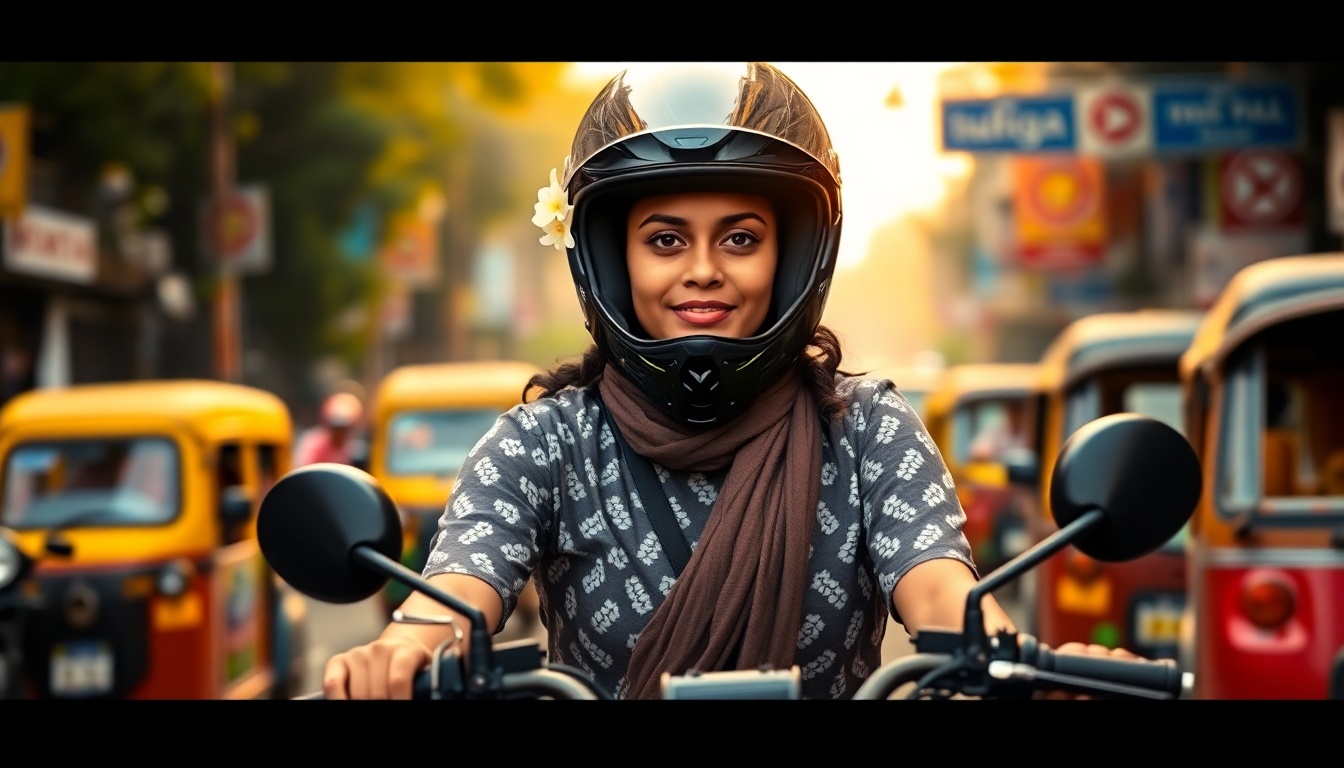
Quick Answer
Advanced vision scanning means looking 12 seconds ahead, not just at the vehicle in front of you. For Bangalore traffic, this translates to scanning 150-200 meters ahead on highways and at least 3-4 vehicles ahead in city congestion. It is the single skill that separates riders who anticipate danger from those who react to it.
I remember the first time a student asked me about advanced vision scanning motorcycle Bangalore. We were stopped at the Silk Board junction, and he was staring directly at the bumper of the auto-rickshaw in front of him.
“What are you looking at?” I asked him. He said the auto. I told him that auto would be gone in two seconds, and then what?
Here is the thing about riding in Bangalore. Your eyes are your best safety device, but most riders use them like a rearview mirror — only when they remember to. Advanced vision scanning is not about looking harder. It is about looking smarter.
Why Most Riders Get Advanced Vision Scanning Motorcycle Bangalore Wrong
Most riders think vision scanning means moving your head left and right constantly. They think it is about checking mirrors every few seconds. That is not wrong, but it is incomplete.
The real mistake is looking at the wrong things at the wrong time. I see riders on Bannerghatta Road staring at potholes they have already passed. Or fixating on a bus stop sign while a cab cuts across three lanes to reach it.
Your eyes should not be chasing what already happened. They should be predicting what is about to happen. In Bangalore, that means reading the behavior of drivers 5-6 vehicles ahead. It means watching the gap between a bus and a tempo to spot the pedestrian who will step out.
Here is the dangerous part. When you fixate on one thing — a pothole, a brake light, a speed breaker — your peripheral vision shuts down by 70%. I have seen this cause accidents dozens of times. A rider dodges a pothole and misses the scooter overtaking them from the right.
I was training a group on the NICE Road bypass last monsoon. One rider, let us call him Ravi, had been riding for three years. He thought he was good. I asked him to tell me what was behind the white Innova ahead of us. He could not answer. He had been staring at its brake lights for 45 seconds.
I told him to look through the Innova’s windows. Behind it was a lorry with a loose tarp. Two hundred meters beyond that, a police checkpoint. He had all that information available, but his eyes were locked on one point. That is tunnel vision. And tunnel vision on a motorcycle is a death sentence.
What Actually Works on Indian Roads
Advanced vision scanning is a system. It is not a trick. It is a deliberate process you run every time you swing a leg over your bike. Here is how I teach it at Throttle Angels.
First, you need to understand the 12-second rule. Your eyes should be scanning where you will be in 12 seconds. At 60 km/h, that is about 200 meters. In Bangalore traffic, that might be 3-4 vehicles ahead. You are not looking at the car in front. You are looking at the car in front of that car.
Second, you scan in layers. Near layer is 0-30 meters. That is your immediate escape path. Middle layer is 30-100 meters. That is where you spot brake lights and turn indicators. Far layer is 100 meters plus. That is where you read traffic flow, signal timings, and road conditions.
Third, you use your peripheral vision for the near layer and your focal vision for the far layer. This is counterintuitive. Most riders do the opposite. They stare at the bumper in front (focal) and miss the bus stopping 200 meters ahead (peripheral).
I tell my students to practice this on the Outer Ring Road. Pick a vehicle three cars ahead. Watch its brake lights, not the ones directly in front of you. When that third car’s lights come on, you have three extra seconds to react. In wet conditions, three seconds is the difference between a smooth stop and a slide.
One more thing. Your eyes should never stop moving. A static gaze is a dangerous gaze. Every two seconds, shift your focus. Mirror. Far ahead. Left side. Right side. Mirror again. This is called the scanning rhythm. It keeps your brain processing new information constantly.
“Your motorcycle goes where your eyes go. If you stare at a pothole, you will hit it. If you stare at a gap, you will find it. Advanced vision scanning is not about seeing more. It is about choosing what to see.”
— Throttle Angels Instructor Team
Beginner vs Trained Rider Comparison
| Aspect | What Beginners Do | What Trained Riders Do |
|---|---|---|
| Focus distance | Stare at the vehicle directly ahead (5-10 meters) | Scan 150-200 meters ahead, looking 3-4 vehicles forward |
| Eye movement | Fixated on one point, slow to shift | Continuous scanning rhythm every 2 seconds |
| Reaction to hazards | React after the hazard appears | Anticipate hazards 3-5 seconds before they happen |
| Mirror use | Check mirrors only when changing lanes | Check mirrors every 5-7 seconds, even when going straight |
| Peripheral vision | Shuts down 70% when fixated on one object | Actively uses peripheral for near hazards, focal for distance |
Adapting to Indian Road Conditions
Book Your Trial Session Today!
Ready to master the roads of Bangalore or Pune? Join India’s premier motorcycle driving school.
Training Available in Bangalore & Pune
Book Your Trial Session Today!
Ready to master the roads of Bangalore or Pune? Join India’s premier motorcycle driving school.
Training Available in Bangalore & Pune
Bangalore roads demand a different kind of scanning than what you see in international training videos. The textbook says look for lane markings. In Bangalore, lane markings are a suggestion at best. You need to read driver intent, not road paint.
Watch for the front wheels of parked cars. A slight turn outward means someone is about to pull out. Watch for the head of an auto driver. If he is looking over his shoulder, he is going to cut across traffic. These are the micro-signals that advanced scanning picks up.
Monsoons change everything. Wet roads reduce your stopping distance by 40%. You need to scan even further ahead because your reaction time must be faster. Look for darker patches on the road — that is standing water. Look for the spray pattern of vehicles ahead — that tells you how much water is on the road.
Highway riding on the NICE Road or Tumkur Road requires a different rhythm. Speeds are higher, so your 12-second zone is much longer. You need to scan for merging traffic from service roads, stray animals near the median, and debris from trucks. Your eyes should be moving constantly between the far distance and your mirrors.
Frequently Asked Questions
What is advanced vision scanning for motorcycle riders in Bangalore?
It is a systematic way of using your eyes to predict hazards 12 seconds ahead. Instead of staring at the vehicle in front, you scan in layers — near, middle, and far — to read traffic flow, driver intent, and road conditions before they become emergencies.
How far ahead should I look when riding in Bangalore traffic?
At city speeds, look 3-4 vehicles ahead or about 100-150 meters. On highways, extend that to 200 meters or 12 seconds of travel time. The key is to look through the vehicles in front of you, not at them.
Can I practice vision scanning on my daily commute?
Absolutely. Start by picking one route you ride daily. Consciously scan three vehicles ahead at every intersection. Check your mirrors every 5 seconds. Within a week, it will become automatic. Your brain will start processing information faster.
What is the biggest mistake riders make with their vision?
Target fixation. When you stare at a hazard — a pothole, a stray dog, a braking car — your brain steers you directly into it. The solution is to look at your escape path, not the obstacle. Your bike follows your eyes.
How much does Throttle Angels training cost?
Our courses start at competitive rates with flexible packages. Call Rajkumar at 9535350575 or Arun at 8169080740 for current pricing and batch schedules in Bangalore and Pune.
Advanced vision scanning is not a skill you master in a day. It is a habit you build over weeks. But here is the truth. Every time you ride without scanning properly, you are gambling. You are hoping that nothing unexpected happens in the 12 seconds ahead of you.
On Indian roads, something unexpected always happens. The only question is whether you see it coming. Start scanning further ahead tomorrow. Your eyes will thank you. Your bones will thank you too.
Book Your Trial Session Today!
Ready to master the roads of Bangalore or Pune? Join India’s premier motorcycle driving school.
Training Available in Bangalore & Pune