Quick Answer
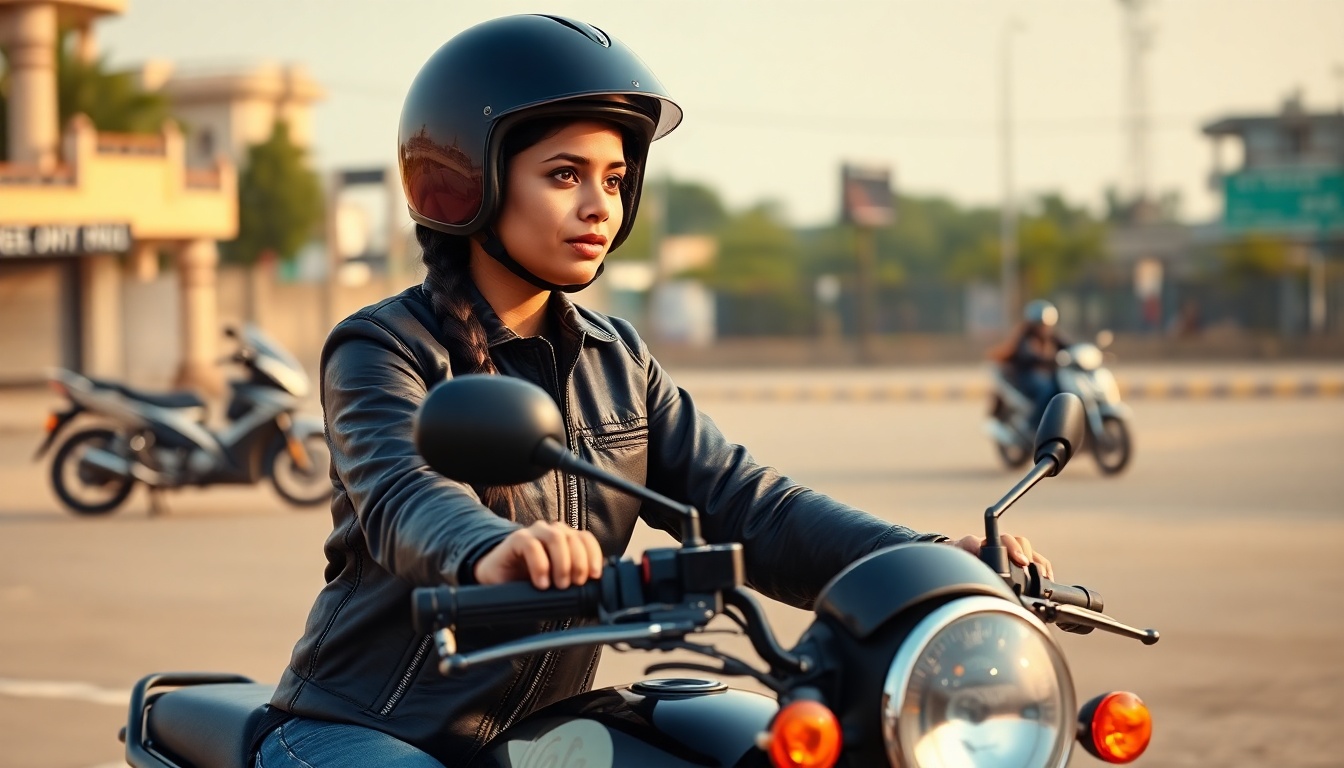
A basic bike training certificate for beginners is your first real step to safe riding. It’s not just about passing the RTO test; it’s about learning to survive on chaotic roads. A proper course, like our 12-hour foundation program, teaches you control, hazard perception, and the confidence to handle your first 1000 kilometers safely.
I see it every weekend at our training grounds. A new rider, excited about their shiny bike, but their hands are locked on the handlebars like they’re holding on for dear life. They can start the engine. They can even ride in a straight line on an empty road.
But the moment you introduce a pothole, a sudden auto-rickshaw swerve, or a wet manhole cover, that confidence evaporates. This is the exact gap a proper basic bike training certificate for beginners is designed to fill. It’s the difference between just moving a motorcycle and actually riding it.
Look, buying a bike is easy. Learning to operate the clutch and gears takes a weekend. But building the instincts to navigate Indian traffic? That’s a skill. And that skill starts with the right foundation.
Why Most Riders Get basic bike training certificate beginners Wrong
Here is the thing about most new riders. They think the certificate is just a piece of paper for the RTO. They see it as a bureaucratic hurdle, not a lifesaving tool. So they take the shortest, cheapest route possible.
They learn in a dusty, empty lot with an uncle shouting instructions. They practice the “8” figure for the test until they’re dizzy. They pass, get their license, and then face real Bangalore or Pune traffic for the first time alone. That’s a dangerous gap.
The real risk is not failing the test. It is passing the test without learning how to handle a rear-wheel skid on a rainy day, or how to brake hard without locking the front wheel when a dog runs across the street. I have seen this mistake cause low-speed crashes dozens of times in the first month itself.
Another common error? Rushing. People want to go from zero to highway touring in two weeks. A good basic training course forces you to slow down. It makes you master the bike at 20 km/h before you even think about 60. Control before speed. Always.
I remember a student, let’s call him Rohan. He came to us after already getting his license. He could ride, but he was terrified of city traffic. On our controlled course, we set up a simple drill: riding in a straight line while looking over your shoulder for a lane change.
Every single time Rohan turned his head, his left hand would unconsciously pull the handlebar left. The bike would veer sharply. On a road, with a truck beside him, that veer could have been fatal. He had his certificate, but he never learned this fundamental skill. It took him two hours of focused practice to break that habit. That’s what real training is for.
What Actually Works on Indian Roads
Forget the test figures for a moment. Let’s talk about what you actually need. Your eyes are your most important tool. A trained rider scans ahead, not at the bumper of the car in front. You look for escape routes, not just obstacles.
You learn to use both brakes together, with a gentle, progressive squeeze on the front. Stabbing at the front brake is a guaranteed way to meet the tarmac. We practice this until it’s muscle memory, because when that cow decides to cross, you won’t have time to think.
Here is what most new riders get wrong about balance. It’s not about going fast. It’s about being stable at walking speed. Can you do a tight U-turn without putting a foot down? Can you ride over a speed breaker without wobbling? If you can’t, you’re not ready for the road.
Clutch control is another game-changer. It’s not just for changing gears. A slightly slipped clutch is your best friend in stop-and-go traffic. It gives you smooth, crawl-along control without stalling. This saves your legs, your engine, and your sanity.
Finally, body position. You are part of the bike. Leaning slightly into a turn helps it go where you want. Sitting relaxed, with bent elbows, lets the bike move beneath you over bad roads. A stiff rider fights the bike. A trained rider works with it.
A license gives you legal permission to ride. A proper basic training certificate gives you the practical permission to survive. The first is granted by the RTO. The second is earned in a safe training environment, where mistakes teach you instead of injuring you.
— Throttle Angels Instructor Team
Beginner vs Trained Rider Comparison
| Aspect | What Beginners Do | What Trained Riders Do |
|---|---|---|
| Emergency Braking | Panic, grab a handful of front brake, lock the wheel, and skid. | Apply progressive pressure to both brakes, keeping the bike upright and stable to stop in the shortest distance. |
| Hazard Scanning | Stare fixedly at the vehicle directly ahead, missing peripheral dangers. | Constantly scan 12-15 seconds ahead, checking mirrors, and identifying potential escape paths. |
| Slow Speed Control | Wobble, put feet down, and stall in tight traffic or parking. | Use clutch, rear brake, and balance to maneuver smoothly at walking speed with full control. |
| Road Surface Reaction | Hit sand, gravel, or wet paint and tense up, making the skid worse. | Spot the hazard early, reduce speed, keep the bike upright, and ride through with minimal steering input. |
| Mental Approach | See every other vehicle as a threat or obstacle, leading to stress. | Predict other road users’ actions, maintain a safety cushion, and ride with calm, defensive awareness. |
Adapting to Indian Road Conditions
Book Your Trial Session Today!
Ready to master the roads of Bangalore or Pune? Join India’s premier motorcycle driving school.
Training Available in Bangalore & Pune
Book Your Trial Session Today!
Ready to master the roads of Bangalore or Pune? Join India’s premier motorcycle driving school.
Training Available in Bangalore & Pune
Your training must go beyond the perfect tarmac of a test track. In India, the road is a shared space with its own rules. You need to read the flow of traffic, not just the lane markings. Because often, there are no lane markings.
Monsoon riding is a whole different skill. Those first rains bring up all the oil and grime, making roads slicker than ice. A good course teaches you to be extra smooth with all your controls—brakes, throttle, steering. No sudden moves.
On highways, the danger is fatigue and speed differential. A trained rider knows to take breaks, stay hydrated, and watch for oncoming traffic from side roads. They also know that a truck’s blind spot is a death zone.
Look, the chaos is predictable. The pedestrian will jaywalk. The car will turn without a signal. The pothole will be there. Your training should make you ready for these certainties, not just the ideal, empty road.
Frequently Asked Questions
Is a basic training certificate mandatory for a license?
While not always legally mandatory, it should be treated as essential. The RTO test checks minimal skills. A proper certificate from a school like ours ensures you learn the survival skills the test misses, especially for Indian road conditions.
I already know how to ride a scooter. Do I need bike training?
Absolutely. A motorcycle is heavier, has a manual gearbox, and handles very differently. The weight transfer during braking and cornering is more pronounced. Scooter experience helps, but it doesn’t translate directly to safe motorcycle control.
What is the ideal duration for a beginner’s course?
You cannot rush muscle memory. A solid foundation takes 10-15 hours of structured training, spread over a few days. This gives you time to practice drills, make mistakes in a safe zone, and let the lessons truly sink in.
How much does Throttle Angels training cost?
Our courses start at competitive rates with flexible packages. Call Rajkumar at 9535350575 or Arun at 8169080740 for current pricing and batch schedules in Bangalore and Pune.
Do you provide bikes for training, or should I bring my own?
We provide training motorcycles for all our beginner courses. It’s better to learn on a bike you’re not afraid of dropping. Once you have the fundamentals, we help you transition to your own motorcycle with confidence.
Think of your basic training as the strongest part of your bike’s frame. You never see it, but it holds everything together. It’s what keeps you safe when everything else is trying to shake you apart.
Invest in those initial hours. Build that foundation right. The road is waiting, and it’s a lot more fun when you’re in control.
Book Your Trial Session Today!
Ready to master the roads of Bangalore or Pune? Join India’s premier motorcycle driving school.
Training Available in Bangalore & Pune