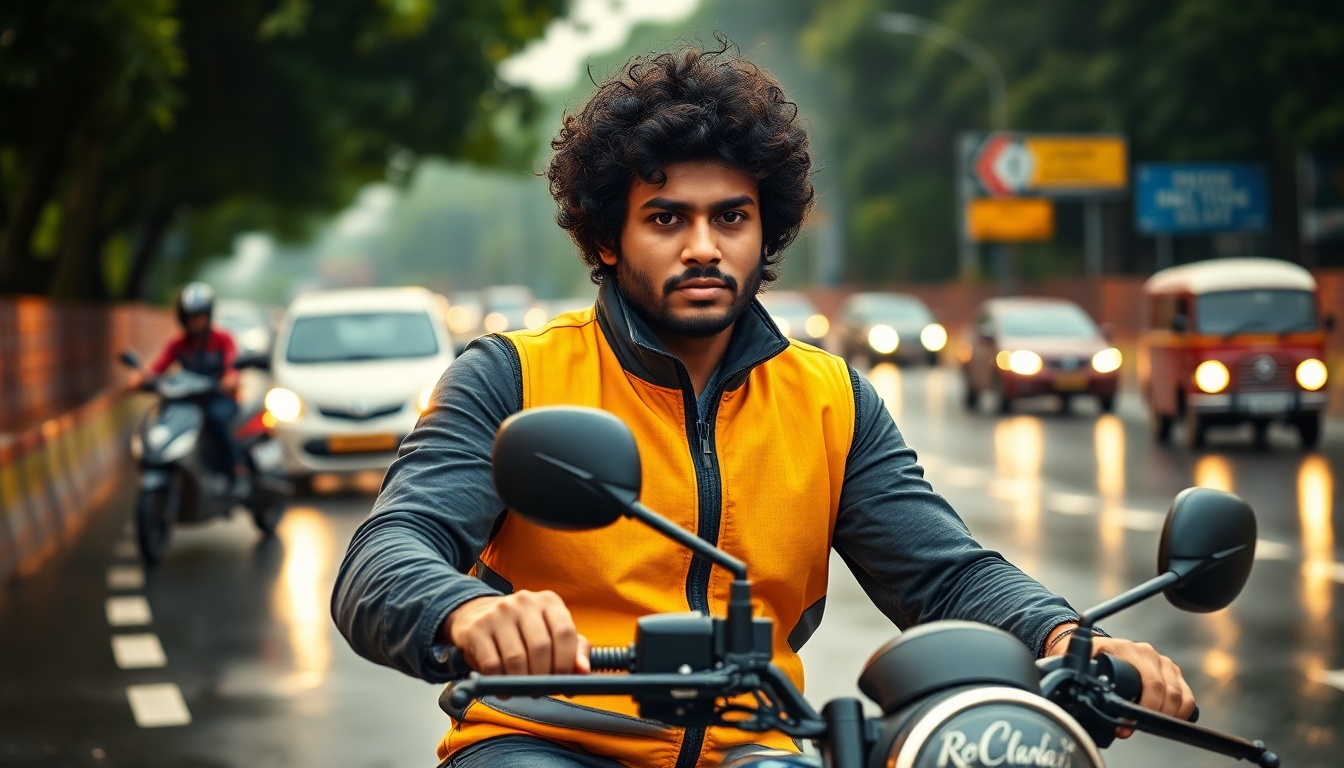
Quick Answer
A solid basic motorcycle weekend training course is a 16-hour commitment over two days. It’s not about learning to ride in a straight line. It’s about building muscle memory for emergency braking, swerving, and low-speed control so you can survive your first 1000 kilometers on Indian roads.
I see it every single weekend. A brand new rider walks into our training ground, their eyes wide with a mix of excitement and fear. They’ve just bought their dream bike, maybe a Royal Enfield or a KTM, and they’ve spent more time watching YouTube reviews than actually learning how to control it.
They think riding is about throttle and speed. I know it’s about control and survival. That’s the real goal of a proper basic motorcycle weekend training. It’s the bridge between buying a motorcycle and actually becoming a rider who can handle Bangalore’s Silk Board junction or Pune’s Katraj traffic without freezing up.
Look, your friend or cousin might have taught you the basics in an empty lot. But that’s like learning to swim by being thrown into the shallow end. You might not drown, but you’ll never learn the right strokes. A structured weekend course builds those strokes from the ground up.
Why Most Riders Get basic motorcycle weekend training Wrong
Here is what most new riders get wrong about this training. They think it’s just for getting a license. They see it as a checkbox, a formality. So they choose the cheapest, quickest option, memorize a few maneuvers for the test, and call it a day.
The real risk is not failing the test. It is passing the test without the skills to handle a real emergency. I have seen this mistake cause accidents dozens of times. A dog runs into the road, a car door swings open, a patch of gravel appears on a turn. The untrained rider panics. They grab a fistful of front brake and lock the wheel, or they freeze and ride straight into the hazard.
Another common error? Riders use their own big, heavy bike for training. This is a terrible idea. You should learn the fundamentals on a light, forgiving training motorcycle. You need to drop the bike, stall it, make mistakes without the fear of damaging your expensive new machine. Learning on a 200kg cruiser is like learning calculus before you know addition.
Finally, people underestimate the physical and mental fatigue. Two days of proper training is exhausting. Your forearms will ache, your brain will be overloaded with new information. If you’re not tired by the end of day one, you’re not training hard enough. This isn’t a leisurely ride.
Last month, a software engineer named Arjun showed up for our weekend course. He had been “riding” his father’s old scooter for years and had just upgraded to a powerful 400cc bike. He was confident, almost cocky. During the slow-speed control drill, he kept looking down at the front wheel, his body tense.
I made him stop. “Where are you looking?” I asked. “At the cone,” he said. I pointed to the far end of the training ground. “Your bike goes where your eyes go. Look at the exit, not the obstacle.” The next attempt was fluid. He realized he’d been steering his scooter with his hands for years, not with his vision and body. That one correction changed everything for him. The bike was no longer a wrestling opponent; it became an extension of his intent.
What Actually Works on Indian Roads
Let’s talk about what actually works. The core of any good weekend course is not highway cruising. It’s mastering the bike at walking pace. If you can control your motorcycle at 5 km/h in a tight circle, you can control it at 50. This builds balance, clutch feel, and trust.
Emergency braking is non-negotiable. Here is the thing about panic braking: your body’s instinct is to slam both brakes. On a motorcycle, that’s a ticket to the ground. You need to learn progressive pressure – squeezing the front, engaging the rear, and doing it while the bike is upright. We drill this until it becomes a reflex.
Swerving is your escape button. When that pothole or pedestrian appears suddenly, you won’t have time to stop. You need to know how to push the handlebar to lean the bike quickly and decisively, then recover. It’s a single, smooth motion that feels unnatural until you’ve practiced it a hundred times.
Then there’s the clutch. Most riders treat it as an on/off switch. A trained rider uses it like a dimmer. Feathering the clutch in slow traffic, finding the friction zone for smooth starts on a hill, using it to stabilize the bike in a tight turn. This alone reduces stalling and jerky movements by 90%.
Finally, you learn to read the road. Not just the signs, but the surface. That shiny patch in the afternoon? It could be oil or water. The difference in colour on the tarmac? Maybe a new patch that’s slick. You start seeing the road as a series of clues, not just a grey strip.
These skills stack. A good weekend course connects them. You brake, then you swerve. You do a slow U-turn, then accelerate out. You learn to link actions fluidly, because on the road, problems don’t come at you one at a time.
A weekend of training doesn’t make you a master. It makes you aware. It gives you the fundamental tools to practice safely for the next ten years. The confidence you get isn’t from knowing everything; it’s from knowing you have the skills to handle the unknown.
— Throttle Angels Instructor Team
Beginner vs Trained Rider Comparison
| Aspect | What Beginners Do | What Trained Riders Do |
|---|---|---|
| Approaching a Hazard | Stare directly at the obstacle (pothole, dog). Body tenses up, inputs become jerky. | Identify an escape path and look through it. Keep body relaxed, execute a planned swerve or controlled brake. |
| Sudden Panic Stop | Grab the front brake lever hard, lock the front wheel, and likely crash. | Apply progressive pressure to front brake, add rear brake, keep arms straight and weight back. |
| Heavy City Traffic | Ride the clutch or constantly brake, leading to fatigue and stalling. | Use clutch feathering for ultra-slow control, cover both brakes, and maintain a safety bubble. |
| Taking a U-Turn | Put feet down, do a clumsy multi-point turn, disrupting traffic flow. | Execute a smooth, single, continuous turn using head turn, counterbalance, and clutch control. |
| Mental Focus | Focused only on the vehicle immediately in front. Reactive riding. | Scans 12-15 seconds ahead, checks mirrors, plans for multiple “what-ifs.” Proactive riding. |
Adapting to Indian Road Conditions
Book Your Trial Session Today!
Ready to master the roads of Bangalore or Pune? Join India’s premier motorcycle driving school.
Training Available in Bangalore & Pune
Book Your Trial Session Today!
Ready to master the roads of Bangalore or Pune? Join India’s premier motorcycle driving school.
Training Available in Bangalore & Pune
Your training must account for India, not Europe. Our roads are a shared space with their own rhythm. You’ll deal with unpredictable traffic, from bullock carts to SUVs, and road surfaces that change every hundred meters.
The monsoon is a different beast. A good course will teach you about riding in the rain. It’s not just about being slow. The first hour of rain is the most dangerous, as oil and dirt rise to the surface. You learn to avoid painted road markings and manhole covers, and how to brake gently in a straight line.
Then there’s the highway. The real danger on our highways is fatigue and monotony, combined with sudden chaos. A trained rider knows to take breaks, stay hydrated, and watch for cross traffic at every small junction – because someone will always try to cross a six-lane highway.
Look, the goal is to make your riding predictable. When you are predictable, other road users, as chaotic as they are, can react to you. Smooth, deliberate inputs make you visible and safe in the beautiful madness of our traffic.
Frequently Asked Questions
I already know how to ride a scooter. Do I really need this training?
A motorcycle handles, brakes, and weighs completely differently from a scooter. The core skills of clutch control, braking balance, and low-speed handling are not transferable. This training rebuilds your fundamentals for a heavier, more powerful machine.
What should I wear for the weekend training?
Full-length jeans, a full-sleeve jacket or thick hoodie, sturdy shoes that cover your ankles (no sandals or floaters), and full-finger gloves. We provide helmets. Dressing right is your first lesson in safety.
Will I get to ride my own bike during training?
We strongly advise against it. You will learn faster and without fear on our lightweight, crash-protected training motorcycles. Once core skills are cemented, you can apply them to any bike, including your own.
How much does Throttle Angels training cost?
Our courses start at competitive rates with flexible packages. Call Rajkumar at 9535350575 or Arun at 8169080740 for current pricing and batch schedules in Bangalore and Pune.
Is two days really enough to learn?
It’s enough to learn the essential, life-saving skills and practice them in a safe environment. It is not enough to become an expert. Think of it as learning the alphabet. The real learning—forming words and sentences—happens over thousands of kilometers of mindful practice afterwards.
So, you have your new bike sitting in the parking lot. The question isn’t whether you can ride it home from the showroom. The question is whether you can ride it for the next five years.
Invest a weekend. Build a foundation that won’t wash away at the first sign of trouble. The roads are waiting, and they deserve your respect. Give yourself the skill to match your enthusiasm.
Book Your Trial Session Today!
Ready to master the roads of Bangalore or Pune? Join India’s premier motorcycle driving school.
Training Available in Bangalore & Pune