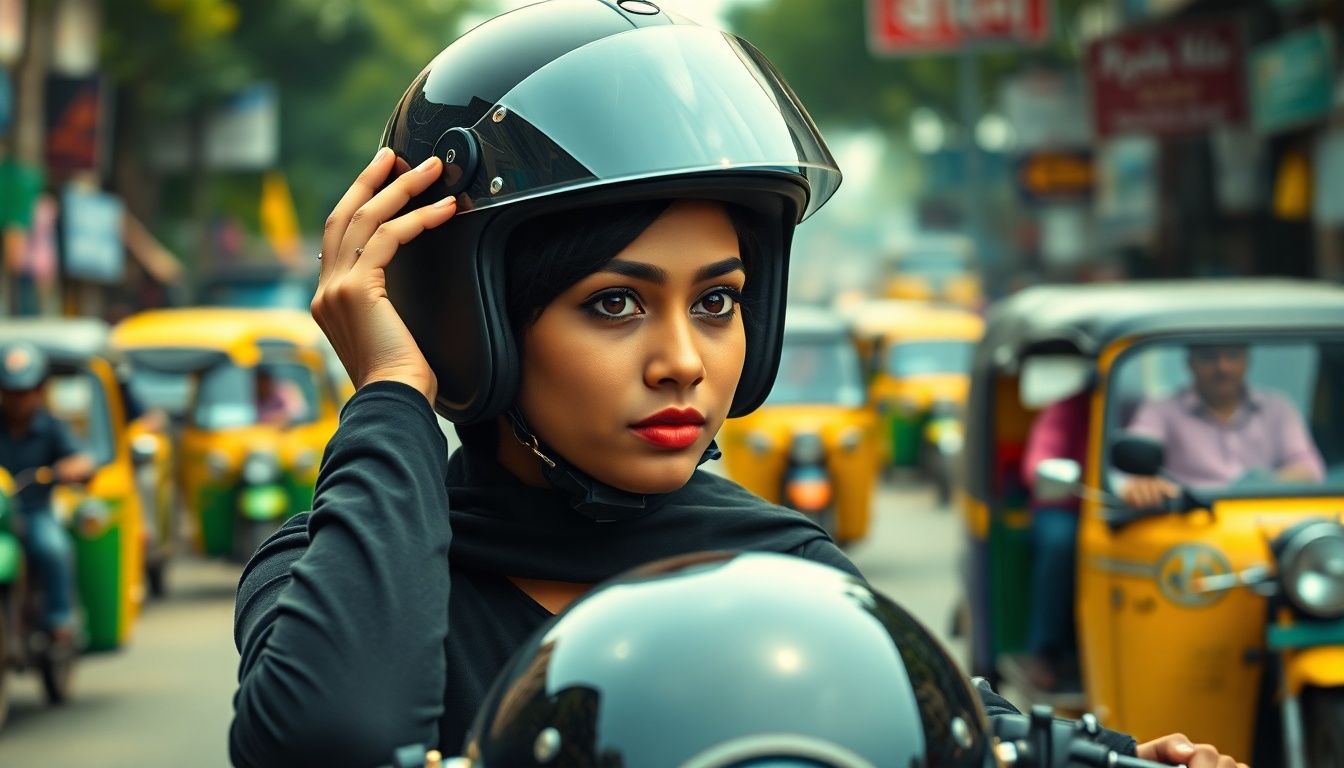
Quick Answer
A proper beginner motorcycle course weekend in Bangalore is a 16-hour, two-day intensive program. You start from zero, learning controls in a safe lot before moving to real traffic. The goal isn’t to make you a racer, but to give you the core skills and confidence to ride safely on our chaotic roads from day one.
I see it every single weekend. A new rider walks into our training ground, their eyes wide. They’ve just bought their first bike, maybe a shiny new Royal Enfield or a nimble Honda. They’re excited, a little scared, and they have no idea where to even begin.
That’s the exact moment a proper beginner motorcycle course weekend in Bangalore becomes priceless. It’s not about getting a license. It’s about building a foundation that keeps you alive. You see, our roads are a beautiful, terrifying dance. An auto-rickshaw will cut across three lanes without looking. A pedestrian will step out from behind a bus. A pothole will appear where the road was smooth yesterday.
Learning to ride in a controlled, empty space is one thing. Learning to ride here is another. That’s what we focus on. We take that nervous energy and channel it into real skill. You don’t need any experience. You just need the willingness to listen and the courage to start.
Why Most Riders Get beginner motorcycle course weekend Bangalore Wrong
Here is what most new riders get wrong about a beginner course. They think it’s just for the license test. They believe if they can wobble around their apartment block, they’re ready. The real risk is not falling at 10 km/h in your colony. It’s being unprepared for the unpredictable flow of traffic on Outer Ring Road at 40 km/h.
I have seen this mistake cause near-misses dozens of times. A rider learns the basics from a friend. They get the clutch and throttle sorted. But they’ve never practiced an emergency stop while turning. They’ve never learned to shift their weight properly for a tight U-turn. Then they hit a patch of gravel on a bend, panic, and grab the front brake. The bike washes out.
Another common error? Focusing only on the bike. Riding is 80% about what’s happening around you. A weekend course teaches you to read traffic like a book. You learn to predict the cow that might amble onto the street, or the car door that could swing open. You stop being a passive passenger on your bike and start being an active manager of the space you’re moving through.
Look, buying a helmet and gloves is easy. Building the muscle memory to actually use them correctly under pressure? That takes guided, repeated practice. That’s what a structured weekend is for. It installs the software your brain needs to handle the hardware of your motorcycle.
I remember a student, Priya. She was in her 40s, had never ridden anything with gears. On the first morning, she was so tense her shoulders were up to her ears. She stalled the bike. Again and again. The frustration was real.
We took a break. I told her to forget the bike for a minute. We just talked about balance, about the feeling of leaning on a bicycle as a kid. We went back to the clutch, just the friction zone, no throttle. By lunch, she was doing smooth figure-eights. By Sunday evening, she navigated a simulated market street with confidence. That shift from fear to control? That’s the magic no YouTube video can give you.
What Actually Works on Indian Roads
Let’s talk about what actually works. It starts with vision. Your eyes are your best tool. Beginners stare at the bumper of the car in front of them. Trained riders look 12 seconds ahead. They scan the sidewalks, the gaps between vehicles, the reflections in shop windows.
You create a bubble of space around your bike. You actively manage it. If a car enters that bubble, you adjust. You slow down, speed up, or change lanes. You never assume someone will follow a rule. You assume they might do the craziest thing possible, and you have a plan for it.
Braking is another big one. Here is the thing about braking: using both brakes is basic. Using them correctly while swerving around a pothole is a skill. We drill this. You learn to brake hard in a straight line, then release and turn. You practice stopping while leaned over a little, because that’s how you’ll find yourself when a kid chases a ball into the street.
Slow speed control is your secret weapon. Bangalore traffic is stop-and-go. If you can balance your bike at walking pace, make a tight turn from a standstill, you are in control. You stop fighting the bike. It becomes an extension of your body. This isn’t about tricks. It’s about never feeling flustered at a traffic signal on an incline.
Finally, there’s mindset. You are the most vulnerable thing on the road. Accept that. It makes you alert, not scared. It makes you defensive, not aggressive. You learn to let the impatient car go. You learn that winning is getting home safely, not winning the race to the next signal.
These aren’t abstract concepts. We break them down into drills. Cone patterns for control. Gradual exposure to real traffic. It’s a progressive build-up of skill and confidence that sticks with you.
A weekend of training doesn’t make you an expert. It makes you aware. It gives you the tools to practice safely for a lifetime. The confidence you gain isn’t arrogance—it’s the calm knowledge that you can handle what the road throws at you.
— Throttle Angels Instructor Team
Beginner vs Trained Rider Comparison
| Aspect | What Beginners Do | What Trained Riders Do |
|---|---|---|
| Vision & Scanning | Stare at the road directly ahead or at the speedometer. Miss peripheral dangers. | Constantly scan ahead, to the sides, and mirrors. Build a mental map of all moving objects. |
| Braking in an Emergency | Grab the front brake hard, often locking the wheel or panicking and using no brake. | Apply progressive pressure to both brakes, keeping the bike upright to maximize stopping power. |
| Slow Speed & Traffic Control | Wobble, put feet down, stall frequently. Become a hazard to themselves and others. | Use clutch friction zone and rear brake to maintain rock-solid balance and smooth maneuvers. |
| Road Positioning | Ride in the center of the lane, often in blind spots, with no escape route planned. | Position themselves for best visibility and escape paths, adjusting lane position for safety. |
| Mindset in Chaos | React with panic or anger. Make unpredictable, jerky movements. | Stay calm, predict others’ mistakes, and execute smooth, deliberate corrections. |
Adapting to Indian Road Conditions
Book Your Trial Session Today!
Ready to master the roads of Bangalore or Pune? Join India’s premier motorcycle driving school.
Training Available in Bangalore & Pune
Book Your Trial Session Today!
Ready to master the roads of Bangalore or Pune? Join India’s premier motorcycle driving school.
Training Available in Bangalore & Pune
Our roads are a special kind of classroom. You have to learn to read the surface. That shiny patch in the evening? Could be oil or water. That seemingly smooth dirt covering the tarmac? It’s fine dust that acts like marbles under your tires.
Monsoon riding is a whole different skill set. We teach you how to ride in the wet. It’s about smoothness—no sudden throttle, brakes, or steering inputs. You learn to avoid painted road markings and manhole covers when it rains. You learn that the first hour of a monsoon is the most dangerous, as oil rises to the surface.
Then there’s the traffic mix. You share the road with everything from bullock carts to supercars. The key is to identify the unpredictable elements. A herd of sheep, a loaded tempo with swaying cargo, a school bus that might stop abruptly. You give them a wide berth. You never try to win an argument with a bus.
Highway riding introduces its own rules. Fatigue is a genuine danger. We talk about taking breaks, staying hydrated, and the hypnosis of a long, straight road. You learn to overtake decisively, never lingering in the oncoming lane. This is the real-world curriculum no manual covers.
Frequently Asked Questions
I have never sat on a bike. Is this course for me?
Absolutely. Our beginner weekend is designed for absolute novices. We start with the very basics: where the controls are, how to find the balance point, how to start and stop. Your first session is on our training bikes in a completely safe, controlled area.
What should I bring for the weekend course?
Bring a full-face helmet if you have one (we have loaners), a sturdy jacket, full-length pants, and shoes that cover your ankles. Gloves are highly recommended. That’s it. We provide the training motorcycles. Come with an open mind and a willingness to learn.
Will this course help me get my motorcycle license?
Yes, directly. The skills you learn—especially slow-speed control, figure-eight, and emergency braking—are exactly what you need for the RTO driving test. More importantly, you’ll have the actual skill to ride safely after you get the license, which is the real point.
How much does Throttle Angels training cost?
Our courses start at competitive rates with flexible packages. Call Rajkumar at 9535350575 or Arun at 8169080740 for current pricing and batch schedules in Bangalore and Pune.
Is two days really enough to learn?
It’s enough to learn the fundamentals correctly and safely. You will not be a tour-ready expert. You will be a competent beginner with a solid foundation. You’ll know what to practice and how to practice it safely, which is the most important outcome.
Look, that shiny new bike in your parking spot is calling. It represents freedom, adventure, the open road. I get it. The urge to just get on and go is powerful.
Resist it for one weekend. Invest those two days in yourself. Give yourself the gift of confidence and competence. The roads will still be there on Monday. And you’ll be ready for them.
Book Your Trial Session Today!
Ready to master the roads of Bangalore or Pune? Join India’s premier motorcycle driving school.
Training Available in Bangalore & Pune