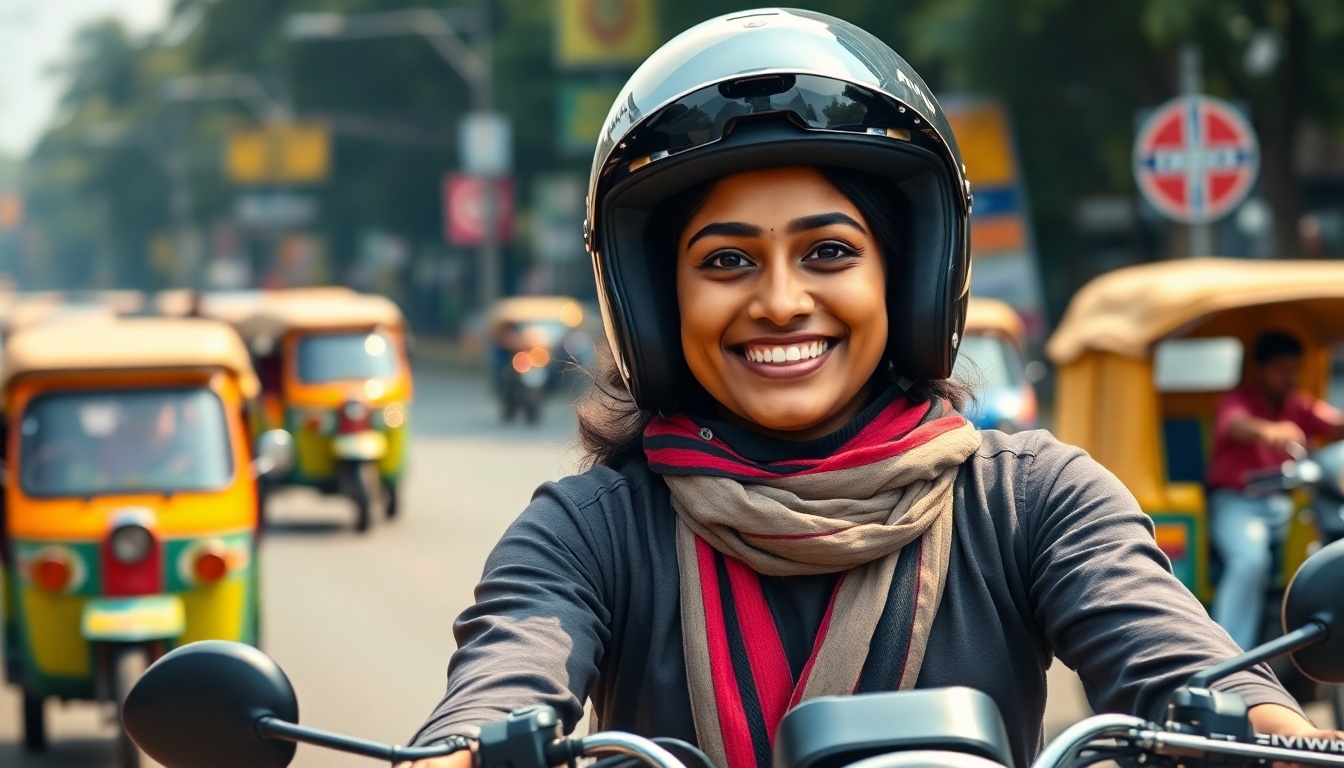
Quick Answer
Mastering beginner bike riding in Bengaluru requires focused training on city-specific chaos, not just open roads. You need at least 15-20 hours of structured practice before tackling peak traffic. The real goal is to build instinct, not just pass a test.
I remember a student last month, fresh off buying a new Royal Enfield. He was beaming with pride in our Koramangala training lot. He told me he’d already ridden from the showroom to his home in HSR Layout, about 3 kilometers away.
His hands were still shaking. That short ride through Bangalore’s unpredictable traffic had scared him more than he’d ever admit. His story is why we do this. That jump from a controlled lot to the real chaos is where most plans for beginner bike riding in Bengaluru fall apart.
Look, Bangalore is a beautiful beast for new riders. Wide Outer Ring Roads suddenly feed into tiny, potholed service lanes. Polite traffic near Indiranagar gives way to the free-for-all at Silk Board. You need a different kind of skill here. It’s not about going fast. It’s about surviving the unpredictable.
Why Most Riders Get beginner bike riding Bengaluru Wrong
Here is what most new riders get wrong about starting out. They think the bike is the challenge. They focus on clutch control and gear shifts in an empty parking lot. That’s just step one.
The real risk is not stalling the bike. It’s failing to read the road. I have seen this mistake cause near-misses dozens of times. A rider is so focused on their own handlebars, they miss the auto-rickshaw suddenly swerving without a signal, or the pedestrian stepping out from behind a parked truck.
Another big error? Choosing the wrong roads to learn on. You think a wide, “empty” road like the one leading to Manyata Tech Park on a Sunday is safe. But that’s where cars feel comfortable speeding. The controlled chaos of a busy street, where everyone is moving slower and more predictably, is often a better teacher.
They also underestimate Bangalore’s surface changes. A smooth tarmac patch can turn into gravel, then a metal drain cover, then a deep pothole—all within 50 meters. If you’re not scanning for these changes three steps ahead, you’re reacting too late. And on two wheels, late reactions have consequences.
I was riding behind a student, Ananya, on her first real-world session near Marathahalli. We were in the left lane, moving steadily. An SUV ahead of us was indicating a right turn, its brake lights glowing.
Ananya saw the indicator and assumed the SUV would wait for a gap. She started to accelerate to pass it on the left. What she didn’t see was the impatient biker squeezing through the gap between the SUV and the divider. The SUV suddenly jerked left to avoid him, cutting right into Ananya’s path. She had to brake hard and swerve onto the dusty shoulder. That day, she learned a vital Bangalore lesson: never trust an indicator. Trust only a vehicle’s actual position and wheels.
What Actually Works on Indian Roads
So what actually works? First, you manage your space. In Bangalore traffic, your safety margin is your most valuable asset. Always keep an “escape route” in mind—a gap to your left or right you can slide into if the vehicle ahead does something stupid.
This means not riding in the center of a lane, especially on roads with loose gravel or oil stains near the middle. Position yourself slightly off-center, where your tires meet cleaner tarmac. You’re more visible in side mirrors this way, too.
Here is the thing about speed. Going with the flow is safer than being the slowest object on the road. If everyone is doing 40 km/h on Sarjapur Road, doing 25 km/h makes you a hazard. Cars will try to overtake you constantly, squeezing you into the curb. Match the general speed, but keep your distance.
Your eyes should never stop moving. Look far ahead to see the traffic light change or a jam forming. Check your mirrors every 8-10 seconds. Glance at the gaps beside you. This constant scan builds a 360-degree picture. You stop being surprised.
And use your brakes correctly. In city traffic, covering your front brake lever with two fingers is a game-changer. Your reaction time drops from half a second to almost instant. That half-second is the difference between stopping safely and hitting the car that just jumped a signal.
Finally, own your lane. When you need to make a turn or avoid a hazard, signal, check your mirror, and then move decisively. A hesitant, slow drift is what causes collisions. Be predictable in your unpredictability. Make your intention clear and then follow through.
Riding in Bangalore isn’t about fighting the chaos. It’s about flowing with it. You learn to read the body language of vehicles, not just their signals. You see the slight turn of a car’s front wheel before the driver does. That’s the instinct we build. That’s what keeps you safe.
— Throttle Angels Instructor Team
Beginner vs Trained Rider Comparison
| Aspect | What Beginners Do | What Trained Riders Do |
|---|---|---|
| Eye Movement | Stare fixedly at the vehicle or road directly in front of them. | Constantly scan ahead, to the sides, and check mirrors to build a full picture. |
| Lane Positioning | Ride in the center of the lane, often over slippery paint or oil spills. | Position themselves slightly off-center for better visibility, traction, and an escape route. |
| Brake Usage | Use only the rear brake in panic, or grab the front brake harshly. | Cover the front brake lever, apply progressive pressure using both brakes in harmony. |
| Speed Management | Either go too slow, becoming a obstacle, or too fast, leaving no room for error. | Match the flow of traffic while maintaining a solid 3-second gap from the vehicle ahead. |
| Hazard Reaction | Freeze or make a single, abrupt steering input when surprised. | Smoothly adjust speed and position early, always having a planned escape path. |
Adapting to Indian Road Conditions
Book Your Trial Session Today!
Ready to master the roads of Bangalore or Pune? Join India’s premier motorcycle driving school.
Training Available in Bangalore & Pune
Book Your Trial Session Today!
Ready to master the roads of Bangalore or Pune? Join India’s premier motorcycle driving school.
Training Available in Bangalore & Pune
Bangalore’s monsoon is a different riding world altogether. The first rain after a dry spell is the most dangerous. It brings up all the engine oil and grime, turning the road into a slick skating rink. Go slow, avoid painted road markings and manhole covers, and double your following distance.
On highways like the one to Mysore, the threat is fatigue and high-speed monotony. Your mind can wander. Fight this by consciously scanning, changing your sitting position slightly, and taking a break every 45 minutes. Hydrate. The real danger isn’t the truck ahead, it’s your own fading concentration.
In city traffic, treat every stationary vehicle as a threat. A door could open. A child could run out from behind it. A two-wheeler could suddenly emerge from its blind spot. Slow down when passing rows of parked cars, and be ready to brake or swerve.
At night, your biggest challenge is being seen. Wear reflective gear. Make sure your headlight is aimed correctly—not blinding oncoming traffic, but illuminating the road ahead. And watch for animals, especially on the city’s outskirts. They don’t follow any rules.
Frequently Asked Questions
What is the best beginner bike for Bangalore roads?
Look for something light, nimble, and with good low-end torque for stop-and-go traffic. A 150-160cc commuter is perfect. Avoid heavy bikes initially. You need to build confidence maneuvering at low speeds before you handle more power.
How long does it take to learn bike riding in Bangalore?
With consistent, structured practice, most people are ready for light traffic in 2-3 weeks. But “learning” never stops. It takes about 6 months of daily riding in varied conditions for things to start feeling instinctive. Don’t rush the process.
Is Bangalore traffic too dangerous for a beginner?
It’s challenging, not impossible. The key is progressive exposure. Start in quiet residential areas early in the morning. Gradually move to busier streets, then peak traffic. With proper training on hazard prediction, you can manage the risk effectively.
What’s the single most important skill for Bangalore riding?
Situational awareness. If you can consistently see a problem three steps before it becomes an emergency, you’ve won half the battle. This means constantly scanning, predicting, and planning your next move. It’s a mental skill, not a physical one.
How much does Throttle Angels training cost?
Our courses start at competitive rates with flexible packages. Call Rajkumar at 9535350575 or Arun at 8169080740 for current pricing and batch schedules in Bangalore and Pune.
Look, your first bike is a ticket to freedom. The open road to Nandi Hills, the breeze on the Mysore highway, the ability to weave through Bangalore’s streets—it’s a fantastic feeling. But that freedom is built on a foundation of respect.
Respect for the machine, the road, and the unpredictable nature of everything around you. Start slow. Build that foundation solidly. The miles will take care of themselves. Now, go put on your helmet. And ride smart.
Book Your Trial Session Today!
Ready to master the roads of Bangalore or Pune? Join India’s premier motorcycle driving school.
Training Available in Bangalore & Pune