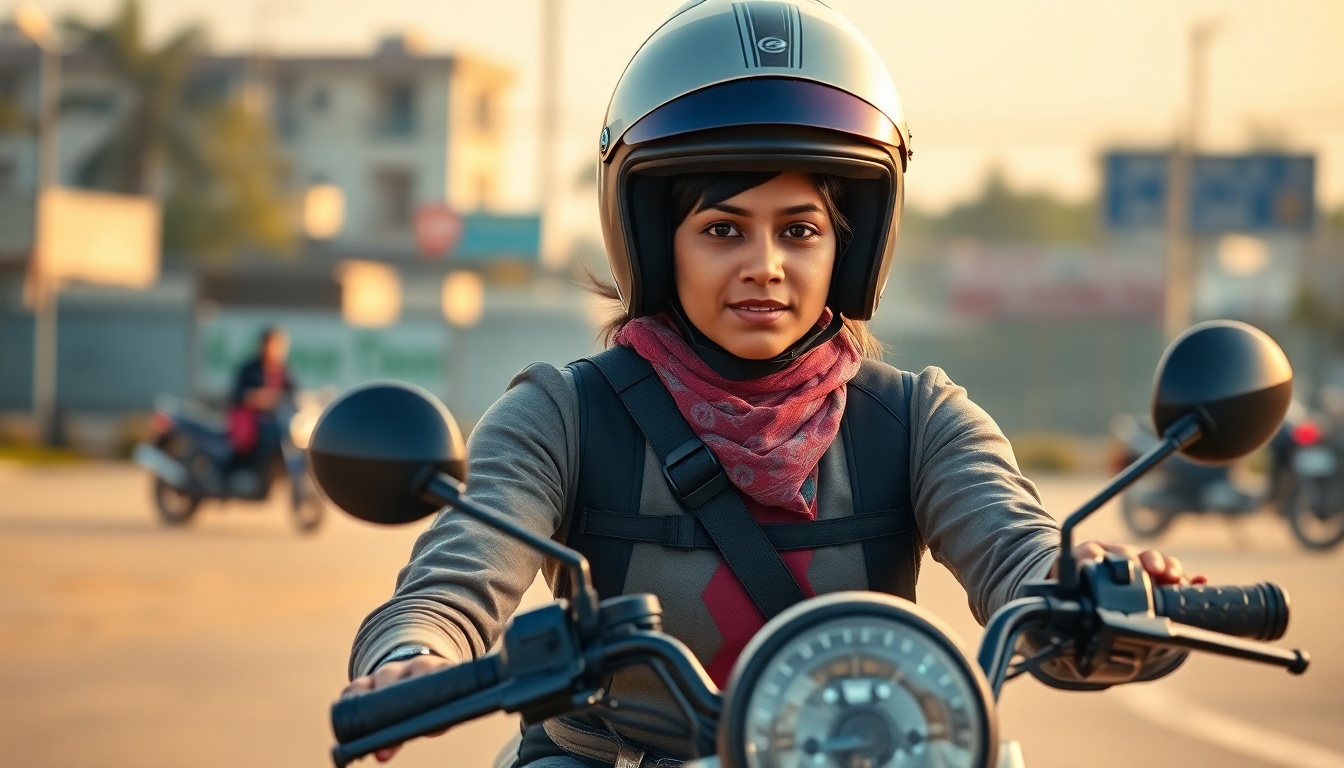
Quick Answer
Proper basic riding training for beginners is a 15-20 hour commitment that builds muscle memory for survival. It’s not about passing a test; it’s about learning to predict chaos on roads where a cow, a bus, and a pothole can appear in the same second. Start in a controlled lot, not on public roads.
I see it every weekend at our training grounds. A new rider, helmet in hand, staring at their shiny new bike with a mix of excitement and pure fear. They can start the engine. They might even wobble forward a few feet.
But their eyes tell the real story. They’re thinking about the traffic outside the gate, the honking, the sudden merges. That’s where the right basic riding training for beginners makes all the difference. It’s the bridge between buying a motorcycle and actually riding it with confidence on our roads.
Look, anyone can twist a throttle. The training is about everything else that happens after that twist. The stuff that keeps you upright when the unexpected, which is a daily guarantee here, happens.
Why Most Riders Get basic riding training beginners Wrong
Here is what most new riders get wrong about basic riding training beginners. They think it’s a formality. A box to tick for the license. They focus on the clutch control test in a quiet alley and call it a day.
The real risk is not stalling the bike. It’s freezing when a pedestrian steps out from behind a parked truck on a rainy Bangalore evening. I have seen this mistake cause accidents dozens of times. The rider knew the controls but had zero hazard practice.
Another huge mistake? Learning from a friend or relative. That person might be a great rider, but they are almost never a great teacher. They skip the fundamentals. They say “just lean” without explaining counter-steering. They throw you into traffic on day two.
You don’t just inherit their bad habits. You miss the structured, safe progression that builds real skill. Your uncle won’t make you practice emergency braking for an hour until it’s pure reflex. But you need that reflex.
I remember a student, Priya. She’d “learned” on her brother’s scooter in her apartment basement. She came to us terrified of changing gears. On her first proper ride with us, she approached a right turn.
She was staring at the gear lever, trying to find second. Her head was down. She drifted into the oncoming lane. A gentle shout on the comms got her head up and she corrected. That moment, that head-down focus on the machine instead of the road, is where accidents are born. We spent the next session on “vision and gears.” She learned to feel the shift, not look for it.
What Actually Works on Indian Roads
Let’s talk about what actually works. Your primary job is not to ride your bike. It is to manage space. You must create a safety bubble around yourself at all times. This means lane positioning, following distance, and escape routes.
On a clear road, you ride in the left third of your lane. This gives you room to dodge a pothole or debris on the left, and space to move further left if someone tries to squeeze past you on the right. You are never in the center.
Here is the thing about following distance. The two-second rule from books? Forget it. On our congested roads, you need a two-second mindset. Your eyes must be two seconds ahead, scanning for the brake lights of the car three vehicles ahead, for the dog on the side of the road, for the open door.
You control your space with throttle and brakes more than the handlebar. A smooth, slight roll-off the throttle creates space in front of you without startling the rider behind. It’s your first and best tool. Braking is your last.
And your escape route. You should always know it. Is there a gap between the car and the median? Is the shoulder clear? This isn’t paranoia. It’s a plan. When the car ahead slams its brakes, you don’t think. You’ve already seen your way out.
Finally, practice the slow stuff. The clutch control to crawl in bumper-to-bumper traffic without putting your feet down. The tight U-turn. If you can control the bike at 5 km/h, controlling it at 50 becomes effortless.
The bike will go where your eyes look. If you stare at the pothole you’re trying to avoid, you will hit it. Look at the clean path around it, and your hands will follow. Your vision is your primary steering control.
— Throttle Angels Instructor Team
Beginner vs Trained Rider Comparison
| Aspect | What Beginners Do | What Trained Riders Do |
|---|---|---|
| Braking | Panic grab. Use only the rear brake, causing a skid, or only the front, risking a lock-up. | Apply progressive pressure to both brakes simultaneously, with more focus on the front. It’s a practiced, smooth squeeze. |
| Cornering | Slow down mid-corner, stiffen up, and stare at the edge of the road. | Set their speed before the turn, look through the exit, and maintain steady throttle through the arc. |
| Traffic Scanning | Focus only on the bumper of the vehicle directly in front. | Scan 12-15 seconds ahead, check mirrors every 5-8 seconds, and monitor side streets and blind spots. |
| Road Hazards | See a patch of sand or oil and brake directly over it. | Identify the hazard early, adjust speed and position before reaching it, and cross it upright with no sudden inputs. |
| Mindset | “I hope others see me.” Reactive and passive. | “I will see them first, and I have a plan.” Proactive and in control. |
Adapting to Indian Road Conditions
Book Your Trial Session Today!
Ready to master the roads of Bangalore or Pune? Join India’s premier motorcycle driving school.
Training Available in Bangalore & Pune
Book Your Trial Session Today!
Ready to master the roads of Bangalore or Pune? Join India’s premier motorcycle driving school.
Training Available in Bangalore & Pune
Indian roads are a living lesson in unpredictability. Your training must account for this. Monsoon riding is a perfect example. The first rain after a dry spell is the most dangerous. All the oil and grime rises to the surface, creating a slick film.
You need to double your following distance, avoid painted road markings and manhole covers, and be gentle with every control input. Sudden braking or acceleration on a wet patch can break traction in a heartbeat.
Then there’s the highway. The real danger is not high speed. It’s fatigue and monotony. Your mind can wander. You must consciously scan, move your head, and take breaks. Watch for crosswinds near bridges and the bow wave of air from large trucks that can push you sideways.
In city chaos, assume you are invisible. Assume that car will turn without signaling. Assume the auto-rickshaw will stop dead in the middle of the lane. Your survival depends on predicting the worst-case scenario, not hoping for the best.
Frequently Asked Questions
I already know how to ride a scooter. Do I need basic motorcycle training?
Yes. A motorcycle is fundamentally different. The weight, balance, clutch, and gearshift operation demand new skills. Scooter experience helps with traffic sense, but you must learn motorcycle-specific control from scratch.
How long does it take to learn basic riding?
For a complete beginner, building solid fundamentals takes about 15-20 hours of structured practice over 2-3 weeks. Rushing this process means carrying dangerous gaps in your skill onto the road.
Should I buy gear before or after training?
Before. At a minimum, get a certified helmet, riding gloves, and a sturdy jacket before your first session. You will fall during training. Good gear turns a painful, confidence-shattering crash into a simple learning moment.
What bike should I start learning on?
Start on a lightweight, low-capacity bike (150-200cc) with a manageable seat height. The goal is to build skill, not manage power or weight. You can always upgrade later, but foundational skills are best learned on an easy-to-handle machine.
How much does Throttle Angels training cost?
Our courses start at competitive rates with flexible packages. Call Rajkumar at 9535350575 or Arjun at 8169080740 for current pricing and batch schedules in Bangalore and Pune.
Look, this isn’t about making riding sound scary. It’s about making it real. The freedom you feel on a bike is incredible, but it’s earned through respect for the machine and the road.
Invest in your training like you invest in your bike. Build those reflexes in a safe place, so when the road throws its chaos at you, you respond without thinking. That’s what true riding confidence is. Now go practice your slow-speed turns.
Book Your Trial Session Today!
Ready to master the roads of Bangalore or Pune? Join India’s premier motorcycle driving school.
Training Available in Bangalore & Pune