Quick Answer
A proper basic riding skills course for beginners is not about learning to ride in a parking lot. It’s about building muscle memory for survival on chaotic roads. At Throttle Angels, our core course is 16 hours over a weekend, where you’ll practice real-world skills like panic braking and swerving before you ever hit main traffic.
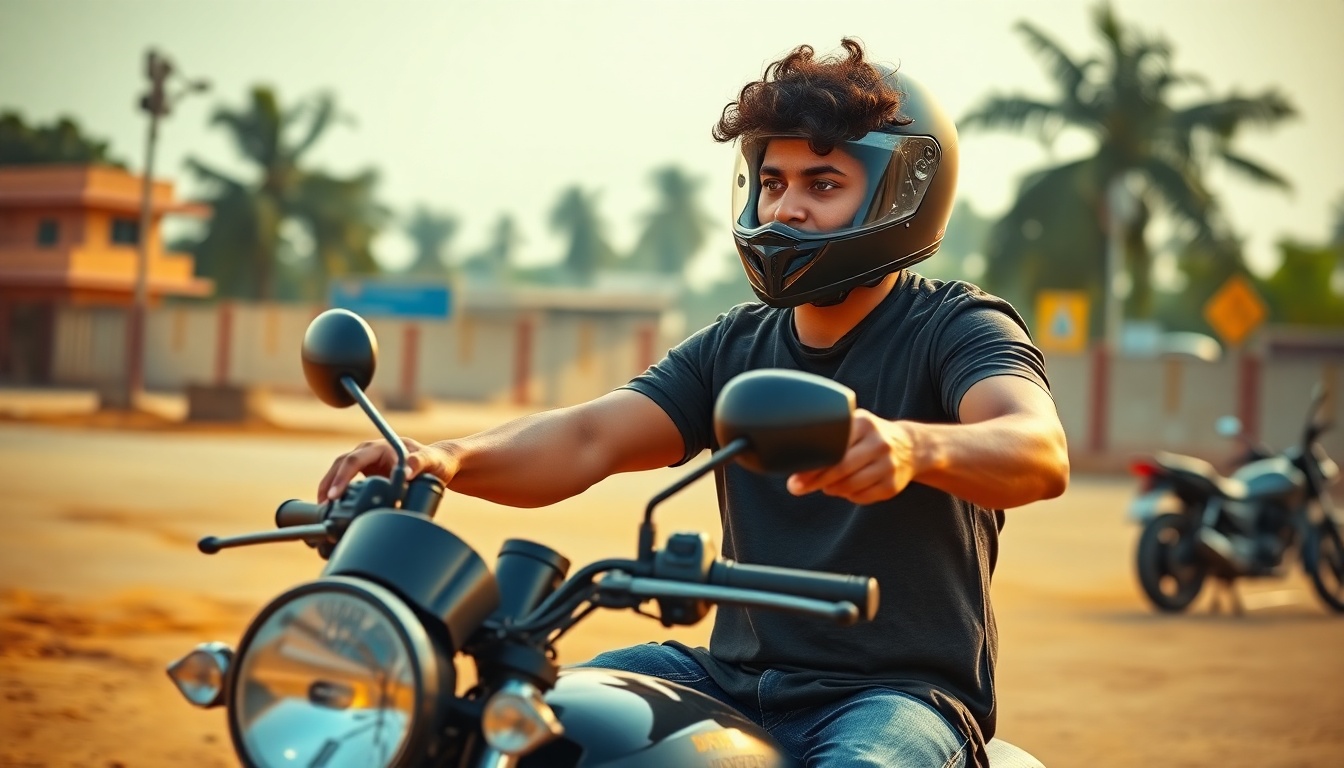
I see it every weekend at our training grounds. A new rider, excited about their shiny bike, gets on and immediately looks down at the controls. Their shoulders are tense, their eyes are glued to the tarmac three feet ahead. They are thinking about the clutch, not the cow that just wandered onto the road ahead.
That’s the biggest gap a solid basic riding skills course for beginners must bridge. It’s the chasm between operating a machine and actually riding it in India. You bought the bike for freedom, but without the right foundation, that freedom comes with a terrifying amount of risk.
Look, the goal isn’t to scare you. It’s to be honest. The chaos of our roads—from Bangalore’s tech corridors to Pune’s hills—is a beautiful, unpredictable dance. You need to learn the steps before you join in. And that starts with skills most people never think to practice.
Why Most Riders Get basic riding skills course beginners Wrong
Here is what most new riders get wrong about training. They think it’s just to get a license. They see the course as a bureaucratic hurdle, not a survival toolkit. So they do the bare minimum on a friend’s scooter, pass the test, and buy a bike they can’t control.
I have seen this mistake cause accidents dozens of times. The real risk is not stalling at a signal. It’s freezing when an auto-rickshaw cuts across your lane without warning. A beginner is focused on not falling. A trained rider is focused on seeing that rickshaw driver’s head turn, predicting the move, and already having an escape path.
Another huge error? Practicing only in perfect conditions. If your only experience is on empty, dry, flat roads at 10 AM, you are not prepared. Our roads are wet, they are dusty, they have potholes disguised as puddles, and they are packed at 6 PM. Your training must include those variables.
Finally, people underestimate the physical skill of braking. They grab the front brake like a lever on a video game. On a loose gravel patch, that’s a guaranteed fall. A proper course drills braking until it’s instinct—progressive pressure, not a panic grab.
Last month, a software engineer in his 40s joined our Bangalore batch. He had just bought a Royal Enfield. He was stiff, nervous. When we did the slow-speed balancing drill, he kept putting his feet down. He was frustrated, saying, “I just want to ride on the highway.”
I told him to forget the highway for a second. I said, “That slow control is what you need when a pedestrian steps off the median right in front of you on MG Road. You can’t swerve into traffic. You need to balance, brake, and steer all at walking pace.” Something clicked. By day two, he was maneuvering through cones without a foot down. He learned that control at 5 kmph gives you confidence at 50.
What Actually Works on Indian Roads
Let’s talk about what works. First, your eyes. You must learn to look where you want to go, not at the obstacle. This sounds simple. On the road, with a truck tire in your path, your body will want to stare at it. Training rewires that instinct. You practice looking through the corner, at the gap, at the escape route.
Here is the thing about clutch control. It’s your best friend in stop-and-go traffic. A smooth, feathered clutch is the difference between a jerky, exhausting ride and one where you’re in calm command. We spend hours on this. Not just finding the bite point, but using it to manage your speed without touching the brakes.
Counter-steering is next. This is how you actually turn a bike above walking speed. Push the left handlebar to go left. It feels backwards until you do it a hundred times. Then it becomes how you instantly change your line to avoid a pothole or a sudden merge.
The real skill is combining all this. Looking through the turn, counter-steering into it, and modulating the clutch and throttle to keep the bike stable. This is the dance. When it becomes one fluid motion, you stop fighting the bike. You start riding with it.
And then there’s the rearview mirror. You don’t just glance at it. You read it. You see the car coming up too fast behind you at a signal. You see the bike filtering through on your left. This situational awareness is your 360-degree force field. It tells you where you can go when the space in front of you closes.
Finally, the most important skill of all: smoothness. Jerky inputs upset the bike’s balance. Smooth throttle, smooth brake, smooth steering. This isn’t just for comfort. A smooth rider is a predictable rider. And on our shared roads, being predictable is a matter of safety.
You don’t rise to the occasion in an emergency. You default to your level of training. When that scooter swerves, you won’t have time to think. Your hands and feet will do what you’ve practiced a thousand times. That’s the only thing that will save you.
— Throttle Angels Instructor Team
Beginner vs Trained Rider Comparison
| Aspect | What Beginners Do | What Trained Riders Do |
|---|---|---|
| Emergency Braking | Slam the front brake, lock the wheel, skid and fall. | Apply progressive pressure to both brakes, keeping the bike upright and stopping in a controlled straight line. |
| Hazard Avoidance | Stare at the pothole or obstacle, ride straight into it. | Identify the hazard early, scan for an escape path, and use counter-steering to smoothly change direction. |
| Slow-Speed Control | Wobble, put feet down constantly, often stall in traffic. | Use clutch-feathering and rear brake to balance effortlessly, able to make tight U-turns and crawl in traffic. |
| Cornering | Slow down too much, enter wide, drift across the lane mid-corner. | Set speed before the turn, look through the exit, and maintain steady throttle for stable, precise arc. |
| Mental Focus | Focused on the bike’s controls and the vehicle immediately ahead. | Scanning 12 seconds ahead, checking mirrors, aware of peripheral movement and potential risks. |
Adapting to Indian Road Conditions
Book Your Trial Session Today!
Ready to master the roads of Bangalore or Pune? Join India’s premier motorcycle driving school.
Training Available in Bangalore & Pune
Book Your Trial Session Today!
Ready to master the roads of Bangalore or Pune? Join India’s premier motorcycle driving school.
Training Available in Bangalore & Pune
Our roads are a special kind of classroom. You have to plan for the monsoon from day one. That means practicing braking on wet paint lines and manhole covers. They become slick as ice. A good course will simulate this with water and teach you to avoid sudden inputs.
Then there’s the dust and gravel on corners, especially on state highways and ghats. You learn to read the road surface, to spot the sheen of loose gravel before you’re on it. The rule is simple: see it early, slow down before the corner, don’t brake or accelerate sharply while leaned over.
Highway riding here isn’t about top speed. It’s about managing fatigue, crosswinds from trucks, and the hypnotic effect of long, straight roads. You learn to take breaks, to stay hydrated, and to watch for animals and people crossing at unexpected points, even on six-lane expressways.
Look, the traffic itself is a system. It flows in its own logic. You learn to position yourself in the lane to be seen, to use your horn as a polite “I’m here” not an angry shout, and to always, always expect the unexpected from every vehicle around you. That’s the Indian road craft.
Frequently Asked Questions
I already know how to ride a scooter. Do I really need a basic riding course for a bike?
Yes, absolutely. A motorcycle handles, balances, and brakes completely differently due to its weight and power. Scooter experience helps with traffic sense, but the core physical skills of clutch control, counter-steering, and managing a heavier machine are new and critical to learn safely.
What should I bring to my first basic riding skills course?
Bring a helmet (we have loaners if you don’t), full-finger gloves, a sturdy jacket, full-length pants, and shoes that cover your ankles. Jeans and sneakers are the bare minimum. Your own gear that fits you is always best.
How much does Throttle Angels training cost?
Our courses start at competitive rates with flexible packages. Call Rajkumar at 9535350575 or Arun at 8169080740 for current pricing and batch schedules in Bangalore and Pune.
Do you provide motorcycles for the training?
Yes, we have a fleet of training motorcycles suitable for beginners. It’s better to learn on our bikes—they are set up for training and expect to be dropped. Save your new bike for when you have the fundamentals locked in.
Is the course only for absolute beginners with zero experience?
Not at all. We get many riders who have been riding for years with bad habits. The course is for anyone who wants to build a correct, safe foundation. Unlearning a bad habit is sometimes harder, but it’s just as important.
Think of this as your first, and most important, modification to your motorcycle. You are upgrading the rider. The bike can only do what you tell it to do. Make sure you’re giving it the right commands.
The road is waiting for you. The freedom, the wind, the incredible journeys. Get the skills first. Then go earn every kilometer of it, safely and confidently, for years to come.
Book Your Trial Session Today!
Ready to master the roads of Bangalore or Pune? Join India’s premier motorcycle driving school.
Training Available in Bangalore & Pune