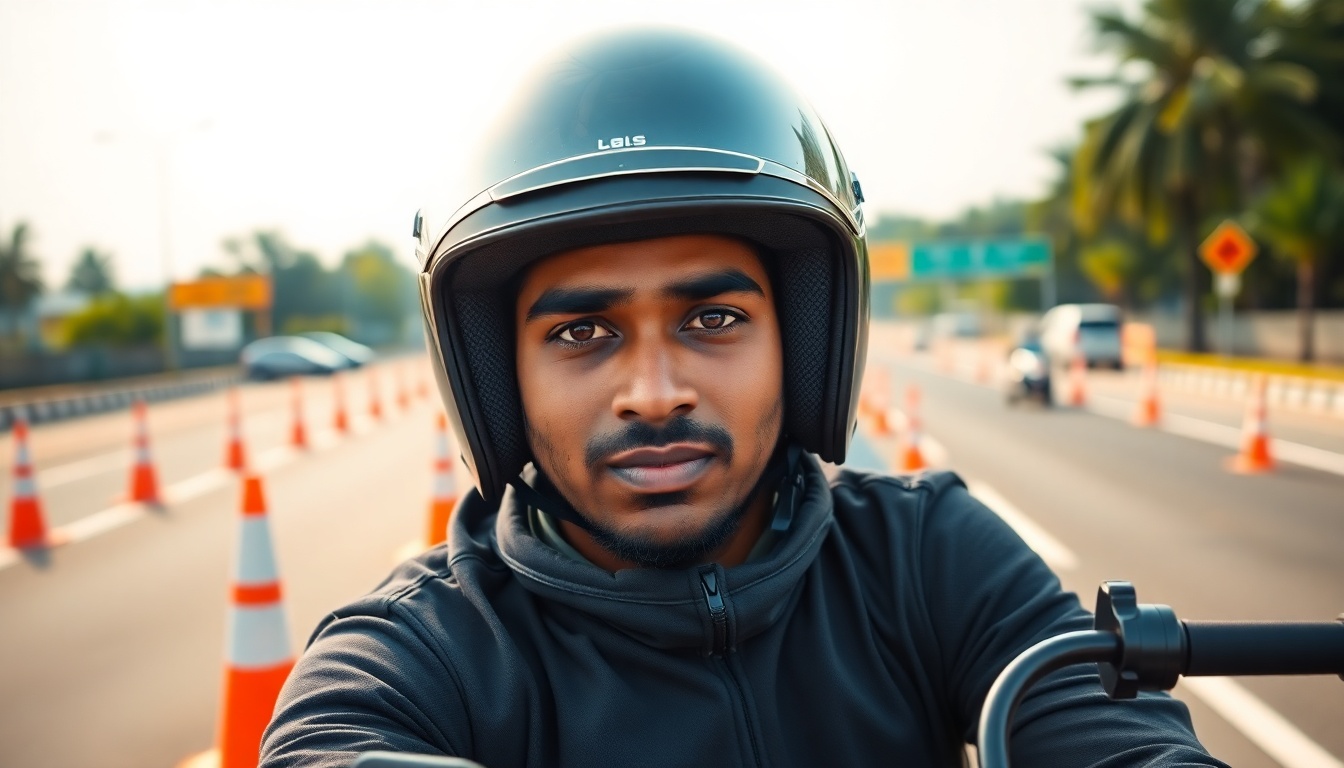
Quick Answer
Advanced corner entry speed control is about managing your pace before you lean, not during. The critical zone is the last 50 meters before the turn. Get your braking, downshifting, and visual setup done there, so you can roll on the throttle smoothly through the apex. This single skill cuts your cornering risk by more than half.
I see it every weekend on the ghats near Pune. A rider approaches a corner a little too hot. You can see the moment of panic in their body language.
They grab a handful of front brake while leaned over, or they freeze on the throttle. The bike stands up and runs wide. It’s a terrifying moment that’s completely avoidable. Here is the thing about advanced corner entry speed control: it’s the invisible skill that separates confident riders from scared ones.
It’s not about how fast you can go around a bend. It’s about how much control you have left when you’re in the middle of it. When you get this right, the chaos of Indian roads feels manageable, not threatening.
Why Most Riders Get advanced corner entry speed control Wrong
Here is what most new riders get wrong about corner entry. They treat the corner itself as the problem to solve. They focus on leaning the bike and looking through the bend.
But by the time you’re leaning, it’s too late to fix your speed. The real risk is not the lean angle. It is entering the corner with unresolved speed. I have seen this mistake cause accidents dozens of times on our winding highways.
Another common error? Riders use the brakes like an on/off switch. They brake hard, release, then turn. This unsettles the suspension right when you need it to be settled and planted.
Your bike needs to be settled and stable as you initiate the lean. If you’re still slowing down or, worse, braking while turning, you’re asking for a crash. Look, your tires only have so much grip. You can’t use it all for braking and cornering at the same time.
I remember a student, Vikram, on the Bangalore-Mysuru highway. He was a fast rider, confident on straights. We came up to a long, sweeping left-hander. He entered way too fast, saw a truck partially in his lane on the exit, and target-fixated.
He slammed the brakes mid-corner. The bike wobbled violently and ran wide towards the truck. We stopped, and he was shaking. That day, he learned that speed on the straight is meaningless. Control at the corner entry is everything. We spent the next hour just practicing slowing down earlier.
What Actually Works on Indian Roads
Forget everything you see in movies. The secret is in the approach. Your goal is to do all your major speed adjustment while the bike is upright and straight.
Here is a simple rule. See your corner. Start braking and downshifting in a straight line. You should be at your final entry speed before you even think about tipping the bike in.
This is called “slow in, fast out.” You enter at a speed that feels almost too slow. This gives you a huge safety buffer. It lets you see the stray cow, the pothole, or the gravel patch without panic.
Then, as you pass the apex, you can smoothly roll on the throttle. This stabilizes the bike and drives you cleanly out of the corner. The throttle is your control lever, not just a go-faster device.
Your eyes are your best tool. Look as far through the corner as you can. Your bike will go where you look. If you stare at the ditch, you’ll head for the ditch. Look for your exit path from the moment you see the turn.
Practice this on a familiar, safe road. Enter each corner slower than you think you need to. Focus on a smooth, continuous throttle application from the apex onward. Speed will come naturally with control, not the other way around.
Speed on the entry is a debt you pay with fear in the middle. Control on the entry is an investment that pays out with confidence at the exit.
— Throttle Angels Instructor Team
Beginner vs Trained Rider Comparison
| Aspect | What Beginners Do | What Trained Riders Do |
|---|---|---|
| Braking Point | Brake late and hard, often carrying braking into the corner. | Brake early and progressively, finishing all braking while upright. |
| Vision | Look directly ahead at the road immediately in front of the bike. | Look through the corner to the exit, scanning for hazards early. |
| Throttle Hand | Choppy inputs: off, then on abruptly. Or frozen closed. | Smooth, continuous roll-on from the apex, maintaining drive. |
| Mental Focus | Focused on not crashing, reacting to immediate threats. | Focused on the plan: entry line, apex, exit. Proactive. |
| Buffer Zone | Uses all available lane, leaving no room for surprises. | Leaves a 30% margin in speed and lane position for the unexpected. |
Adapting to Indian Road Conditions
Book Your Trial Session Today!
Ready to master the roads of Bangalore or Pune? Join India’s premier motorcycle driving school.
Training Available in Bangalore & Pune
Book Your Trial Session Today!
Ready to master the roads of Bangalore or Pune? Join India’s premier motorcycle driving school.
Training Available in Bangalore & Pune
Our roads demand a different rulebook. On a perfect track, you can use the entire lane. Here, you must assume the opposite lane will be used by an oncoming vehicle in every blind corner.
Your entry speed must account for this. Enter slow enough that you can stop within the part of the lane you can actually see. This is non-negotiable.
Monsoon riding changes everything. That beautiful smooth tarmac can hide a layer of slick mud or diesel spill. Your corner entry speed in the wet should be 30-40% slower than in the dry.
And highway curves? They often have broken edges, unexpected dips, or sand blown across them. Your eyes must be scanning for these traps during your approach, so you can adjust your line and speed before you commit.
Frequently Asked Questions
How do I know if I’m entering a corner too fast?
If you feel the need to brake or close the throttle while leaned over, you entered too fast. A correct entry feels calm. You should be able to smoothly add throttle from the apex onward.
Should I use the rear brake in corners?
Almost never to adjust speed mid-corner. Its primary use is for low-speed stability and very subtle adjustments. If you need to brake in a corner, you misjudged the entry. Fix the entry speed instead.
What’s the biggest visual mistake in cornering?
Looking down at the road right in front of your wheel. Your head should be up, eyes level, looking through the corner to where you want to go. Your peripheral vision will handle the near stuff.
Does this apply to small bikes like 150cc motorcycles?
Absolutely. The physics are the same. In fact, mastering this on a smaller, lighter bike builds fantastic muscle memory and judgment. Speed is irrelevant; control is everything.
How much does Throttle Angels training cost?
Our courses start at competitive rates with flexible packages. Call Rajkumar at 9535350575 or Arun at 8169080740 for current pricing and batch schedules in Bangalore and Pune.
Think of your next ride as practice, not just a commute. Pick one familiar corner and focus solely on nailing the entry. Be slow, be smooth, be early with your actions.
The goal isn’t to be the fastest rider on the road. It’s to be the rider who comes home every single time, with a smile behind the visor. That control starts with your right hand, your eyes, and the courage to slow down before the turn.
Book Your Trial Session Today!
Ready to master the roads of Bangalore or Pune? Join India’s premier motorcycle driving school.
Training Available in Bangalore & Pune