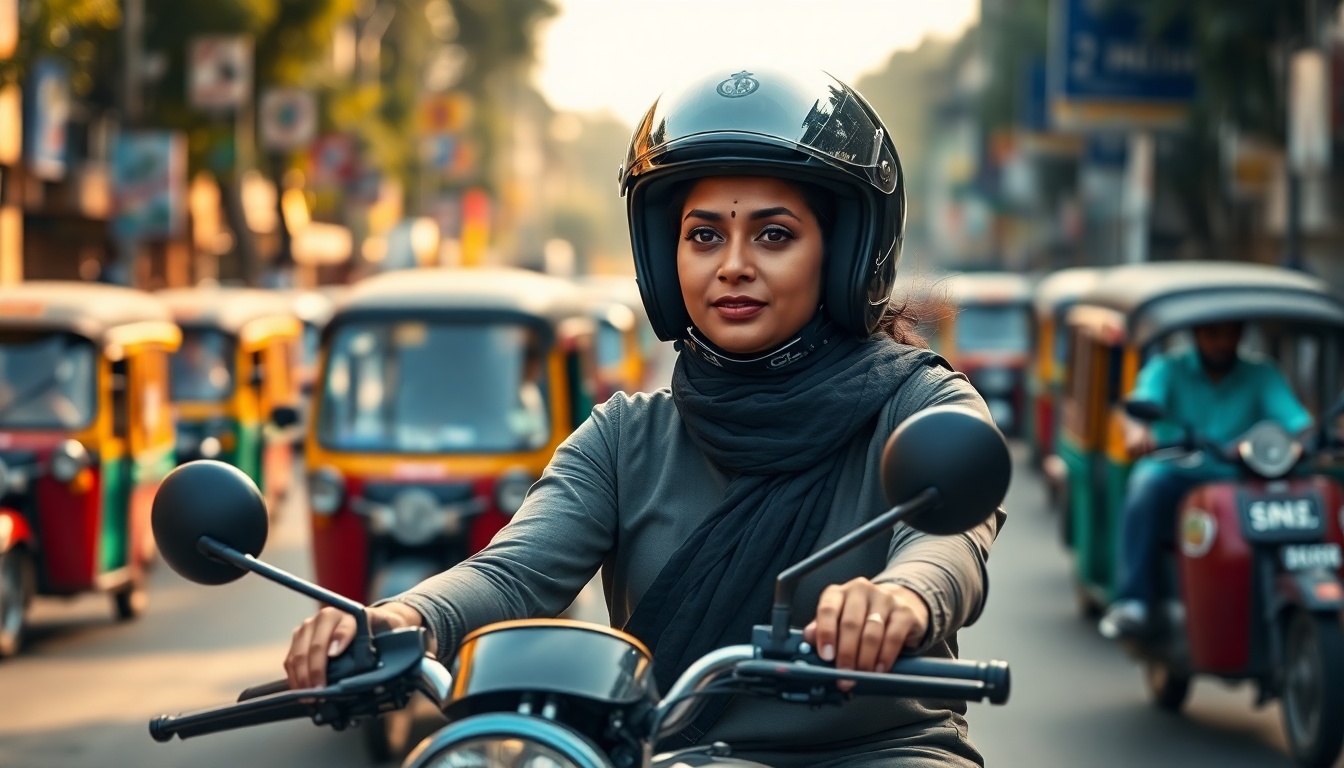
Quick Answer
Advanced emergency braking in Bangalore means learning to stop your motorcycle from 60 km/h to zero in under 15 meters — without losing control. The real skill is not just grabbing the brakes, but using your eyes and body position to create a safety buffer before you even need to brake.
I have trained over three thousand riders at Throttle Angels, and I can tell you this with absolute certainty: most riders in Bangalore cannot emergency brake properly. They freeze. They grab a handful of front brake. They crash.
The phrase “advanced braking emergency advanced Bangalore” keeps popping up in search logs because riders here are finally realizing that standard training does not prepare you for a sudden autorickshaw U-turn on Old Airport Road. Or a dog darting across Silk Board at 8 pm. Or a truck brake-checking you on the NICE Road flyover.
This is not theory. This is what happens every single day on our roads. And if you have never practiced emergency braking at speed, you are riding on borrowed time.
Why Most Riders Get advanced braking emergency advanced Bangalore Wrong
Here is the biggest mistake I see: riders think emergency braking is about squeezing the lever harder. They believe that if they just pull the brake harder, the bike will stop faster. That is how you flip over the handlebars.
The real problem is not braking force. It is braking progression. Your front tire has only so much grip. When you exceed that grip, the wheel locks. And on Bangalore roads, that grip is already compromised by dust, diesel spills, and painted road markings that turn into ice when wet.
I have watched riders at our training pad in Bangalore try to emergency stop from 40 km/h. They grab the brake. The rear wheel lifts. They panic and let go. Then they crash into the cone anyway. The issue is not their strength. It is their timing and their fear.
Another common mistake: riders look at the obstacle instead of the escape path. When a car cuts into your lane on the Outer Ring Road, your instinct is to stare at the car. That is exactly wrong. Your bike goes where your eyes go. If you stare at the car, you will hit the car.
I remember one session with a rider named Ravi. He had been riding a Royal Enfield for six years. Thought he knew braking. I set up a simple emergency stop drill at 50 km/h. First attempt, he grabbed the front brake so hard the rear wheel went two feet in the air. He nearly went over the bars.
After we corrected his technique — progressive squeeze, looking where he wanted to go, using the rear brake to settle the bike — he stopped in 14 meters. He got off the bike shaking. He said, “I have been doing it wrong my entire riding life.” That is the truth for most riders. Six years of wrong muscle memory.
What Actually Works on Indian Roads
Let me break down what advanced emergency braking really looks like in Bangalore traffic. It is not one single technique. It is a sequence of decisions that happen in under two seconds.
First, you must scan ahead. The best emergency stop is the one you never have to make. If you see the gap closing between the bus and the auto ahead, you pre-load your brakes. You cover the front brake lever with two fingers. You reduce your speed before the emergency happens.
Second, when you need to stop hard, you squeeze the front brake progressively. Not grab. Squeeze. Start at about 30 percent pressure, then increase to 70 percent as the weight transfers to the front wheel. That weight transfer gives you more grip. That is when you can really brake hard.
Third, use the rear brake to stabilize. The rear brake does maybe 30 percent of your stopping power on a modern bike. But it keeps the rear end planted. It prevents that terrifying rear-wheel-lift feeling. On a steep downhill near Nandi Hills, the rear brake is your friend.
Fourth — and this is the part most riders ignore — you must practice releasing the brake. Once you have stopped or slowed enough, you need to be ready to release and swerve. Emergency braking is not always about stopping completely. Sometimes you brake hard to 20 km/h, then turn the bars and go around the obstacle.
Fifth, your body position matters more than you think. In an emergency, most riders sit up and tense their shoulders. That pushes weight off the front wheel. Bad. You want to grip the tank with your knees, keep your elbows bent, and push your hips back slightly. That keeps weight on the rear wheel and gives you more control.
“The difference between a crash and a close call is not luck. It is the 200 milliseconds you spent practicing emergency braking in a controlled environment. That half-second decides everything.”
— Throttle Angels Instructor Team
Beginner vs Trained Rider Comparison
| Aspect | What Beginners Do | What Trained Riders Do |
|---|---|---|
| Brake application | Grab the lever in panic, lock the wheel | Squeeze progressively, feel for grip |
| Eye position | Stare at the obstacle they want to avoid | Look at the escape path or vanishing point |
| Body tension | Lock arms, straighten up, push weight back | Grip tank, bend elbows, stay relaxed |
| Rear brake use | Ignore it or stomp on it | Use it to settle the chassis and add stability |
| Stopping distance (60 to 0) | 18 to 22 meters with panic | 12 to 15 meters with control |
Adapting to Indian Road Conditions
Book Your Trial Session Today!
Ready to master the roads of Bangalore or Pune? Join India’s premier motorcycle driving school.
Training Available in Bangalore & Pune
Book Your Trial Session Today!
Ready to master the roads of Bangalore or Pune? Join India’s premier motorcycle driving school.
Training Available in Bangalore & Pune
Bangalore roads are a special kind of challenge. You have painted road markings that become absolutely treacherous in the monsoon. You have diesel spills near every bus stop. You have loose gravel from construction sites that collects in corners. Your braking distance can double on these surfaces.
Here is the rule: in the rain, you brake earlier and smoother. Your tires need time to find grip on wet asphalt. Do not expect to stop in the same distance as a dry day. Give yourself at least 50 percent more space. And if you feel the ABS pulsing, let it work. Do not release the brake.
On highways like the NICE Road or the elevated expressway, the risk is different. High speeds mean your reaction time matters more. At 100 km/h, you travel 28 meters every second. If you take one second to react and another to brake, you have already covered 56 meters before you even start slowing down.
That is why advanced braking on Indian roads is not just about the physical technique. It is about your mental readiness. You must be scanning, predicting, and positioning yourself so that when the emergency comes, you have already bought yourself time.
Frequently Asked Questions
What is the most common mistake in advanced emergency braking?
Grabbing the front brake too hard without progressive squeeze. This locks the wheel and causes a loss of control. The correct technique is to start with 30 percent pressure, then increase as weight transfers forward.
Can I learn advanced braking on my own?
You can practice in a parking lot, but most riders reinforce bad habits without feedback. A structured course with instructors watching your every move is far more effective. One session at Throttle Angels will fix years of wrong muscle memory.
Does ABS make emergency braking automatic?
No. ABS prevents wheel lock, but it does not reduce your stopping distance on every surface. On loose gravel or wet paint, ABS can actually increase stopping distance. The skill of braking remains essential regardless of your bike’s electronics.
How often should I practice emergency braking?
At least once a month. Find an empty stretch of road or a parking lot. Do five to ten emergency stops from 40 km/h. Build that muscle memory so when the real emergency happens, your body knows what to do.
How much does Throttle Angels training cost?
Our courses start at competitive rates with flexible packages. Call Rajkumar at 9535350575 or Arun at 8169080740 for current pricing and batch schedules in Bangalore and Pune.
Look, I have been teaching this for over a decade. I have seen riders come in thinking they know braking, and I have seen them leave after one session with a completely new understanding of what their bike can do. The skill is not complicated. But it is specific, and it needs practice.
Bangalore traffic is not getting easier. The number of vehicles is growing faster than the roads can handle. Your safety depends on your ability to stop, swerve, and survive. That starts with learning how to brake like a trained rider. Not like a beginner. Not like someone who hopes luck will save them.
Book Your Trial Session Today!
Ready to master the roads of Bangalore or Pune? Join India’s premier motorcycle driving school.
Training Available in Bangalore & Pune