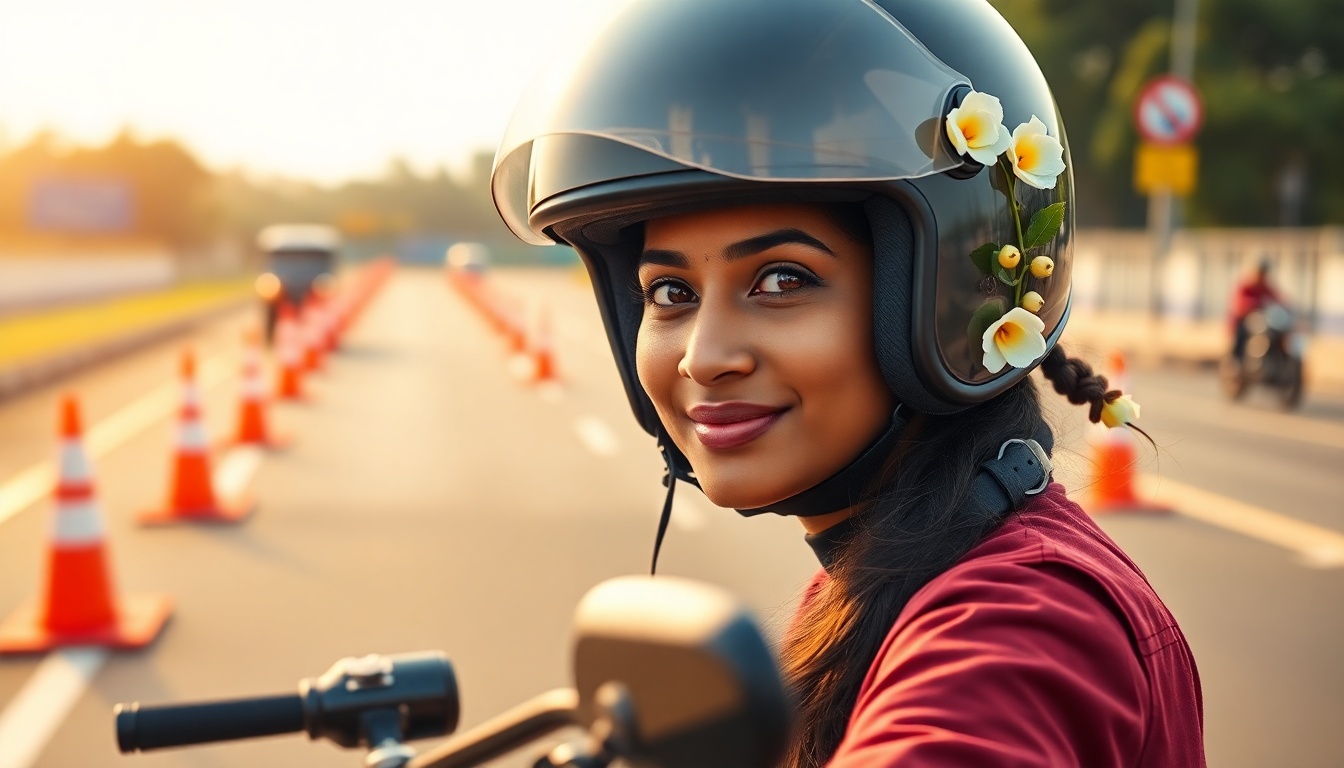
Quick Answer
Advanced slow speed maneuvers come down to three things: clutch control in the friction zone, rear brake modulation, and head-and-eye commitment. Master those, and you can turn a 600cc bike in a space just 2.5 meters wider than your bike’s length. Without them, even a 150cc commuter will feel like a handful in Bangalore traffic.
I remember watching a rider on a brand-new Interceptor 650 try to make a U-turn on a narrow Pune side street last month. He was with us for our advanced slow speed maneuvers advanced course, and his face said everything. White knuckles, locked elbows, and a bike that wanted to tip over at every inch of the turn.
Here is the thing about advanced slow speed maneuvers advanced. They are not about being a show-off in a parking lot. They are about surviving Indian roads every single day. When a cow decides to sit in the middle of a narrow lane, or an auto-rickshaw cuts you off at a roundabout, your ability to crawl, pivot, and balance at walking pace is what keeps you upright.
Most riders think slow-speed control is about “just going slow.” It is not. It is a completely different set of skills than riding at speed. And if you have not practiced them deliberately, you are one tight turn away from a dropped bike.
Why Most Riders Get Advanced Slow Speed Maneuvers Wrong
The biggest mistake I see is riders trying to use the front brake at slow speeds. They panic, grab a handful of front brake, and the bike stands up and heads for the ditch. Or worse, the front wheel locks and down you go.
At walking pace, your front brake is your enemy. The geometry of the motorcycle changes when you turn the handlebars. Applying front brake in a tight turn compresses the forks and makes the bike want to fall into the turn. You then overcorrect with your body, and the whole thing becomes a wobbling mess.
Another common mistake is looking down. I see it every single session. A rider enters a U-turn, and their eyes drop to the front wheel or the ground immediately in front of it. Your bike goes where your eyes go. Look at the tarmac two feet ahead, and you will end up on the tarmac two feet ahead.
Here is what really happens on Indian roads. You are trying to turn around on a road that is barely wide enough. There is a pothole on one side, a parked Tata Ace on the other, and a kid with a cricket bat watching you. Your brain screams “slow down,” so you pull the clutch all the way in and coast. The bike loses all stability. You put a foot down. You feel embarrassed. Sound familiar?
I had a student in our Bangalore class last year. Let us call him Ravi. He rode a Himalayan and had done a Ladakh trip. He was confident. Then I asked him to do a figure-eight in a space the size of two parking spots. He dropped the bike three times in ten minutes.
The problem was not his courage. It was his technique. He was using the front brake, looking at the ground, and keeping the clutch fully pulled in. After we spent an hour on the friction zone and rear brake, he completed the figure-eight without putting a foot down. He told me later that same skill saved him from dropping the bike when a dog ran in front of him on MG Road.
What Actually Works on Indian Roads
Let us break down the real technique. The foundation of every slow-speed maneuver is the friction zone. That is the part of the clutch pull where the plates start to engage but are not fully locked. You want to hold the engine right at that sweet spot where the bike wants to move but is not fully committed.
Here is how you find it. Find an empty parking lot. Sit on your bike with the engine running. Pull the clutch in, put it in first gear. Now slowly release the clutch until you feel the bike start to creep forward. Then pull it back in just a millimeter. That tiny range of movement is your friction zone. You need to live there during slow turns.
Now add the rear brake. This is the secret that transforms your slow-speed control. While you are holding the engine in the friction zone, apply light, constant pressure on the rear brake. This does two things. It keeps the bike stable by preventing the rear wheel from spinning too fast, and it allows you to modulate your speed with your foot instead of your clutch hand.
Your right foot becomes your speed controller. More rear brake means slower. Less rear brake means faster. Your left hand stays steady in the friction zone. Your right hand barely touches the front brake. This combination gives you surgical precision at walking pace.
Now the most important part. Your head. When you enter a U-turn, turn your head all the way to look where you want to exit. Not where you are. Not at the front wheel. At the exit point. Your shoulders will follow your head. Your hips will follow your shoulders. The bike will follow your hips. It sounds almost too simple, but it works because of how your body weight shifts naturally.
Counterweighting is next. For tight turns, shift your body weight to the outside footpeg. If you are turning right, press your weight onto your left footpeg and push the bike down into the turn with your right hand. This keeps the bike’s mass low and stable. You are essentially letting the bike lean while your body stays upright. It feels weird at first. It becomes automatic after fifty repetitions.
“The difference between dropping your bike in a U-turn and looking like you have been riding for twenty years is one thing: your willingness to look where you want to go, not where you are afraid of falling.”
— Throttle Angels Instructor Team
Beginner vs Trained Rider Comparison
| Aspect | What Beginners Do | What Trained Riders Do |
|---|---|---|
| Clutch Control | Pulls clutch fully in, coasts through turns | Holds friction zone, maintains engine power |
| Brake Usage | Grabs front brake in panic | Uses rear brake for fine speed control |
| Head Position | Looks at front wheel or ground | Turns head fully to exit point |
| Body Weight | Leans into the turn with the bike | Counterweights, presses outside peg |
| Foot Placement | Dangles feet, ready to catch the fall | Feet on pegs, uses them for balance |
Adapting to Indian Road Conditions
Book Your Trial Session Today!
Ready to master the roads of Bangalore or Pune? Join India’s premier motorcycle driving school.
Training Available in Bangalore & Pune
Book Your Trial Session Today!
Ready to master the roads of Bangalore or Pune? Join India’s premier motorcycle driving school.
Training Available in Bangalore & Pune
Indian roads add variables that no parking lot can simulate. Loose gravel on a turn, a sudden oil patch from an autorickshaw, or the monsoon rain turning every painted line into a slip zone. Your advanced slow speed maneuvers advanced training means nothing if you do not adapt to the surface.
In the rain, your rear brake becomes even more critical. The front brake at slow speed on wet tarmac is a disaster waiting to happen. Use the rear brake almost exclusively for speed control in tight turns. And keep your body loose. Tense muscles transmit every bump and slide into the bike’s steering.
On uneven surfaces, like the pothole-ridden roads of Bangalore or the narrow lanes of old Pune, you need to stand slightly on your pegs. Not fully standing, but taking weight off the seat. This lets your legs act as suspension and keeps the bike more stable when the rear wheel hits a bump mid-turn.
One more thing about traffic. When you are doing a U-turn on a busy road, do not rush. The cars behind you will wait. Take your time to set up the turn, check your mirrors, commit your eyes, and execute. I have seen more accidents from riders rushing a U-turn than from any other slow-speed mistake.
Frequently Asked Questions
Can I practice advanced slow speed maneuvers on my own?
Yes, but start in an empty parking lot with no traffic. Practice figure-eights, U-turns between two markers, and emergency stops from walking pace. Record yourself to see if you are looking down.
Is it harder on a heavy bike like a Harley or Gold Wing?
Heavier bikes require more deliberate counterweighting and smoother clutch control. The principles are the same, but the margin for error is smaller. We have trained riders on 350kg touring bikes to do full-lock U-turns in under 4 meters.
How long does it take to master slow speed maneuvers?
Most riders see dramatic improvement after one focused two-hour session. True mastery where it becomes muscle memory takes about 10 to 15 hours of deliberate practice spread over a few weeks.
What if my bike stalls during a slow turn?
Do not panic. Pull the clutch in immediately, apply rear brake, and put your foot down. Restart and try again. Stalling usually means you are not giving enough throttle while holding the friction zone. Rev the engine a bit higher next time.
How much does Throttle Angels training cost?
Our courses start at competitive rates with flexible packages. Call Rajkumar at 9535350575 or Arun at 8169080740 for current pricing and batch schedules in Bangalore and Pune.
Here is what I want you to take away from this. Advanced slow speed maneuvers advanced are not some elite skill reserved for stunt riders. They are the difference between riding with confidence and riding with fear. Every time you nail a tight U-turn without putting a foot down, you build a little more trust in your bike and yourself.
Go find an empty patch of tarmac this weekend. Mark two points ten meters apart. Practice turning around in that space until you can do it without thinking. Your bike will thank you. And the next time a cow blocks your path on a narrow road, you will know exactly what to do.
Book Your Trial Session Today!
Ready to master the roads of Bangalore or Pune? Join India’s premier motorcycle driving school.
Training Available in Bangalore & Pune