Quick Answer
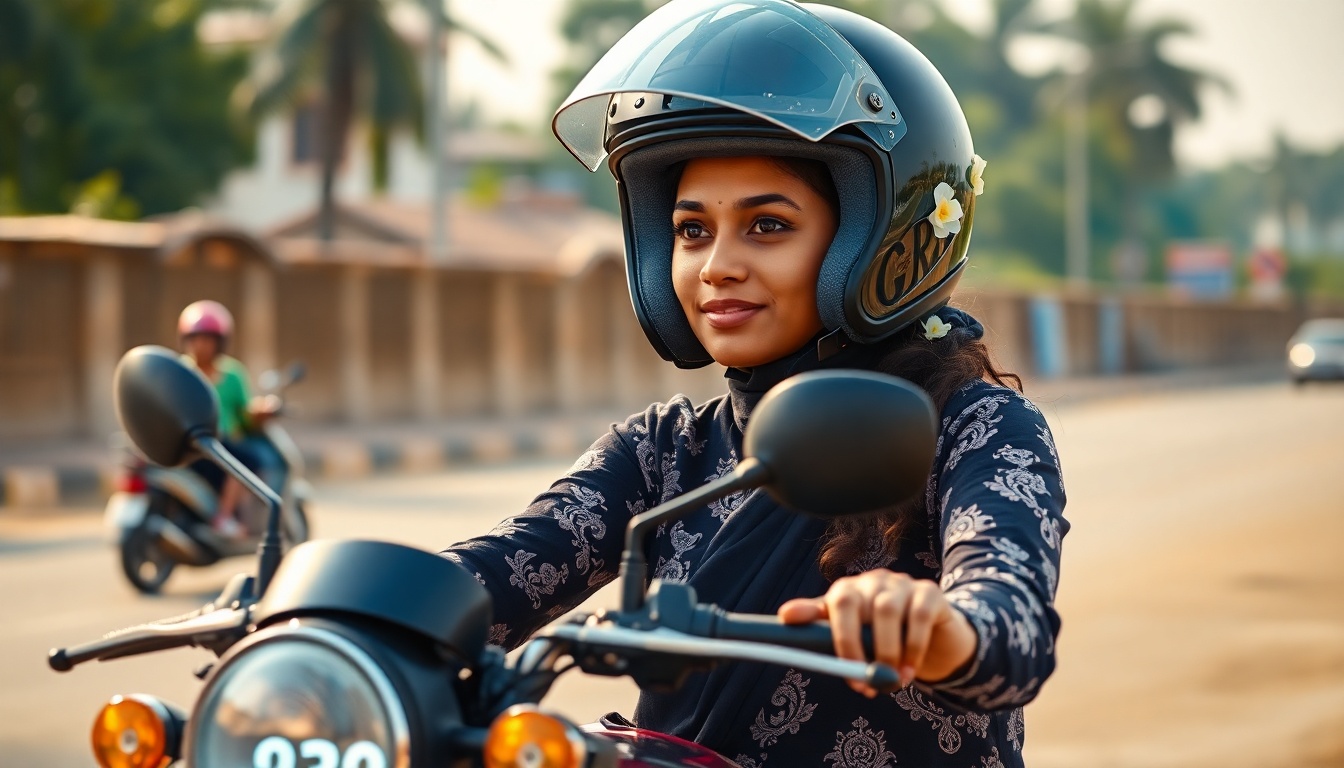
A Royal Enfield learn riding course is a specialized training program designed to handle the unique weight and character of these bikes. It’s not just about getting a license; it’s about building the muscle memory and confidence to control 180+ kilograms of metal on chaotic Indian roads. A proper course, like ours at Throttle Angels, runs for a minimum of 15-20 hours over 5-7 days to build that foundation.
I see it every weekend at our training grounds. A new rider walks up to a Royal Enfield Bullet, their eyes full of dreams of open highways. They swing a leg over, and the bike leans just a fraction. Their eyes change instantly.
That slight tilt feels like the bike is about to fall. Because it weighs more than they do. This is the exact moment a proper Royal Enfield learn riding course becomes non-negotiable. You are not just learning to ride; you are learning to manage mass and momentum.
Here is the thing about these machines. They are forgiving in a straight line but demand respect in slow speeds and panic situations. The course you choose should address that specific physics, not just tick a box for the RTO test.
Why Most Riders Get Royal Enfield learn riding course Wrong
The biggest mistake is thinking you already know how to ride. Maybe you’ve handled a 150cc commuter for years. You assume the skills transfer directly. They do not.
I have seen this mistake cause close calls dozens of times. A rider used to flicking a light bike through traffic tries the same on an Enfield. The throttle response is different. The braking distance is longer. The weight shifts differently in a turn. What was a simple maneuver becomes a wobble, then a scare.
Another common error is focusing only on “getting the bike moving.” Anyone can twist the throttle. The real risk is not going fast. It is stopping, swerving, or handling a sudden obstacle at 40 km/h when the bike feels top-heavy.
People also underestimate the importance of slow-speed control. Can you make a tight U-turn on a narrow Bangalore lane without putting a foot down? Can you filter through stopped traffic without clipping a mirror? A proper course drills these scenarios until they are instinct.
I remember a student, Vikram. He was a software engineer who had just bought a Classic 350. He was bright, but his body was stiff with fear. Every time the bike leaned even a little, he would stab his foot down hard, jerking the handlebars.
We spent a whole session just walking the bike, feeling its weight pivot around the wheels. Then, with the engine off, we practiced leaning it side to side, getting his hips to move with the machine, not against it. The click happened when he realized the bike wants to stay upright. His job was to guide it, not fight it. By day three, that stiff panic was gone, replaced by smooth, deliberate movements.
What Actually Works on Indian Roads
Look, theory is fine. But Indian roads are a live game. Your training must reflect that. It starts with vision. You must look where you want to go, not at the pothole you’re trying to avoid. I know it sounds simple. Under pressure, everyone stares at the danger.
We train you to scan ahead, identify escape routes, and keep your head up. A Royal Enfield needs more planning. You cannot dart through a gap like a scooter. You commit to a line.
Then there is braking. Here is what most new riders get wrong. They grab the front brake in a panic, especially at low speed. On a heavy bike, this can tip the balance. You must use both brakes together, with progressive pressure.
We practice emergency stops until your hands and feet learn the pressure. Not just in a straight line, but in a mild curve, simulating a cow or a car door suddenly opening. The real skill is stopping straight and controlled, no matter the surprise.
Cornering is another reality. An Enfield is not a sportbike. You do not hang off. You shift your weight slightly, look through the corner, and let the stable chassis do its work. Smooth inputs are everything. A jerky throttle mid-corner on gravel or tar strips can upset the bike.
Finally, we talk about posture. Slouching on a highway will wreck your back. Gripping the tank with your knees, keeping your elbows slightly bent, and staying relaxed in the shoulders—these are not style points. They are control points that let you ride for hours without fatigue.
The goal of a Royal Enfield learn riding course isn’t to make you fast. It’s to make you predictable—to yourself and to the chaos around you. When you know exactly how your bike will react, that’s when you stop being a passenger on your own machine and start being a rider.
— Throttle Angels Instructor Team
Beginner vs Trained Rider Comparison
| Aspect | What Beginners Do | What Trained Riders Do |
|---|---|---|
| Slow Speed Control | Stiff arms, stabbing feet down, erratic clutch & throttle causing wobbles. | Feather the rear brake for stability, use smooth clutch friction zone, look ahead not down. |
| Sudden Obstacles | Panic, grab a handful of front brake, often target-fixate on the obstacle. | Simultaneous brake application, quick scan for an escape path, swerve if space allows. |
| Highway Riding | Stay in one lane, get buffeted by truck wind blasts, struggle with fatigue. | Active lane positioning for visibility and safety, countersteer through wind blasts, planned breaks. |
| Hill Starts | Roll backwards, stall the engine, or give too much throttle and lurch dangerously. | Use rear brake to hold position, smoothly engage clutch to biting point, then release brake and move. |
| Mental Approach | Fight the bike’s weight, react to every stimulus, ride tense. | Work with the bike’s physics, anticipate traffic flow, stay alert but relaxed in posture. |
Adapting to Indian Road Conditions
Book Your Trial Session Today!
Ready to master the roads of Bangalore or Pune? Join India’s premier motorcycle driving school.
Training Available in Bangalore & Pune
Book Your Trial Session Today!
Ready to master the roads of Bangalore or Pune? Join India’s premier motorcycle driving school.
Training Available in Bangalore & Pune
Monsoon riding on a heavy bike is a different beast. The real danger is not deep water. It is the first 10 minutes of rain when oil and dirt rise to the surface, creating a slick film. Your braking distance doubles instantly.
You must learn to read the road surface. Fresh tar strips, manhole covers, and painted lines become ice when wet. A trained rider knows to avoid braking or accelerating hard on them.
Then there is our famous traffic. Filtering is an art. You need to judge the width of your handlebars and mirrors perfectly. We practice in coned corridors that mimic auto-rickshaws and cars parked haphazardly. It is about control, not speed.
For highway tours, you deal with fatigue and crosswinds. A strong gust from a passing truck can push a tall bike like an Enfield. You countersteer gently into it. This is not intuitive. It needs to be practiced in a safe environment before you face it at 80 km/h.
Frequently Asked Questions
I have a two-wheeler license. Do I still need a Royal Enfield learn riding course?
Absolutely. A license proves you are legal. A specialized course proves you are capable. The skills required to safely manage a 180kg+ motorcycle are not covered in standard license tests. It is about competency, not just compliance.
Will I be riding my own new Enfield in the course?
We strongly advise against it for initial training. We provide our training bikes. They are set up for repeated drops with crash guards. Let your first few mistakes happen on our bikes, not on your brand-new pride and joy. It saves you heartache and repair costs.
How much does Throttle Angels training cost?
Our courses start at competitive rates with flexible packages. Call Rajkumar at 9535350575 or Arjun at 8169080740 for current pricing and batch schedules in Bangalore and Pune.
What if I drop the bike during training?
You will. And that is the point. Our training area is a safe space to make those mistakes. Our bikes are built for it. Learning how a bike feels as it approaches its limit, and how to recover (or safely step away), is a critical lesson you can’t learn on the road.
Is the course only for complete beginners?
Not at all. We have many riders who have been on Enfields for years but want to correct bad habits, learn advanced braking, or prepare for touring. Self-taught skills often have gaps you don’t see until an instructor points them out.
Look, buying the bike is the easy part. The real journey starts when you admit there is a lot to learn. That humility is what separates a long-term rider from a statistic.
Invest in the skills before you invest in the accessories. Good training is the only gear that truly protects you. It stays with you on every road, in every unexpected moment, long after the course ends.
Book Your Trial Session Today!
Ready to master the roads of Bangalore or Pune? Join India’s premier motorcycle driving school.
Training Available in Bangalore & Pune