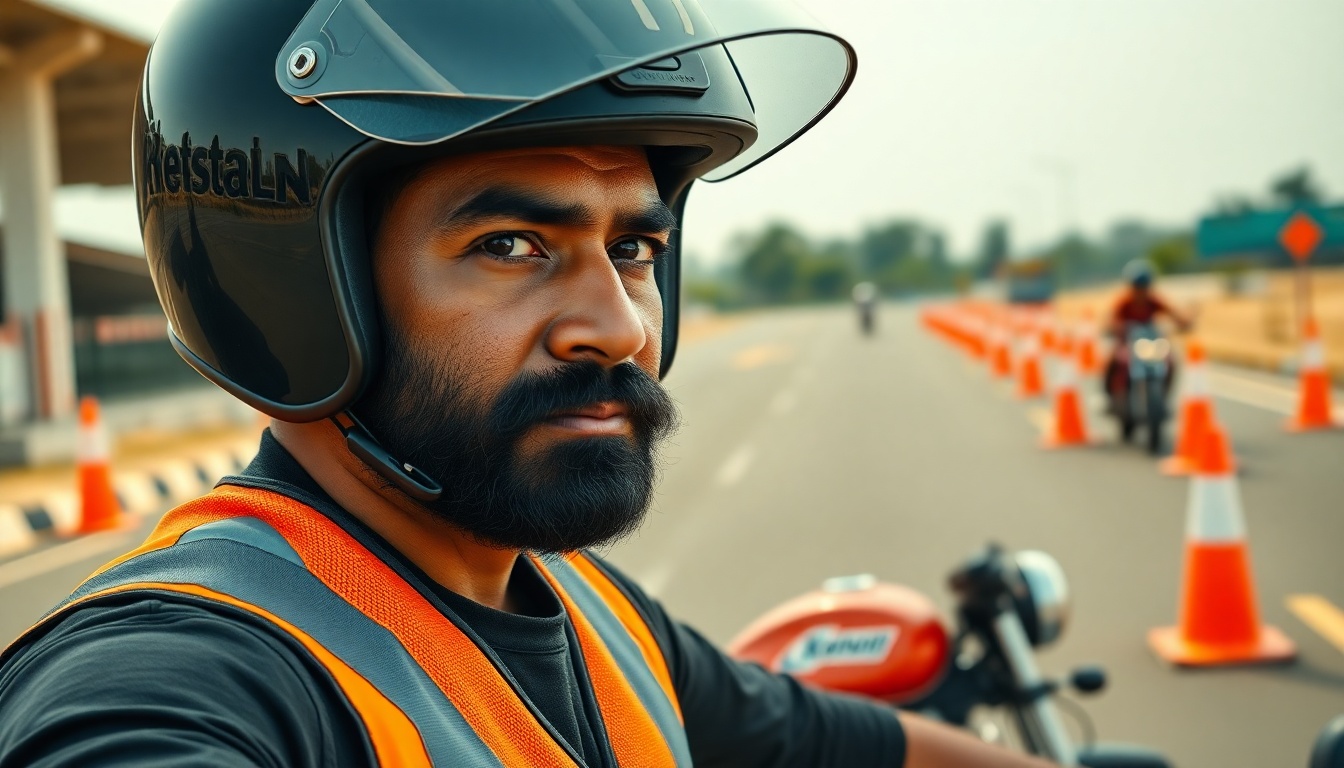
Quick Answer
Enfield coaching is specialized training for handling the weight, torque, and character of a Royal Enfield motorcycle. It’s not about going faster, but about gaining control. A proper 2-day course can teach you the core skills to manage its 190+ kg weight safely, especially in chaotic Indian traffic where panic braking is a real danger.
I see it every weekend at our training grounds. A proud new owner of a gleaming Royal Enfield, standing beside it with a mix of love and fear. They’ve bought the dream, the thump, the legacy.
But when they try a slow U-turn for the first time, the bike starts to tip. You see the panic in their eyes as they fight the weight. That’s the exact moment they realize the dream machine demands respect. This is why Enfield coaching exists.
It bridges the gap between owning the bike and truly commanding it. Here is the thing about these motorcycles: they forgive many mistakes on open highways. But in Bangalore’s silk board junction or Pune’s narrow lanes, they don’t.
Why Most Riders Get Enfield coaching Wrong
Here is what most new riders get wrong about Enfield coaching. They think it’s only for off-roading or high-speed cornering. That’s the glamorous stuff you see in videos.
The real risk is not leaning too little in a curve. It is dropping your bike at a standstill when a cow walks into your path. I have seen this mistake cause dozens of near-accidents. The rider stops, puts a foot down on loose gravel, and the sheer weight takes over.
Another big mistake? Using only the front brake. On a lighter bike, you might get away with it. On a loaded Enfield, especially in the rain, that’s a direct ticket to the ground. Your instinct will be to grab a handful of brake when a car swerves.
Without training, that instinct will betray you. You need to rewire that reflex to use both brakes in a balanced way. The bike’s mass wants to keep moving forward. You have to manage that energy, not fight it.
I remember a student, Rohan. He’d ridden his Classic 350 for two years, commuting in Pune. He came to us after a scare. On a ghat section, a bus came into his lane on a blind corner.
He froze. He didn’t brake, he didn’t swerve—he just stared. Later, he said his mind went blank because he had no practiced escape plan. We spent that day drilling emergency braking and controlled swerving until it was muscle memory. The bike wasn’t the problem. The lack of a trained response was.
What Actually Works on Indian Roads
Look, the manual doesn’t teach you how to handle a pothole hidden under a puddle during a Bangalore drizzle. Your riding buddy might tell you to “just lean more.” That’s terrible advice if you don’t know how your bike’s weight shifts.
What actually works is mastering slow-speed control first. If you can walk your Enfield in a tight figure-eight without putting a foot down, you’ve built foundational balance. This control is what saves you in traffic.
Next is vision. You must look where you want to go, not at the obstacle. This sounds simple. But when a pedestrian steps off the median, you will look at them. Training teaches you to snap your eyes to the escape route. Your bike follows your eyes.
Then there’s throttle control. That lovely torque can pull you out of trouble or low-side you on a sandy patch. The trick is smooth, deliberate inputs. Jerk the throttle on a wet tar road and the rear wheel will lose grip. I’ve seen it happen.
Finally, braking. You must practice braking until you can feel the point just before the wheel locks. You do this in a safe, controlled yard so you don’t have to learn it when an auto-rickshaw stops suddenly.
These aren’t stunts. They are survival skills. They turn that heavy motorcycle from a liability in chaos into a predictable, controlled partner.
You don’t ride a Royal Enfield like other bikes. You partner with it. The training isn’t about taming the beast; it’s about learning its language so you can have a conversation with the road, especially when the road is shouting.
— Throttle Angels Instructor Team
Beginner vs Trained Rider Comparison
| Aspect | What Beginners Do | What Trained Riders Do |
|---|---|---|
| Sudden Obstacle | Panic, grab front brake hard, often leading to a skid or drop. | Apply firm, progressive pressure to both brakes while looking for an escape path. |
| Slow Speed Turns | Stiffen up, stare at the ground, put foot down early. | Use rear brake drag to stabilize, look through the turn, use smooth throttle. |
| Riding in Rain | Avoid riding or ride nervously, afraid of every painted road marking. | Increase following distance, smooth out all inputs, and know how to brake safely on wet surfaces. |
| Hill Starts | Roll backwards, panic-rev, stall, or lunge forward dangerously. | Use rear brake to hold position, smoothly engage clutch and throttle, then release brake. |
| Carrying a Pillion | Let the pillion mount/dismount while on the side-stand, upsetting balance. | Always be on the bike, upright, with both feet down and front brake applied when pillion mounts. |
Adapting to Indian Road Conditions
Book Your Trial Session Today!
Ready to master the roads of Bangalore or Pune? Join India’s premier motorcycle driving school.
Training Available in Bangalore & Pune
Book Your Trial Session Today!
Ready to master the roads of Bangalore or Pune? Join India’s premier motorcycle driving school.
Training Available in Bangalore & Pune
Indian roads are a unique curriculum. Your Enfield coaching must include this reality. Think about broken tarmac, unexpected gravel patches, and diesel spills near bus stops.
The key is reading the road surface constantly. That darker patch ahead? Could be water, could be oil. A trained rider learns to spot these hazards early and adjust their line and speed smoothly, without sudden movements.
Then there’s the traffic psychology. You must anticipate the unpredictable. That car slowing down near a crossing might be letting a pedestrian run across. That scooter ahead will likely swerve without signaling for that pothole.
Monsoon riding is another beast. Your Enfield’s tyres and weight behave differently. You learn to avoid manhole covers and painted lines like the plague. You learn that gentle is fast, and smooth is safe.
Frequently Asked Questions
I already know how to ride a bike. Do I really need Enfield-specific coaching?
Absolutely. Riding a 150cc commuter and a 350cc Enfield are different worlds. The weight, torque, and handling characteristics demand new skills. It’s like switching from a hatchback to an SUV—the basics are the same, but the feel and techniques are not.
Will training help prevent my bike from tipping over at traffic lights?
Yes, this is a primary focus. We drill slow-speed balance and control until you can handle the bike’s weight confidently. You’ll learn how to place your feet, use the brakes to stabilize, and never be caught off-guard by a slope or uneven road.
Is the training done on my own bike?
We strongly recommend using your own motorcycle. You need to build muscle memory and confidence on the exact bike you’ll be riding every day. The training is about you and your machine becoming one unit.
How much does Throttle Angels training cost?
Our courses start at competitive rates with flexible packages. Call Rajkumar at 9535350575 or Arun at 8169080740 for current pricing and batch schedules in Bangalore and Pune.
What’s the single biggest takeaway from Enfield coaching?
Confidence through control. You stop being a passenger on your own motorcycle. You start dictating its movement, in any situation. That peace of mind transforms every ride, whether it’s a trip to the market or a cross-country tour.
Look, the goal is simple. We want you to enjoy that legendary thump for decades. To come back from every ride with a smile, not a story about a close call.
Investing in proper Enfield coaching is the smartest upgrade you can make. It stays with you for life, long after the first scratch on the chrome. Your bike is built for the long haul. Make sure your skills are too.
Book Your Trial Session Today!
Ready to master the roads of Bangalore or Pune? Join India’s premier motorcycle driving school.
Training Available in Bangalore & Pune