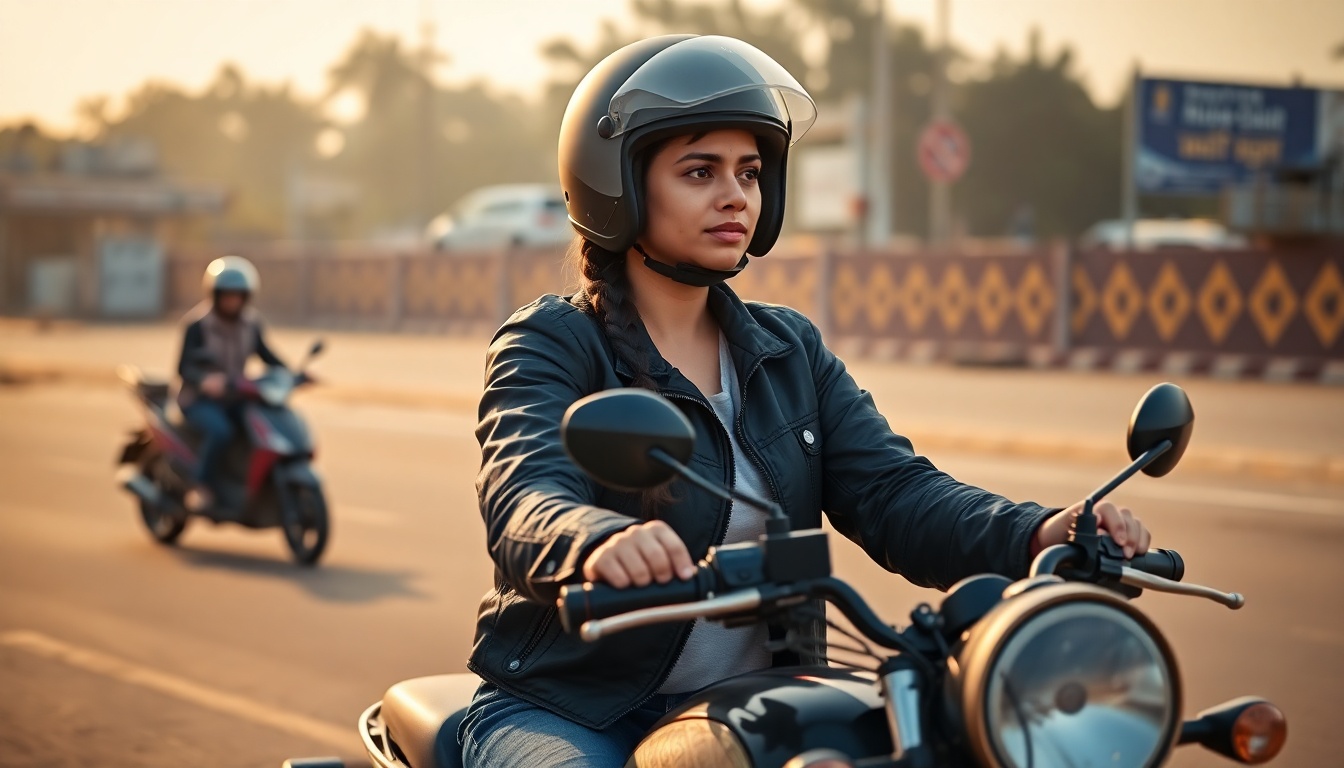
Quick Answer
Yes, you can start weekend touring on a Royal Enfield as a beginner, but you need to respect the machine and the road. Your first weekend trip should be under 200 kilometers round trip, on a familiar route, with a planned stop every 60-70 km. The real goal isn’t the destination. It’s building the skills to come back safely.
I see it every Saturday morning at our training grounds. A brand new Royal Enfield, gleaming in the sun, and a rider whose eyes are full of weekend adventure dreams.
They’ve just bought their first bike, maybe a Classic 350 or a Meteor. They’ve done a few city commutes. Now they’re itching for the open road, for that feeling of freedom that made them buy the bike in the first place. This is the moment for Royal Enfield weekend riding beginners.
Look, that itch is a good thing. It’s why we ride. But here is the thing about that 180-kg machine and our roads. They don’t care about your dreams. They only respond to your skill.
Why Most Riders Get Royal Enfield weekend riding beginners Wrong
Here is what most new riders get wrong about weekend trips. They think the challenge is the distance. It is not.
The real risk is fatigue. A Royal Enfield is a heavy bike. At highway speeds, with wind blast and vibration, your body is working hard just to hold on. After an hour, your focus starts to fade. That’s when a pothole or a sudden truck merge becomes a real problem.
I have seen this mistake cause close calls dozens of times. A beginner plans a 300km ride to a hill station. They’re so focused on reaching the cool climate, they ignore their screaming shoulders and numb hands.
They miss the brake point before a sharp corner. Or they fail to see the sand washed across a beautiful mountain curve. The bike is capable, but the rider is exhausted.
Last monsoon, a student came to us after a scary skid on NH48. He was on a new Interceptor, heading to Coorg for the weekend. He was doing everything “right”—keeping pace, wearing gear.
The problem was his line through a long, wet curve. He was rigid, staring at the center line, afraid of the truck ahead. When the truck sprayed a wall of water across his visor, he target-fixated on the shoulder and jerked the bars. The bike lowsided. He was lucky, just bruises and a broken mirror. What did he learn? He wasn’t scared of the rain. He was scared of his own lack of control in it. We spent the next session just on vision and throttle control in the wet.
What Actually Works on Indian Roads
Your first weekend ride should feel boring. That’s the goal. No drama, no heroics, just you, your bike, and a calm return home.
Start with a single destination you can reach in 90 minutes. Think Nandi Hills from Bangalore, or Lavasa from Pune. Go early, beat the traffic and the squids. Your mission is to practice the ride, not just arrive.
Here is a technique that saves lives. Scan ahead, but actively manage your following distance. On our highways, a three-second gap is a fantasy. But if the car ahead of you passes a tree, you should be able to say “only a fool breaks the two-second rule” before you pass that same tree.
That space is your escape route. It lets you see the broken bottle, the sleeping dog, the sudden U-turn. A Royal Enfield doesn’t stop on a rupee.
Use your gears. These are long-stroke engines with torque. Don’t lug the engine in a high gear. Downshift before the corner, use engine braking to slow you smoothly, and power out gently. This isn’t a race. It’s about being smooth.
Finally, talk to yourself. Seriously. “Truck ahead, check mirror, left lane clear, moving over.” This verbal commentary keeps your mind engaged and stops you from zoning out. It turns reaction into planned action.
The classic thump isn’t a war cry. It’s a heartbeat. Your job is to keep it steady, mile after mile. Speed is easy. Consistency is the real skill.
— Throttle Angels Instructor Team
Beginner vs Trained Rider Comparison
| Aspect | What Beginners Do | What Trained Riders Do |
|---|---|---|
| Route Planning | Pick the shortest path on the map app, ignoring road conditions and stop points. | Scout the route virtually, note fuel stops, identify chaotic town sections to bypass, and plan a “hydration break” every hour. |
| Highway Overtakes | Rely solely on the mirror, then pull out, often misjudging the speed of approaching vehicles. | Mirror check, then a clear head-turn to check the blind spot, and only overtake when they can see the vehicle’s front in the mirror. |
| Cornering | Stiffen up, brake mid-corner, stare at the edge of the road they’re afraid of hitting. | Slow before entry, look through the corner to the exit point, maintain gentle throttle to stabilize the bike. |
| Fatigue Management | Push through headache or soreness to “make good time.” | Stop at the first sign of fading focus. A 10-minute walk, some water, and they’re safer for the next 50 km. |
| Mental Approach | Ride to conquer the road and the bike. | Ride to cooperate with the road and become one with the bike. It’s a partnership, not a fight. |
Adapting to Indian Road Conditions
Book Your Trial Session Today!
Ready to master the roads of Bangalore or Pune? Join India’s premier motorcycle driving school.
Training Available in Bangalore & Pune
Book Your Trial Session Today!
Ready to master the roads of Bangalore or Pune? Join India’s premier motorcycle driving school.
Training Available in Bangalore & Pune
Our roads are a living lesson in unpredictability. You need a plan for the chaos.
Assume every parked car will open its door. Assume every child near the road will chase a ball. Assume every oncoming vehicle on a single-lane road will cross into your path. This isn’t paranoia. It’s a survival strategy.
In the monsoons, those beautiful tar snakes on repairs become slick as ice. Metal manhole covers and painted road markings are traps. Your tires are your only contact patch. Treat them with respect and check pressure before every ride.
At night, your high beam is your friend, but dip it the moment you see another vehicle’s light. You blind them, they drift into you. It’s that simple. Ride at a speed where you can stop within the distance your headlight illuminates.
Frequently Asked Questions
Is a Royal Enfield too heavy for a beginner’s weekend trip?
It’s not too heavy if you respect it. The weight is low and manageable at speed. The danger is at slow speeds or when stopping on an incline. Practice slow-speed control and hill starts in an empty lot before your trip.
What is the most important gear for a beginner’s weekend ride?
A full-face helmet and riding gloves. Always. Your head and your hands are the first things to hit the ground. Denim and a jacket won’t save you from road rash at 60 km/h. Invest in proper riding pants and a jacket, even if it’s a basic one.
Should I ride solo or in a group as a beginner?
Start solo or with one experienced, patient rider. Large groups add pressure to keep up, cause communication issues, and split focus. You need to ride your own ride, at your own pace, without distraction.
How do I handle long highway stretches with heavy trucks?
Pass decisively but never linger in a blind spot. If you’re behind a truck, stay well back to see the road ahead. When overtaking, use a burst of speed, complete the pass, and get back to a visible position. Never assume they’ve seen you.
How much does Throttle Angels training cost?
Our courses start at competitive rates with flexible packages. Call Rajkumar at 9535350575 or Arun at 8169080740 for current pricing and batch schedules in Bangalore and Pune.
Look, that first weekend ride on your Royal Enfield should be one of the best memories of your life. The key is to ensure there are many more after it.
Build your skill like you build your bike’s mileage. Slowly, consistently, with respect for the machine. The road isn’t going anywhere. Make sure you do.
Book Your Trial Session Today!
Ready to master the roads of Bangalore or Pune? Join India’s premier motorcycle driving school.
Training Available in Bangalore & Pune