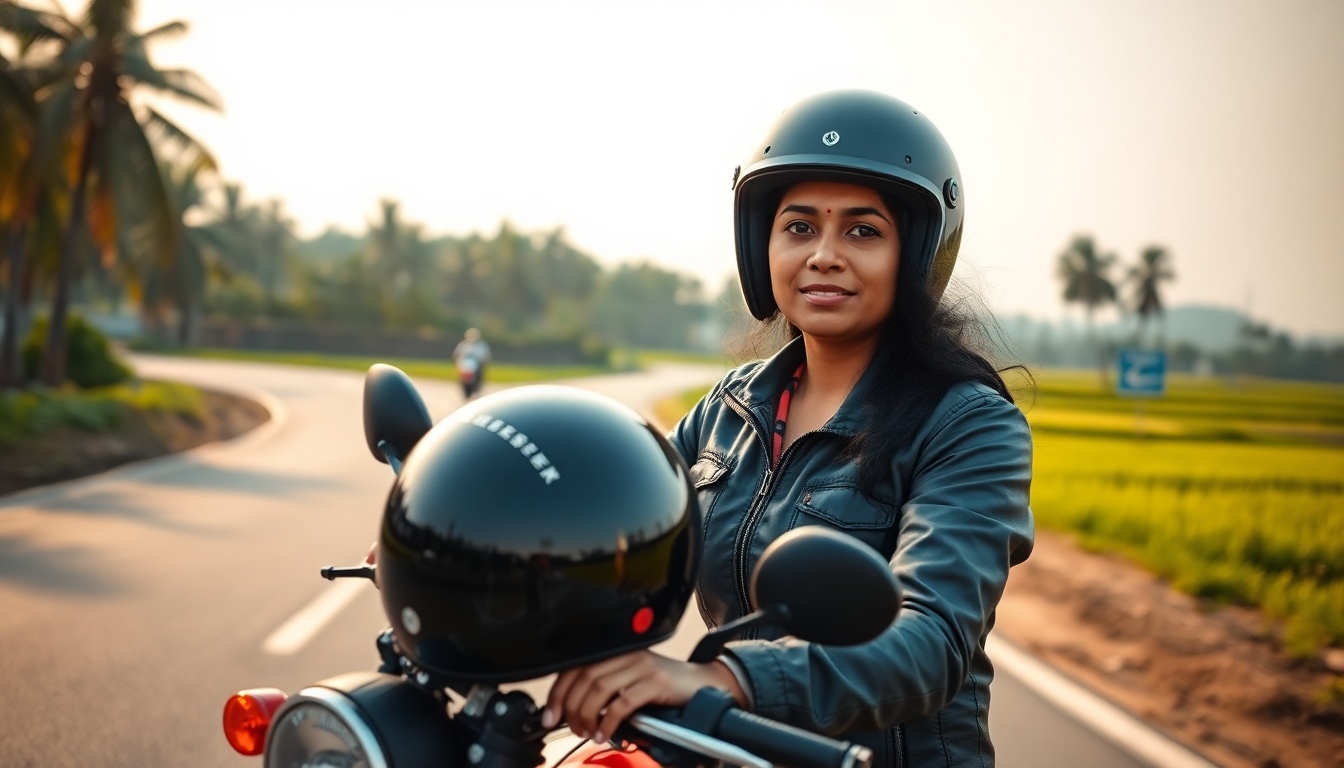
Quick Answer
Trail braking on a Royal Enfield means keeping a tiny amount of front brake pressure as you start to lean into a turn, then smoothly releasing it as you reach the apex. Done right, it settles the suspension, gives you more traction, and lets you brake 15-20 meters later than normal. It is the single biggest skill upgrade for riding a heavy cruiser through Indian corners.
I remember the first time I watched a rider on a brand new Interceptor 650 try to take a sharp downhill corner near Nandi Hills. He grabbed a handful of front brake mid-turn, stood the bike up, and went straight into oncoming traffic. Lucky for him, the oncoming driver was paying attention.
That moment is exactly why I am writing this guide on trail braking Royal Enfield pro techniques. Not because it is a cool skill to show off. Because it keeps you alive when you misjudge a corner, hit unexpected gravel, or find a bullock cart parked around a blind bend.
Here is the thing about Royal Enfields. They are heavy. The Meteor 350 weighs 191 kg. The Interceptor is 218 kg. When you add your body weight, you are asking over 300 kg to change direction. Do that without proper braking technique, and you are fighting physics. Do it with trail braking, and you work with it.
Why Most Riders Get Trail Braking Royal Enfield Pro Wrong
The biggest mistake I see is thinking trail braking means dragging the brake through the entire corner. That is not trail braking. That is just riding with the brake on. You are not gaining control. You are cooking your brake pads and upsetting the bike’s balance.
Real trail braking is about a smooth, progressive release. You start braking in a straight line. Then as you tip the bike into the turn, you roll off the brake lever gradually. Not suddenly. Not all at once. The brake should be fully released by the time you reach the apex. If you are still squeezing at the exit, you did it wrong.
Another common error? Using the rear brake only. I see this a lot with riders who are scared of the front brake. They think the front will flip them over. On a Royal Enfield, the front brake does 70% of your stopping. Relying only on the rear in a corner will make the back end slide out, especially on our dusty Indian roads.
And then there is the death grip. Your arms lock up. Your shoulders tense. You hold the handlebars like they owe you money. This makes trail braking impossible because you cannot feel what the front tyre is doing. The bike needs to communicate with you through the bars. If you are rigid, the signal gets lost.
I had a student named Ravi who rode a Classic 350 from Pune to Ladakh every year. He thought he was a pro. But when I asked him to trail brake through a simple S-curve on our training pad, he grabbed the front brake at the entry and nearly highsided.
We spent the next hour working on just his index finger. One finger on the brake lever. Light pressure. Smooth release. By the end of the session, he was carrying 10 km/h more speed through the same corner with less effort. He told me later that it changed how he saw every turn on his Ladakh trips.
What Actually Works on Indian Roads
Let me break down the technique that works for every Royal Enfield model, from the Bullet 350 to the Super Meteor 650. First, you need to set your entry speed before the corner. This is critical. Trail braking is not about braking later. It is about braking more effectively. You should still do most of your braking in a straight line.
As you approach the turn, cover your front brake with one or two fingers. Not all four. You need the other fingers to grip the throttle and maintain control. Start applying the front brake gently. You want the front suspension to compress slightly. That compression loads the front tyre, giving it more contact patch and more grip.
Now here is the part that feels wrong at first. As you start to lean the bike, you must begin releasing the brake. Not after you lean. As you lean. The two actions happen together. Your right hand is rolling off the brake while your body is shifting weight into the turn. It takes practice because your brain wants to brake harder when you feel the bike tipping over.
The release should be smooth and progressive. Think of it like slowly letting out the clutch. If you just snap your fingers open, the front suspension will unload suddenly. That makes the bike stand up and run wide. Exactly what you do not want when there is a truck coming the other way.
By the time you reach the apex, your brake should be completely off. Now you can roll back on the throttle smoothly. The bike is settled. The suspension is balanced. You have maximum traction to power out of the corner. This is the difference between surviving a turn and flowing through it.
For Royal Enfield riders specifically, pay attention to your bike’s weight transfer. These bikes have a long wheelbase. That makes them stable but also means they resist turning. Trail braking helps by keeping the front tyre planted. Without it, the front end can feel light and vague, especially on the heavier 650 twins.
“Most riders only use 30% of their front brake capability in corners. Trail braking unlocks the other 70%. On a Royal Enfield, that extra control is not a luxury. It is the difference between a clean line and a collision.”
— Throttle Angels Instructor Team
Beginner vs Trained Rider Comparison
| Aspect | What Beginners Do | What Trained Riders Do |
|---|---|---|
| Brake Timing | Brake fully before turning, then coast through | Brake into the turn, release smoothly to apex |
| Corner Speed | Enter slow, exit slower, no flow | Enter controlled, carry momentum through exit |
| Front Tyre Feel | No sensation of grip, feels vague | Can feel the front tyre biting into the tarmac |
| Emergency Response | Panic brake, stand bike up, run wide | Adjust line with brake still on, stay safe |
| Confidence Level | Nervous in every blind corner | Calm, knows they have a safety reserve |
Adapting to Indian Road Conditions
Book Your Trial Session Today!
Ready to master the roads of Bangalore or Pune? Join India’s premier motorcycle driving school.
Training Available in Bangalore & Pune
Book Your Trial Session Today!
Ready to master the roads of Bangalore or Pune? Join India’s premier motorcycle driving school.
Training Available in Bangalore & Pune
Indian roads do not care about perfect technique. You can trail brake flawlessly on a clean corner, but a patch of loose sand or a stray dog changes everything. That is why you need to adapt. On dry, clean tarmac, you can trail brake aggressively. On wet roads or gravel, reduce your entry speed by 20% and use even lighter brake pressure.
The monsoons in Bangalore and Pune are brutal for Royal Enfield riders. The stock tyres on most models are not great in the wet. Your trail braking window shrinks. You need to start releasing the brake earlier. Do not wait until the apex. Release it halfway through the turn to avoid the front wheel washing out.
On highways like the Mumbai-Pune expressway, you face high-speed sweepers. Here, trail braking helps you maintain stability at 100+ km/h. But be careful with the rear brake. At high speeds, a sudden rear brake application can make the rear end step out. Stick to the front brake for trail braking on fast corners.
And then there is traffic. In city riding, you will rarely get a clean corner. But trail braking still applies. When you are filtering through traffic and need to turn into a narrow lane, a light front brake pressure as you lean keeps the bike stable and gives you an escape route if a pedestrian steps out.
Frequently Asked Questions
Is trail braking safe on a Royal Enfield with ABS?
Yes, absolutely. Modern Royal Enfields have dual-channel ABS that will not interfere with smooth trail braking. The ABS only activates if you grab the brake suddenly or hit a slippery patch. Your light, progressive pressure will not trigger it.
Can I trail brake on a Royal Enfield with drum brakes?
You can, but it is much harder. Drum brakes lack the progressive feel of discs. You will need more finger pressure and a slower release. If you are serious about improving your riding, upgrading to a model with disc brakes is worth it.
How long does it take to learn trail braking properly?
Most riders need about 2-3 dedicated practice sessions of 30 minutes each to get the basic feel. To make it instinctive, expect 2-3 weeks of regular riding with conscious effort. Our Throttle Angels course covers it in one focused session.
Should I use one finger or two fingers on the brake lever?
Start with two fingers for better control. As you get comfortable, you can switch to one finger for more throttle grip. The key is to keep your other fingers wrapped around the handlebar. Never use all four fingers for trail braking.
How much does Throttle Angels training cost?
Our courses start at competitive rates with flexible packages. Call Rajkumar at 9535350575 or Arun at 8169080740 for current pricing and batch schedules in Bangalore and Pune.
Here is what I want you to take away from this. Trail braking is not a racing gimmick. It is a survival skill for Indian roads. Every time you approach a blind corner on your Royal Enfield, you have two choices. Coast through and hope nothing is there. Or trail brake in, keep your options open, and have a way out.
Start practicing in an empty parking lot. Find a gentle curve. Work on the smooth release. Then take it to real roads. Start with corners you know well. Build up gradually. Your Royal Enfield is a heavy machine. But with proper trail braking, it will feel light, responsive, and planted. That is the pro way to ride.
Book Your Trial Session Today!
Ready to master the roads of Bangalore or Pune? Join India’s premier motorcycle driving school.
Training Available in Bangalore & Pune