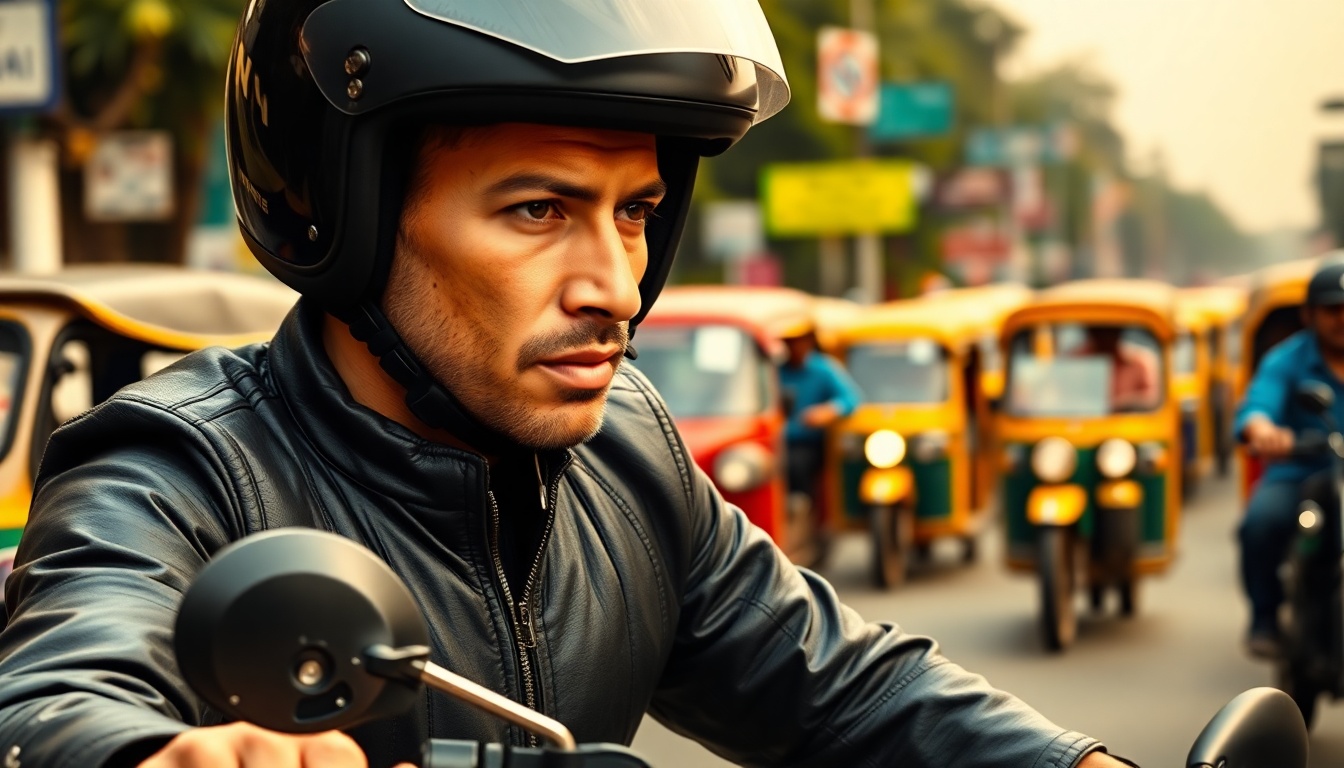
Quick Answer
Trail braking on a Royal Enfield in Bangalore means you keep the front brake lightly engaged as you lean into a turn, then smoothly release it 30-40% through the corner. This technique gives you 50% more control over your line, especially on Bangalore’s unpredictable roads with sudden gravel patches and autorickshaw cut-ins. It is not just for racers—it is a survival skill for city riding.
I remember the first time I watched a new rider on a brand new Himalayan try to take the sharp left from MG Road onto Brigade Road. They grabbed the front brake while the bike was still upright, then let go completely and leaned. The bike stood up, they ran wide, and almost collected a parked i10.
That is the moment most riders in Bangalore realize they do not actually know how to brake in a corner. And when you are riding a heavy machine like a Royal Enfield, that mistake gets magnified. The weight wants to keep going straight. Your instincts tell you to grab brake. That combination is how you end up in a ditch.
Learning trail braking Royal Enfield pro Bangalore techniques changes everything. It is the difference between fighting your bike through a corner and dancing with it. And on Bangalore roads, where every corner hides a pothole, a stray dog, or a bus that forgot its lane, you need that dance.
Why Most Riders Get trail braking Royal Enfield pro Bangalore Wrong
Here is the thing about trail braking on a Royal Enfield. Most riders think it is about going faster. It is not. It is about having an escape route. When you enter a corner with your brake still on, you keep the front suspension loaded. That weight on the front tire gives you grip. Grip gives you options.
The biggest mistake I see in Bangalore is riders chopping the throttle or grabbing the brake at the wrong moment. They panic when they see a gap in traffic or a pedestrian step out. They squeeze the front brake hard while the bike is leaned over. On a Royal Enfield with its long wheelbase and heavy front end, that means the front tire washes out. You go down before you even know what happened.
Another common error is trailing off the brake too early. Riders release the brake completely before they even reach the apex. The bike stands up, the suspension unloads, and suddenly you are heading wide. On a road like the NICE Road bypass, that wide line takes you straight into a concrete barrier or oncoming traffic.
I have seen this mistake cause accidents dozens of times in our training sessions. The rider enters the corner, brakes hard, then lets go completely. The bike lurches upright, they panic, and they target-fixate on the thing they are trying to avoid. The result is always the same. A crash that could have been avoided with 50 meters of controlled braking into the turn.
Last monsoon season, I had a student at our Bangalore training pad who was terrified of the sharp U-turn near the Hebbal flyover. He rode a Classic 350, and every time he approached that turn, he would grab the clutch, chop the throttle, and coast through like a bicycle. The bike wobbled every single time.
I made him stay on the throttle and trail the front brake through that same turn. First attempt, he was shaking. By the fifth attempt, he was carrying 10 km/h more speed, the bike was stable, and he had a line that left him room to avoid a pothole he had never even noticed before. He looked at me and said, “I have been riding for 12 years. Why did nobody teach me this?” That is why Throttle Angels exists.
What Actually Works on Indian Roads
Let me break down how trail braking actually works on a Royal Enfield in Bangalore traffic. First, you need to understand that your front brake is not the enemy. It is your steering tool. When you apply the front brake while leaned over, you are not slowing down as much as you are tightening your line. The bike wants to stand up, but your brake keeps it planted.
Start by doing all your hard braking before the corner. Get your speed down, downshift, and get your revs matched. Then, as you start to lean in, keep a light, constant pressure on the front brake. I am talking about two fingers, maybe three. Not a death grip. Just enough to feel the front tire bite into the tarmac.
Here is the key. As you lean deeper into the corner, you gradually release that brake pressure. Not all at once. Smoothly. Like you are letting water out of a tap. By the time you reach the apex, your brake should be completely off, and you should be rolling back onto the throttle.
The Royal Enfield has a unique character here. Because of its heavy flywheel and long stroke engine, it does not like sudden throttle inputs. So when you trail brake, you need to be smooth with the release. If you snap the brake off, the front end rises, the suspension unloads, and the bike feels vague and unstable. You want to bleed the brake off as you add throttle. That transition is where the magic happens.
On Bangalore roads, I tell my students to practice this on the wide, sweeping turns on the airport road. Take the turn at 40 km/h with no brakes first. Feel the line. Then do it again at 45 km/h with a light trail brake. You will feel the bike settle. You will feel the front tire grip. You will feel like you can actually steer the bike mid-corner instead of just hoping it goes where you look.
“Trail braking on a Royal Enfield is not about shaving seconds off your lap time. It is about giving yourself an extra meter of room when an autorickshaw decides your lane looks better than theirs. That one meter is the difference between a close call and a hospital visit.”
— Throttle Angels Instructor Team
Beginner vs Trained Rider Comparison
| Aspect | What Beginners Do | What Trained Riders Do |
|---|---|---|
| Brake Timing | Brake hard before corner, release completely, then lean | Brake 70% before corner, trail remaining 30% into the turn |
| Corner Entry Speed | Too fast or too slow, no consistency | Controlled entry speed that allows mid-corner adjustment |
| Suspension Feel | Bike feels bouncy and unstable mid-turn | Front suspension stays compressed, bike feels planted |
| Emergency Response | Panic brake, stand bike up, crash | Trail brake harder, tighten line, avoid obstacle |
| Confidence in Traffic | Nervous, jerky inputs, wide lines | Smooth, predictable, leaves margin for error |
Adapting to Indian Road Conditions
Book Your Trial Session Today!
Ready to master the roads of Bangalore or Pune? Join India’s premier motorcycle driving school.
Training Available in Bangalore & Pune
Book Your Trial Session Today!
Ready to master the roads of Bangalore or Pune? Join India’s premier motorcycle driving school.
Training Available in Bangalore & Pune
Bangalore roads do not care about your technique if you do not adapt. The monsoon season here turns every corner into a slip-and-slide. Trail braking on wet roads requires even lighter pressure. You want to feel the front tire, not overwhelm it. If the road is wet, use three fingers but apply half the pressure. Let the bike tell you what it can handle.
Here is a specific tip for Royal Enfield riders in Bangalore. The stock tyres on many Enfields are not the grippiest, especially in the wet. If you are serious about trail braking, consider upgrading to a dual-compound tyre. It makes a massive difference when you are trailing the brake through a wet corner on Old Airport Road.
And watch out for those white and yellow lane markings. In the rain, they are like ice. If you have to trail brake over a zebra crossing or a painted arrow, do it gently. The difference in grip between tarmac and paint can catch you off guard. I have seen riders lowside their Enfields exactly this way near the Silk Board junction.
Frequently Asked Questions
Is trail braking dangerous for a heavy bike like a Royal Enfield?
Only if you do it wrong. When done correctly, trail braking actually makes the bike more stable by keeping the front suspension loaded. The real danger is not trail braking at all, because you lose the ability to adjust your line mid-corner.
Can I use the rear brake for trail braking instead?
You can, but it is not as effective. The rear brake does not load the front suspension, so it does not give you the same steering control. Use the front brake with two fingers for trail braking. Save the rear brake for low-speed U-turns and fine adjustments.
How long does it take to learn trail braking properly?
Most riders at Throttle Angels get the basics in a single 3-hour session. But mastering it takes about 500-1000 kilometers of deliberate practice. You need to build muscle memory so it becomes automatic when a dog runs in front of you.
Does trail braking work on a Royal Enfield with ABS?
Yes, absolutely. Modern Royal Enfields have dual-channel ABS that is calibrated for Indian conditions. The ABS will only kick in if you brake too hard, so it acts as a safety net. It does not interfere with smooth, controlled trail braking.
How much does Throttle Angels training cost?
Our courses start at competitive rates with flexible packages. Call Rajkumar at 9535350575 or Arun at 8169080740 for current pricing and batch schedules in Bangalore and Pune.
Here is what I want you to take away from this. Trail braking is not some advanced racing secret. It is a basic survival skill for Indian roads. Your Royal Enfield is a heavy, beautiful machine that wants to go straight. You need to convince it to turn. Trail braking is how you do that.
Start slow. Find an empty stretch of road with a gentle curve. Practice at 30 km/h. Then 35. Then 40. Feel the front tire. Listen to your bike. And remember, every corner in Bangalore is a test. The road does not care about your ego. It only cares about your inputs. Make them smooth, make them deliberate, and you will ride home safe every single time.
Book Your Trial Session Today!
Ready to master the roads of Bangalore or Pune? Join India’s premier motorcycle driving school.
Training Available in Bangalore & Pune