Quick Answer
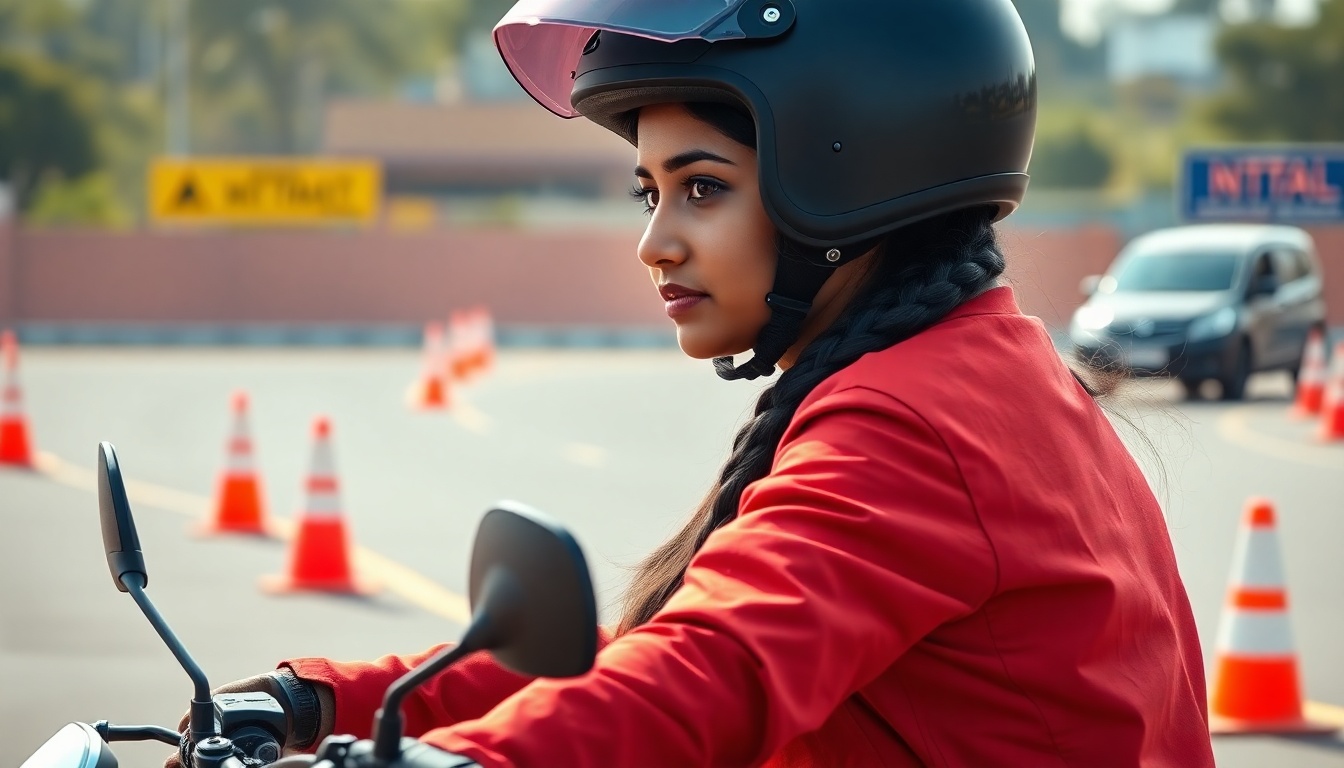
Emergency maneuver motorcycle skills are the muscle-memory reactions that stop you from hitting a sudden obstacle. The most critical skill is controlled braking, which can cut your stopping distance by 30% or more. You need to practice these skills in a safe space for at least 30 minutes every month to keep them sharp for when a cow, pothole, or car appears from nowhere.
I was watching a new rider in our Bangalore training yard last week. He was doing fine, cruising around the cones. Then I threw a soft foam block in his path.
He froze. His hands went stiff on the bars, he sat up straight, and he rode right over it. This is the exact moment that defines why you need emergency maneuver motorcycle skills. On the road, that block is a child, a scooter, or a slab of concrete that fell off a truck.
Your brain’s first instinct is to panic. Without training, panic wins every single time. The goal is to rewire that instinct. To make your body do the right thing before your fear-filled mind can even process what’s happening.
Why Most Riders Get emergency maneuver motorcycle skills Wrong
Here is what most new riders get wrong about emergency skills. They think it’s about lightning-fast reflexes. It’s not. It’s about overriding a bad reflex with a trained one.
I have seen this mistake cause accidents dozens of times. A dog runs across the road. The rider’s untrained instinct is to stare at the dog and swerve violently. They forget to check their blind spot, and they swing right into the path of a fast-moving auto-rickshaw.
The real risk is not the obstacle itself. It is your own panic reaction. You grab a fistful of front brake while the bike is leaned over in a turn. You target-fixate on the back of the truck you’re trying to avoid. You forget to cover the clutch and stall the engine right in the middle of a dangerous situation.
Another huge error? Practicing at 30 kmph. If you only practice slow, you will only react slow. You need to build confidence at 50, 60, even 70 kmph in a controlled environment. Because that’s the speed at which things go wrong on our highways.
A student named Priya, a software engineer who commuted on her scooter for years before buying a proper motorcycle, taught me something. She was brilliant at theory. But when we simulated a car door opening suddenly, she did the “textbook wrong” thing every time.
She would brake hard, but she’d also try to swerve at the same time. The bike would get unstable, and she’d have to put a foot down. We spent an hour just on this. Not braking and swerving. But braking first, straightening the bike, stopping if you can, swerving only if you have the space. By the end, her body had learned the sequence. She said it felt less frantic. That’s the point. It’s not about being a hero. It’s about being calm.
What Actually Works on Indian Roads
Look, forget the fancy terms for a second. What works is a simple hierarchy. Your first job is to brake. Your second job is to go around. But only if you can’t stop in time.
Here is the thing about braking. You must use both brakes. Every time. The front brake does 70-80% of the work. But if you ignore the rear, the bike feels nervous. Squeeze the front lever progressively, don’t snatch it. Stomp on the rear pedal firmly.
Practice this until you feel the rear wheel just begin to lighten. That’s the sweet spot of maximum stopping power before the wheel locks. Do this in a clean, empty parking lot. Start at 40 kmph. Mark a line on the ground with chalk or use a water bottle.
Now, for swerving. This is not a lean. It’s a press. See an obstacle? Press firmly on the left handlebar to go right. Press right to go left. The bike will flick quickly underneath you. It feels unnatural at first, but it’s the fastest way to change your line.
The critical part? You separate braking and swerving. You brake, release the brakes, then swerve. You don’t do both at once when you’re learning. On our roads, you often don’t have the space for a big swerve anyway. Stopping is usually your best and only bet.
Finally, look where you want to go. Your hands follow your eyes. If you stare at the pothole, you will hit the pothole. Force your gaze to the gap, to the escape route. The bike will follow.
The skill isn’t in performing the maneuver once on a sunny day. It’s in having it buried so deep in your muscle memory that it comes out on a wet, dark night when a truck has its high beams on and you’re tired. That’s when the training pays for itself a hundred times over.
— Throttle Angels Instructor Team
Beginner vs Trained Rider Comparison
| Aspect | What Beginners Do | What Trained Riders Do |
|---|---|---|
| Sudden Obstacle | Freeze or make a sudden, unplanned swerve. Often target-fixate on the obstacle. | Immediately apply controlled, progressive braking. Eyes scan for an escape path while slowing down. |
| Braking Technique | Stomp on the rear brake only, or grab the front brake violently, risking a lock-up. | Apply both brakes in unison, with smooth, increasing pressure on the front. Body position is braced. |
| Lane Positioning | Ride in the center of the lane, where oil and dirt accumulate, with no escape buffer. | Ride in the left or right tire track of the vehicle ahead, maintaining a 2-second gap and an exit strategy. |
| During a Skid | Panic, hold the brake locked, and almost certainly crash. | If the rear locks, keep the front straight and gently release the rear brake to regain traction. |
| Mental State | Reactive. Processes the danger, then tries to decide what to do. This delay is critical. | Proactive. The body executes the drilled maneuver while the mind assesses the outcome. Much faster. |
Adapting to Indian Road Conditions
Book Your Trial Session Today!
Ready to master the roads of Bangalore or Pune? Join India’s premier motorcycle driving school.
Training Available in Bangalore & Pune
Book Your Trial Session Today!
Ready to master the roads of Bangalore or Pune? Join India’s premier motorcycle driving school.
Training Available in Bangalore & Pune
Our roads are a different beast. You can’t practice emergency maneuvers the same way you would on a perfect German autobahn. You have to account for the chaos.
Monsoon roads are the great equalizer. Your braking distance can double. Here, the skill is modulating your brakes with feather-light touch. Practice in the wet in a safe area. Feel how the brakes respond. Know that painted lines and manhole covers become like ice.
Highway riding brings its own nightmares. The real danger is not the big pothole you see. It’s the shallow, faded one you don’t see until the last second because of the glare. Your default speed on unfamiliar highways should leave you enough space to stop within your sight distance.
In city traffic, your emergency maneuver is often just a hard stop. But you must be aware of the tempo traveler or scooter right behind you. Use your mirrors even in an emergency stop. Sometimes, getting hit from behind is worse than a minor impact in front. There are no easy answers, only trained choices.
Frequently Asked Questions
What is the single most important emergency skill to practice first?
Controlled braking with both brakes. Find an empty lot, get up to 40 kmph, and practice stopping as quickly and smoothly as possible. Master this before you even think about swerving. It’s the foundation of everything else.
Can I practice these skills on my own bike?
Absolutely, and you should. But start in a completely safe, controlled area like a large, empty parking lot. Wear all your gear. And consider getting professional guidance first to ensure you’re building the right habits, not ingraining dangerous ones.
How often should I refresh these emergency skills?
Muscle memory fades. Aim for a short, focused practice session every month. Even 20-30 minutes of braking and swerving drills will keep the neural pathways active. Before a long tour, make it a point to do a refresher.
Is swerving safer than braking in an emergency?
Rarely. Your first option is always to try and stop. Swerving introduces new risks—like what’s in the lane you’re swerving into. Only swerve if you are 100% certain the space is clear and you cannot stop in time.
How much does Throttle Angels training cost?
Our courses start at competitive rates with flexible packages. Call Rajkumar at 9535350575 or Arun at 8169080740 for current pricing and batch schedules in Bangalore and Pune.
Think of these skills as your personal insurance policy. You pay the premium with your practice time. You hope you never have to make a claim.
But if that day comes, when the unthinkable happens right in front of you, that investment will be the difference between a scary story you tell later and a life-changing incident. Your bike is capable of incredible things. Your job is to unlock that capability, safely and on purpose.
Book Your Trial Session Today!
Ready to master the roads of Bangalore or Pune? Join India’s premier motorcycle driving school.
Training Available in Bangalore & Pune