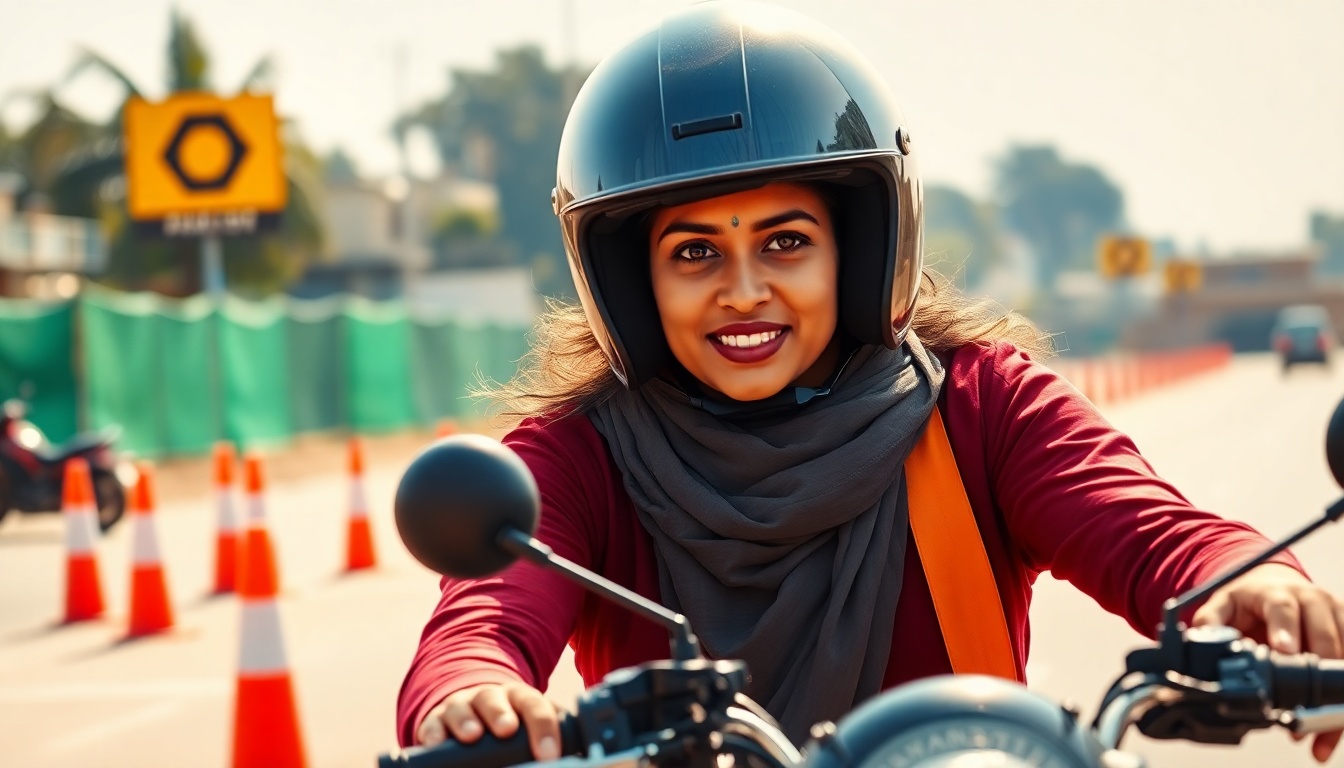
Quick Answer
Advanced motorcycle braking pro is about reducing your stopping distance by 40% or more using progressive brake pressure and body positioning. It is not about grabbing levers harder. It is about learning to feel the tires’ grip limit and using both brakes in a specific sequence that shortens your stop from 60 km/h to under 14 meters.
I remember watching a rider at our Bangalore training pad panic-stop from 50 km/h. He locked the rear, skidded sideways, and took almost 25 meters to stop. His bike was new. His gear was expensive. His technique was non-existent.
That moment is why I am writing this. If you are searching for “advanced motorcycle braking pro,” you already know that basic braking is not enough. You have felt that moment when the front end dives too hard, or the rear steps out, and you realized there is more to stopping than just pulling the lever.
Here is the thing about advanced motorcycle braking pro. It is not a secret technique reserved for racers. It is a set of skills that any rider can learn, and it will save your life on Indian roads more times than you can count.
Why Most Riders Get Advanced Motorcycle Braking Pro Wrong
The biggest mistake I see is grabbing the front brake like it is a panic button. New riders think more force equals more stopping power. It does not. It just locks the wheel and sends you sliding.
I have seen this mistake cause accidents dozens of times on Bangalore’s Outer Ring Road. A car cuts in, the rider grabs a handful of front brake, the front tucks, and down they go. The real risk is not the car. It is your own hand doing too much too fast.
Another common error is ignoring the rear brake entirely. Some riders think the rear brake is useless. That is wrong. On a properly executed stop, the rear brake provides stability and contributes about 30% of your stopping force. Without it, your rear end gets light and unstable.
Then there is the body position problem. Riders keep their arms locked straight, elbows stiff, and weight too far back. When they brake, all that weight transfers forward, and they have no strength left in their arms to control the bars. Your body should be doing the work, not your wrists.
I had a student in Pune last monsoon season. He was a confident rider, three years of daily commuting. But when a dog ran in front of him on a wet road, he grabbed the front brake like it owed him money. The front wheel washed out, and he went down hard. Broken collarbone, damaged bike, shaken confidence.
After he healed, he came to our advanced training. We spent two hours just on progressive braking. By the end of the day, he could stop from 60 km/h in under 14 meters on dry tarmac. He told me later that he had never known braking could be controlled like that. He had always just squeezed and prayed.
What Actually Works on Indian Roads
Here is the sequence that works. First, you set your body. Grip the tank with your knees. Bend your elbows. Keep your head up and eyes scanning where you want to go, not at the obstacle. Your body must be braced for the weight transfer that is coming.
Then you apply the rear brake first. Just a light touch. This settles the suspension and tells the bike you are about to slow down. It takes maybe 0.1 seconds. It makes a massive difference.
Now the front brake. But here is the key. You do not squeeze. You roll on the lever. Start with light pressure, feel the front tire bite, then increase pressure smoothly. The goal is to reach maximum braking force just before the front tire would lock. You can feel this. The front end dives, the tire hums, and you are right at the edge.
Look, the hardest part is not the technique. It is the panic. When something jumps in front of you, your brain screams “STOP NOW” and your hand wants to obey instantly. You have to train your brain to override that instinct. The only way to do that is practice. Real, deliberate practice in a safe space.
I tell all my students to find an empty parking lot. Mark a spot. Accelerate to 40 km/h, then practice your emergency stop. Do it twenty times. Then do it with the rear brake only. Then with the front only. Feel the difference. Build the muscle memory so that when the real moment comes, your hands know what to do before your brain finishes panicking.
One more thing. Your tires matter more than your brake pads. Old, hard tires will not grip no matter how perfect your technique is. Check your tire pressure every week. Replace tires when the tread depth hits 2 mm. On Indian roads with all that debris and dust, your tires are your only contact patch with the ground. Treat them like they matter, because they do.
“Advanced braking is not about how strong your fingers are. It is about how well you listen to what your tires are telling you. That feedback is the difference between stopping safely and sliding into the back of a bus.”
— Throttle Angels Instructor Team
Beginner vs Trained Rider Comparison
| Aspect | What Beginners Do | What Trained Riders Do |
|---|---|---|
| Brake application | Grab front brake hard and fast | Roll on front brake progressively, rear first |
| Body position | Arms locked, weight back, head down | Knees gripping tank, elbows bent, head up |
| Stopping distance from 60 km/h | 20–25 meters with skidding | 13–15 meters with full control |
| Rear brake usage | Ignore it or stomp on it | Light, deliberate pressure for stability |
| Panic response | Close eyes, grab brake, pray | Scan escape path, brake smoothly, steer |
Adapting to Indian Road Conditions
Book Your Trial Session Today!
Ready to master the roads of Bangalore or Pune? Join India’s premier motorcycle driving school.
Training Available in Bangalore & Pune
Book Your Trial Session Today!
Ready to master the roads of Bangalore or Pune? Join India’s premier motorcycle driving school.
Training Available in Bangalore & Pune
Indian roads are a different beast. You have loose gravel, sand, oil spills, painted road markings that become ice when wet, and animals that appear from nowhere. Your advanced braking technique must adapt to all of it.
On loose surfaces, your front brake becomes dangerous. The front tire can wash out instantly on gravel. Here, use the rear brake more. Drag it gently to slow down while keeping the bike straight. The front brake should be used with extreme caution, maybe 20% of normal pressure.
In the monsoon, everything changes. Wet roads cut your grip by half. Your stopping distance doubles. The trick is to brake earlier and gentler. Apply both brakes but with less force. And never brake while leaning or turning. Always straighten the bike first, then brake hard. If you brake in a turn on wet tarmac, you are going down. Period.
Highway riding at 80–100 km/h requires a different approach. You have more time because you see obstacles from further away. Use that time. Start braking early, smoothly, with both brakes. Do not wait until the last second. On the highway, a controlled stop from 100 km/h takes about 40 meters even for a trained rider. Give yourself that space.
Frequently Asked Questions
How long does it take to master advanced motorcycle braking pro?
Most riders see significant improvement after 3–4 focused practice sessions of 30 minutes each. Full mastery where it becomes instinct takes about 2–3 months of regular practice. The key is consistency, not intensity.
Can I practice advanced braking on my own without a trainer?
Yes, but you need a safe, empty space and a clear understanding of the technique. Start slow at 20 km/h and work up. Film yourself to see your body position. But nothing beats having an instructor watch you and correct your mistakes in real time.
Does ABS make advanced braking techniques unnecessary?
No. ABS prevents wheel lock, but it does not reduce your stopping distance automatically. You still need progressive braking technique to stop as short as possible. ABS is a safety net, not a replacement for skill.
What is the most common advanced braking mistake on Indian highways?
Braking while leaning into a curve. Riders panic when they see a pothole or vehicle mid-turn and grab the brake. This stands the bike up and sends them wide, often into oncoming traffic. Always straighten first, then brake.
How much does Throttle Angels training cost?
Our courses start at competitive rates with flexible packages. Call Rajkumar at 9535350575 or Arun at 8169080740 for current pricing and batch schedules in Bangalore and Pune.
The truth is, advanced motorcycle braking pro is not a luxury skill. It is a survival skill for anyone riding on Indian roads. You will face a situation where your life depends on stopping a few meters shorter. That distance is decided by how well you have practiced.
So get out there. Find a parking lot. Mark a spot. Practice until your hands move without thinking. Ride safe, and remember that every stop is a chance to get better.
Book Your Trial Session Today!
Ready to master the roads of Bangalore or Pune? Join India’s premier motorcycle driving school.
Training Available in Bangalore & Pune