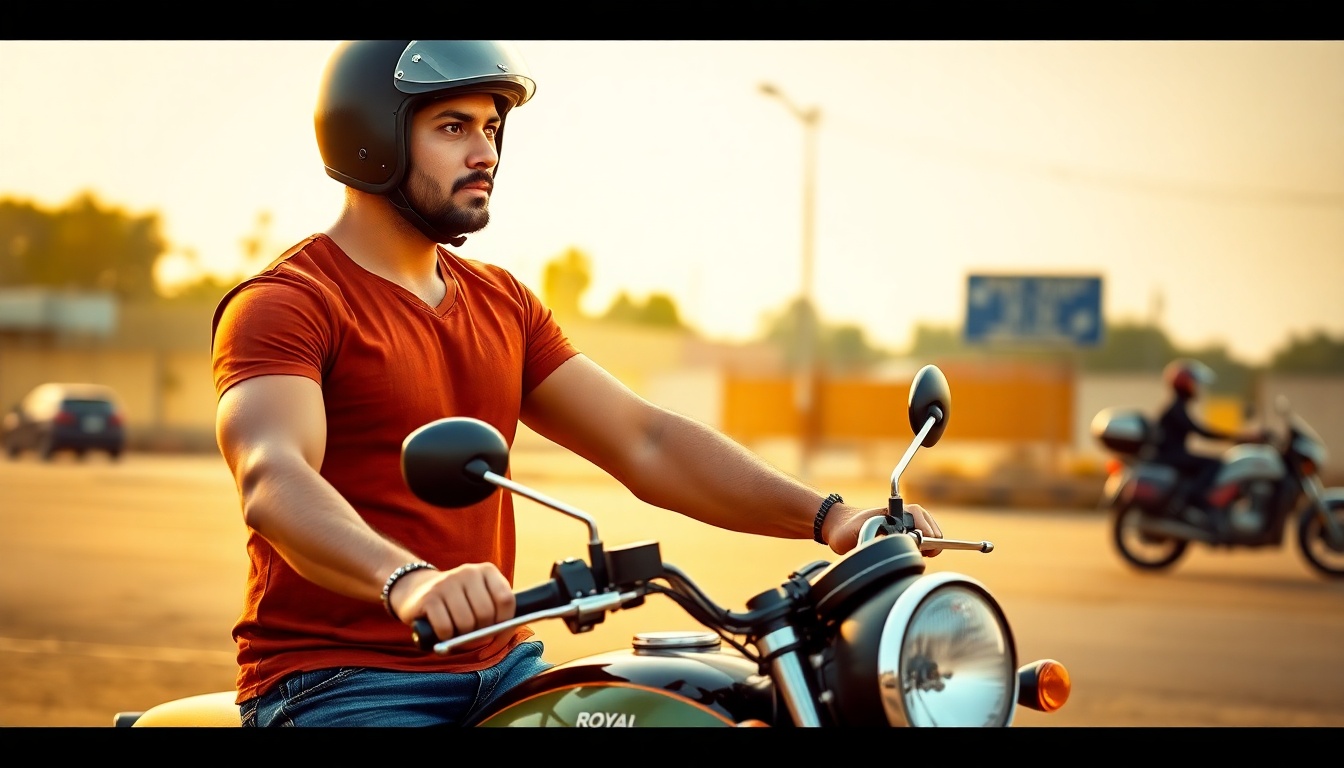
Quick Answer
A proper basic bike handling beginners course is your single best investment before hitting Indian roads. It’s not just about learning to ride in a straight line. A structured 2-day course teaches you the core skills—slow-speed control, emergency braking, and swerving—that prevent 90% of common urban crashes. Think of it as building muscle memory for chaos.
I see it every weekend at our training grounds. A new rider, beaming with pride over their shiny new bike, struggles to make a simple U-turn without putting a foot down. Their eyes are fixed on the handlebar, their body is stiff, and the bike wobbles like it’s on ice.
That moment tells me everything. It shows they’ve learned to move the bike, but not to control it. There’s a massive gap between knowing how to work the clutch and throttle and actually having command over your machine. This gap is what gets people hurt.
This is exactly why a structured basic bike handling beginners course is non-negotiable. It’s not a luxury or just for the nervous. It’s the foundation. You learn to speak the bike’s language so you can focus on the road, not on fighting your controls.
Why Most Riders Get basic bike handling beginners course Wrong
Here is what most new riders get wrong about handling. They think the goal is to go fast in a straight line. They practice on empty roads, get comfortable at 60 km/h, and think they’ve cracked it. The real risk is not speed on an open highway. It’s the sudden stop or the unexpected obstacle at 30 km/h in your colony lane.
I have seen this mistake cause accidents dozens of times. A dog runs out, a car door swings open, a pothole appears from nowhere. The untrained rider panics. They grab a fistful of front brake, lock the wheel, and go down. Or they freeze and ride straight into the hazard. Their brain has no practiced response.
Another huge error is focusing only on the hands. You steer with your eyes and your hips. Look down at your front wheel in a turn, and I guarantee you’ll run wide. Your bike goes where your eyes go. This isn’t philosophy. It’s physics. On a wet Bangalore road or a dusty Pune by-lane, that misplaced glance can be the difference between a smooth maneuver and a slide.
Finally, riders underestimate the bike’s weight. They try to muscle it around at a standstill. This drains energy and creates instability. The secret is balance, not brute force. A good course teaches you to let the bike work for you, to find its center and use it.
I remember a student, let’s call him Rohan. He had ridden a scooter for years and just upgraded to a 350cc motorcycle. He was confident, maybe overconfident. During a slow-speed slalom drill, he kept stalling and getting frustrated. “My scooter never did this,” he said.
The issue was in his left hand. He was using only his fingers on the clutch lever, like on a scooter’s weak clutch. A motorcycle clutch needs your whole hand. I made him practice the “friction zone” for twenty minutes—just creeping the bike forward with clutch control. The click in his brain was visible. He realized control isn’t about speed, it’s about precision. That one skill transformed his riding.
What Actually Works on Indian Roads
Look, the textbook tells you to use both brakes smoothly. On our roads, you need to know how much of each brake, and when. The front brake has about 70% of your stopping power. But grab it too hard on a gravel-strewn corner and you’re on the ground.
Here is the thing about braking. You must practice progressive pressure. Squeeze the front lever, don’t snatch it. Press the rear pedal firmly. In an emergency, you do this while keeping the bike upright. This isn’t instinct. It’s a trained reflex. We drill this until it’s in your bones.
Cornering is another beast. You see a curve, you naturally want to slow down. That’s good. But then you must look through the turn, at your exit point. Your head turns, your shoulders follow, the bike leans naturally. Fight this and you run wide into oncoming traffic or off the edge.
Slow-speed control is your superpower in Indian traffic. Filtering through cars, navigating a crowded market, parking in a tight spot—it all depends on this. It’s about clutch control, a tiny bit of rear brake, and looking where you want to go, not at the car bumper inches away.
The real skill is combining these. Seeing a pothole mid-corner, adjusting your line with a slight counter-steer, then getting back on throttle. Or stopping smoothly on a downhill slope without stalling. This is what a proper course builds: connected skills, not isolated tricks.
Finally, you learn to trust the bike. It wants to stay upright. It’s designed to turn. Your job is to guide it, not fight it. This trust removes panic. When you’re not scared of the machine, you can focus on the madness outside.
You don’t rise to the occasion in a crisis on a motorcycle. You default to your level of training. When that autorickshaw swerves, there’s no time to think. Your hands and feet must already know what to do. That’s what we build—calm, automatic competence.
— Throttle Angels Instructor Team
Beginner vs Trained Rider Comparison
| Aspect | What Beginners Do | What Trained Riders Do |
|---|---|---|
| Emergency Stop | Panic, grab only the front brake hard, likely locking the wheel and falling. | Apply progressive pressure to both brakes, keeping body weight back and bike upright. |
| Slow Speed Maneuvers | Stare at the ground, use erratic throttle, put feet down, wobble excessively. | Look at the exit point, use clutch friction zone with light rear brake, smooth and stable. |
| Taking a Corner | Brake mid-corner, fixate on the inside edge of the road, run wide. | Brake before the turn, look through to the exit, maintain steady throttle or gently accelerate. |
| Hazard Reaction | Freeze or target-fixate, riding straight into the obstacle. | Instantly scan for an escape path, use a quick swerve or controlled brake, or both. |
| Riding Mindset | Focused on controlling the bike itself, overwhelmed by traffic inputs. | Bike control is subconscious. Mind is focused on traffic patterns, road surface, escape routes. |
Adapting to Indian Road Conditions
Book Your Trial Session Today!
Ready to master the roads of Bangalore or Pune? Join India’s premier motorcycle driving school.
Training Available in Bangalore & Pune
Book Your Trial Session Today!
Ready to master the roads of Bangalore or Pune? Join India’s premier motorcycle driving school.
Training Available in Bangalore & Pune
Our roads are a live curriculum. You have to read the surface like a book. A dark patch on a sunny day? Probably tar bleed, slick as oil. Those metal covers near signals? Become skating rinks in the first drizzle. A trained rider sees these and adjusts position and speed before reaching them.
Monsoon riding is a whole different module. The first hour of rain is the most dangerous, lifting all the oil and grime to the surface. You learn to increase following distance massively, to avoid painted road markings, and to be gentle with every input—braking, steering, throttle.
Then there’s the traffic psychology. The cow, the pedestrian on their phone, the car indicating right but turning left. You stop assuming anyone will follow rules. You develop a constant scan—far ahead, your mirrors, your sides. You position yourself in the lane to be seen and to have an escape route. Always have an exit.
Highways aren’t about top speed. They’re about endurance, wind blast, and avoiding sleepy truck drivers at noon. You learn to manage fatigue, to stay hydrated, and that on a two-lane highway, the center is often the dirtiest, most dangerous part of the lane.
Frequently Asked Questions
I already know how to ride a scooter. Do I really need a beginner’s course for a bike?
Absolutely. A motorcycle behaves fundamentally differently. It’s heavier, requires manual gear shifting, and leans into corners. Scooter skills help with traffic sense, but the physical control is new. The course builds the specific muscle memory for a motorcycle.
What is the single most important skill I’ll learn?
Slow-speed control and clutch mastery. If you can balance, turn, and maneuver a bike confidently at walking speeds, everything else—braking, cornering, traffic navigation—becomes infinitely easier and safer.
Do I need to bring my own motorcycle?
No. We provide training motorcycles for all our beginner courses. It’s better to learn on a lightweight, crash-protected bike you’re not afraid to drop. Learning on your own expensive new bike adds fear, which is a terrible teacher.
How much does Throttle Angels training cost?
Our courses start at competitive rates with flexible packages. Call Rajkumar at 9535350575 or Arun at 8169080740 for current pricing and batch schedules in Bangalore and Pune.
Is the course only for absolute beginners with zero experience?
Not at all. We get many riders who have been riding for years with bad habits. The course resets your fundamentals. You’ll be surprised how much you didn’t know about proper braking, cornering, and bike balance. It makes riding smoother, safer, and more enjoyable.
Think of this course as your bike’s first service. You wouldn’t run a new engine for 5000 km without an oil change. Don’t run your riding career without tuning the most important part—you.
The road will test you. It’s not a matter of if, but when. Your preparation decides the outcome. Build a foundation so solid that chaos just flows around you. Then the real freedom begins.
Book Your Trial Session Today!
Ready to master the roads of Bangalore or Pune? Join India’s premier motorcycle driving school.
Training Available in Bangalore & Pune