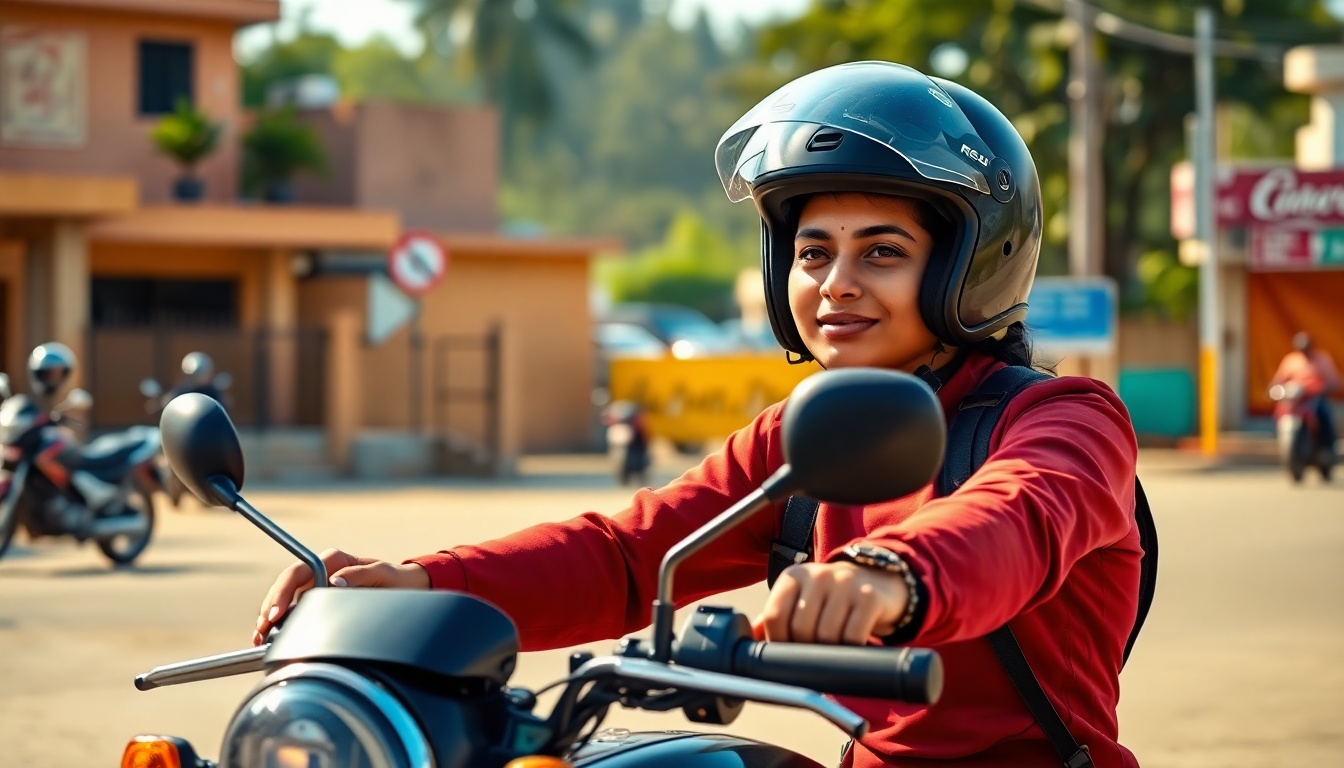
Quick Answer
A proper Royal Enfield beginner certification course is a 2-3 day intensive program that teaches you to handle the bike’s weight and torque, not just ride it. It should cover slow-speed control, emergency braking, and real-world traffic navigation. At Throttle Angels, our structured course in Bangalore and Pune transforms a nervous new owner into a confident rider in one weekend.
I see it every weekend at our training grounds. A brand new Royal Enfield, gleaming in the sun, and a proud owner standing next to it with a mix of excitement and pure fear. They’ve just bought the bike of their dreams, the thump is everything they hoped for, but the sheer weight of the machine feels like a mountain.
Here is the thing about that moment. The excitement is real. The fear is also real, and it’s smart. A Royal Enfield beginner certification course isn’t about getting a fancy certificate to frame on your wall. It’s about replacing that fear with skill. It’s about learning to make that 190-kilo machine do exactly what you want, when you want, especially when a stray dog or a sudden pothole appears.
Look, I have trained thousands of riders. The ones who jump straight onto a Bullet or a Classic 350 without proper training develop bad habits. And on Indian roads, bad habits get punished. This is why a structured course isn’t a luxury. It’s your first and most important riding gear.
Why Most Riders Get Royal Enfield beginner certification course Wrong
Here is what most new riders get wrong about a Royal Enfield beginner certification course. They think it’s just about learning to change gears and go in a straight line. They believe the open highway is where they need skill. That’s a dangerous mistake.
The real risk is not high-speed wobbles. It is the slow-speed drop. I have seen this mistake cause accidents dozens of times. A rider stops at a chaotic Bangalore junction, puts their foot down on an oily patch, and the bike’s weight takes over. The bike goes down, the rider’s confidence shatters, and the traffic doesn’t stop.
Another common error? Misunderstanding the torque. That beautiful low-end pull is what gives you the thump. But in first gear, with a clumsy throttle hand, it can lurch forward or stall unexpectedly. Beginners either whiskey-throttle it or stall at the worst possible moment, like in the middle of a tight U-turn.
They also underestimate the importance of controlled braking. A Royal Enfield is heavy. Grabbing a fistful of front brake on a dusty Pune road is an invitation for the front wheel to wash out. A proper course drills this into your muscle memory until it becomes a reflex.
I remember a student, let’s call him Arjun. He showed up with a brand new Interceptor. He could ride, but his turns were wide and nervous. He said he was fine on open roads but dreaded city traffic. His problem was simple: he was looking at the handlebars, not where he wanted to go.
We set up cones for a tight slalom. I told him to stop looking at the cones and instead look at the gap past them. His head turned, his shoulders followed, and the 200-kilo bike just leaned and flowed through. His face lit up. That moment, the connection between his eyes and the bike’s balance clicked. He learned that the bike goes where you look, a lesson that saved him a week later when a car door opened suddenly.
What Actually Works on Indian Roads
So what actually works? It starts before you even start the engine. You must build a relationship with the bike’s weight. We spend hours just walking the bike, feeling its balance point, learning to lean it onto the side stand on uneven ground. This isn’t boring. It’s foundational.
The clutch is your best friend. A Royal Enfield’s long clutch travel is a gift for beginners. You learn to use the friction zone to control the bike at walking pace. This is how you navigate through crawling traffic without putting your feet down every two seconds. It’s how you make a tight turn on a narrow street without tipping over.
Braking is a dance, not a panic attack. You practice progressive pressure. You learn how much front brake to use, and when to let the engine braking do the work. Most importantly, you practice this while the bike is straight up and down, not mid-corner.
Then comes the real test: the controlled stop on a simulated incline. Think of a flyover ramp in Mumbai during rush hour. Stalling or rolling back here is a nightmare. We drill this until you can hold the bike on a slope using just the clutch and throttle, without touching the brakes.
Finally, we talk about the road itself. You learn to read the tarmac. A wet patch, a manhole cover, a streak of sand. Your eyes learn to scan for these hazards automatically. You stop fixating on the bumper of the car in front and start seeing the whole picture. This is what keeps you safe.
The certificate isn’t the goal. The goal is the moment you stop fighting the bike and start feeling like it’s an extension of your body. When a sudden hazard appears and your hands and feet react correctly before your brain even processes the danger—that’s when the training has worked.
— Throttle Angels Instructor Team
Beginner vs Trained Rider Comparison
| Aspect | What Beginners Do | What Trained Riders Do |
|---|---|---|
| Slow Speed Control | Feet constantly down, jerky throttle, high stress in traffic. | Use clutch friction zone to crawl smoothly, feet up, focused on gaps. |
| Emergency Braking | Panic, grab front brake hard, often lock the wheel or skid. | Apply progressive pressure, use both brakes in balance, keep the bike upright. |
| Hazard Reaction | Stare at the hazard (pothole, animal), often ride straight into it. | Spot it early, scan for escape path, look and steer towards the safe zone. |
| U-Turns & Tight Spaces | Take a wide, uncertain arc, put foot down, feel unstable. | Head turned over shoulder, clutch modulation, clean tight turn within a lane. |
| Mental Load | Overwhelmed. Thinking about gears, balance, traffic all at once. | Controls are subconscious. Mind is free to scan traffic, anticipate risks, and plan. |
Adapting to Indian Road Conditions
Book Your Trial Session Today!
Ready to master the roads of Bangalore or Pune? Join India’s premier motorcycle driving school.
Training Available in Bangalore & Pune
Book Your Trial Session Today!
Ready to master the roads of Bangalore or Pune? Join India’s premier motorcycle driving school.
Training Available in Bangalore & Pune
Indian roads are a living lesson in unpredictability. Your Royal Enfield beginner certification course is useless if it doesn’t prepare you for this. The painted road markings in the rain? They are as slippery as ice. We teach you to avoid braking or leaning on them.
Monsoon riding is a whole different skill. That beautiful layer of water hides potholes that can bend your rim. You learn to ride in the tracks of cars, where the water is shallowest, and to treat every puddle with suspicion.
Then there’s the highway. The wind blast from trucks, the sudden crosswinds on bridges, the hypnotic effect of long straight roads. A heavy bike like a Royal Enfield is stable, but you must know how to position yourself. We teach you the block position, how to be seen, and why you should never, ever ride in a truck’s blind spot.
The chaos of a city intersection requires calm aggression. You learn to make eye contact, to position your bike for an escape route, and to never assume a green light means it’s safe to go. This is the real-world curriculum no manual teaches you.
Frequently Asked Questions
I already have a bike license. Why do I need a beginner course?
A license test teaches you to ride a light motorcycle in a controlled yard. A Royal Enfield beginner course teaches you to master a heavy, torque-heavy machine in real Indian traffic. They are completely different skill sets. One is legal permission, the other is survival skill.
Should I buy the bike first or do the course first?
Do the course first, without a doubt. We provide the training bikes. This way, you build confidence on our bikes before you handle your own precious new machine. You’ll avoid those painful first-day scratches and drops that haunt so many new owners.
Is the course only for absolute beginners with zero experience?
Not at all. We get many riders who have been riding lighter bikes for years but are intimidated by the Enfield’s weight. The course corrects bad habits and builds specific skills for heavy motorcycles. It’s often the experienced riders who learn the most.
What if I drop the training bike during the course?
That’s what the training bikes are for. They have crash guards for a reason. We expect drops to happen during learning. It’s a safe, controlled environment to make those mistakes. It’s far better to drop our bike in a field than yours on the road.
How much does Throttle Angels training cost?
Our courses start at competitive rates with flexible packages. Call Rajkumar at 9535350575 or Arun at 8169080740 for current pricing and batch schedules in Bangalore and Pune.
Look, that dream of the open highway, the mountain pass, the long ride with friends—it’s all absolutely possible. But it starts with respect for the machine and for the road. A proper Royal Enfield beginner certification course builds the bridge between your dream and the reality.
Invest that one weekend. Build your skills on a foundation of proper technique, not fear and luck. The thump of the engine should be a sound of joy, not anxiety. Your first ride home on your new bike should feel like a victory lap, not a terrifying trial. Get the training. Then go earn those miles.
Book Your Trial Session Today!
Ready to master the roads of Bangalore or Pune? Join India’s premier motorcycle driving school.
Training Available in Bangalore & Pune